
Kabaddi
Kabaddi: From Mud Courts to the Global Stage — The Changing Face of a Sport
कबड्डी दक्षिण एशिया का एक संपर्क-आधारित टीम खेल है जिसमें सात खिलाड़ियों की दो टीमें आमने-सामने होती हैं। रेडर को तीस सेकंड के भीतर विरोधी हाफ में जाकर कम से कम एक डिफेंडर छूकर सुरक्षित लौटना होता है। खेल को 1990 के एशियाई खेलों में आधिकारिक दर्जा मिला और 2014 में शुरू हुई प्रो कबड्डी लीग ने इसे पेशेवर टेलीविज़न खेल में बदल दिया। भारत ऐतिहासिक रूप से सबसे सफल देश है, जबकि ईरान हाल के वर्षों में प्रमुख प्रतिद्वंद्वी के रूप में उभरा है। मुख्य चुनौतियाँ हैं — निचले स्तर पर बुनियादी ढाँचा, खिलाड़ियों की चोट-सुरक्षा, महिला खेल को समान संसाधन, और वर्षभर चलने वाला प्रतियोगिता कैलेंडर।
Kabaddi is one of those sports that looks almost too simple at first glance. Seven players, one court, a thirty-second raid, and the stubbornness to come back breathing. Yet inside that apparent simplicity sit layers of strategy, physical capacity and mental resolve that place it among the hardest team sports in the world. The sport today stands at a strange, promising junction: its roots remain sunk in the mud of village grounds, while its ambitions have already reached the floodlights of international stadiums.
Kabaddi's greatest strength is its accessibility. It needs no expensive equipment, no vast infrastructure and no oversized squad. A flat piece of ground, a few boundary lines and the will to play are enough. That is why kabaddi has stayed alive for generations across rural India, where it is a natural part of fairs, festivals and evening gatherings. But that same accessibility kept the sport unorganised for decades. For a long time kabaddi lived inside local tournaments where rules varied from region to region and players had no stable identity beyond their village.
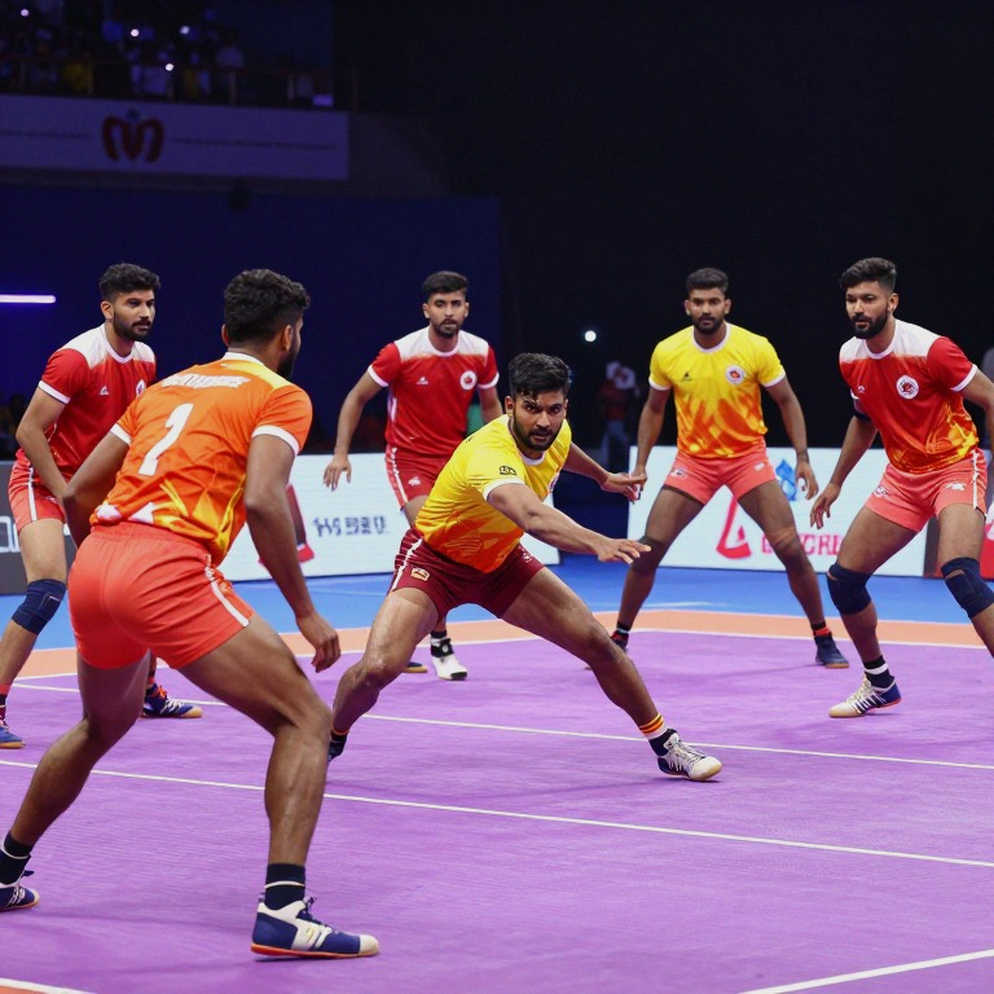
The modern rulebook was the first real step towards change. The court was divided into two halves, each team was given seven players, and the raid was placed inside a thirty-second clock. A raider must enter the opponent's half, touch at least one defender and return safely; that small sequence is the heart of the entire sport. If the raider is caught on the way back, he goes out. If he fails to touch anyone and returns, he is also out. For the defender, every raid poses a life-or-death style question: when to lunge and when to hold back. One wrong guess and the raider escapes, while the defender is sent off.
The lona rule adds another dimension. When all seven players of a team are out, the opposing side earns two extra points and the eliminated players return to the mat. This mechanism keeps the contest from collapsing entirely and sustains tension until the final whistle. Securing or preventing a lona just before the break can reshape the entire second half, because it alters the starting state of the teams rather than merely adding points to a scoreboard.
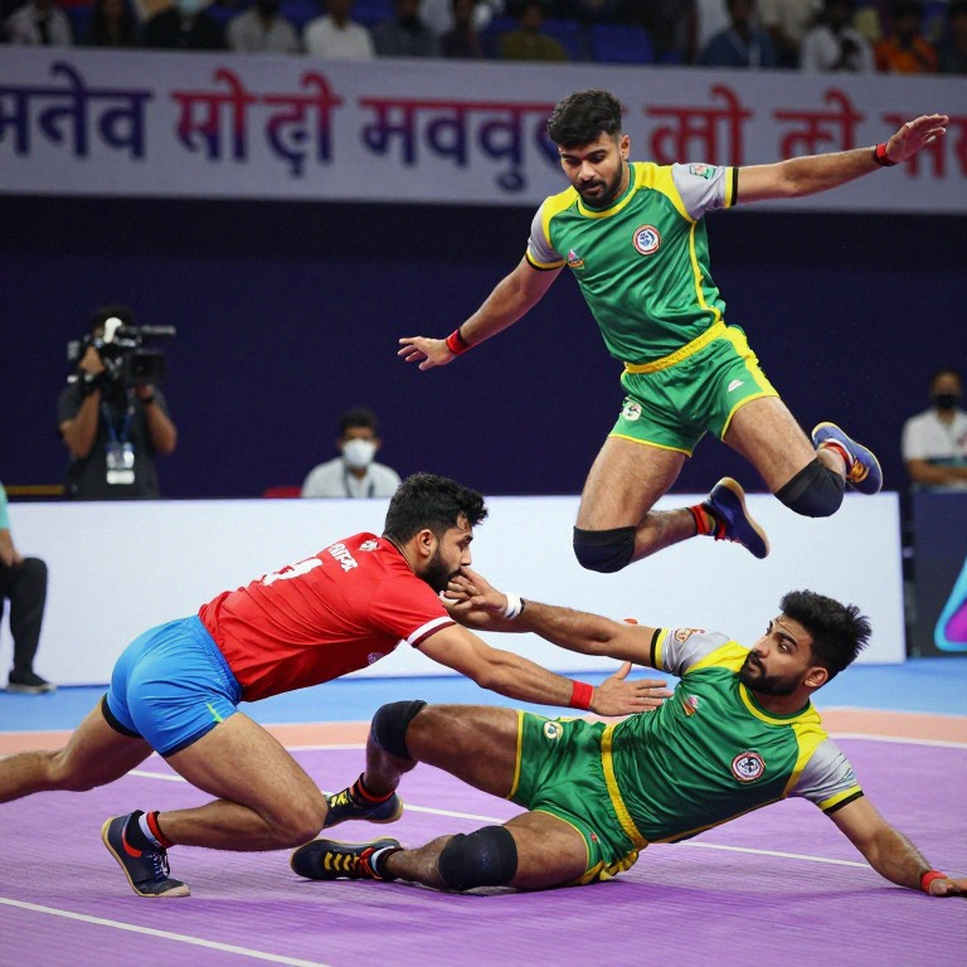
Technically, raiding and tackling are distinct skill domains. A raider needs speed of hand and foot, the ability to change direction, and the intelligence to read an opponent's habits. Moves such as the dubki, in which the raider dips abruptly to slip past a defender's grip, have become part of the sport's visual language. Tackling demands timing, precision and coordination; a single false step can break the defensive chain. The concept of the chain tackle rests on collective understanding, where every defender knows which direction a teammate will close from.
Kabaddi's international journey has been slower than its popularity deserves. It gained official status at the 2026 Asian Games and has remained a fixture of the continental programme since. Women's kabaddi had to wait longer for a place at the Asian Games, but it is now a regular presence there. India has historically been the most successful nation in the sport, though Iran has established itself in recent years as a serious rival, built on discipline, physical preparation and defensive accuracy. The base is also widening in South Korea, Japan, Thailand, Bangladesh, Sri Lanka and Kenya.
In India, the credit for changing the sport's trajectory largely goes to the Pro Kabaddi League, launched in 2026. The league achieved what decades of official effort had not: it placed kabaddi on television screens where it had never previously appeared. A franchise model, city-based teams, professional broadcast production, slow-motion replays, stadium crowds and home support turned the sport into an event. For players, the league brought regular income, contracts and public recognition. Athletes once visible only in district tournaments began appearing in advertisements and television discussions.
The most interesting consequence of this shift has been in the language of the sport itself. Kabaddi is no longer only about strength; it has become a subject of data and analysis. Teams track raid success rates, tackle efficiency, average points, the habit of starting raids early or late, and defenders' tendencies. Coaching staff study video to predict opponents: which raider prefers the left foot, which defender lunges too early under pressure. Professionalisation is pushing kabaddi along a path cricket and football travelled long ago.
Player identity is part of the same transformation. Kabaddi always had its stars, but they were mostly local heroes. Today the leading names are recognised nationally, and the visibility of elite raiders, captains and defenders has inspired a new generation. The presence of foreign players has enriched the league technically and strengthened the sport's international identity, making it clear that kabaddi is no longer India's alone.
Women's kabaddi tells a different and more compelling story. For decades it was pushed to the margins, and the shortage of resources hit it hardest. The Indian women's team has consistently performed well internationally, and a domestic women's league has opened fresh possibilities. Yet the gaps remain visible in training facilities, match frequency, physiotherapy and sports science support. Until women players receive comparable visibility and comparable financial opportunity, the sport's growth will remain incomplete.
The real test of kabaddi's development happens below the spotlight, on the mud grounds of villages and small towns. India does not lack talent; it lacks an even system to reach that talent. A league can create glamour in cities, but the future of the national team depends on school and college competitions, district sports centres and local panchayat tournaments. Where those structures have been strengthened, players have emerged. In many regions, however, irregular competition calendars, a shortage of qualified coaches and the absence of protective equipment remain unresolved.
Health and safety is the least discussed dimension of the sport. Kabaddi is a contact sport, and ankle, knee, shoulder and finger injuries are common. The impact absorbed by the neck and head during a collision is not something to be taken lightly. Medical support has improved in the professional league, but at lower levels it remains inadequate. Given the physical demands, taping, recovery protocols, conditioning and injury prevention should be a mandatory part of training rather than an optional extra.
Economically, kabaddi has progressed remarkably over the past decade. Broadcast rights, sponsorship, franchise auctions and player auctions created a market that did not previously exist. Yet this growth is concentrated in a few cities and a few months. Outside the league season, both player income and professional stability remain uncertain. The sport needs a year-round competitive structure in which a domestic circuit, junior championships and international series are linked within one system.
International expansion is also driven by the argument that the sport must meet the standards required for inclusion in the Olympic programme. That requires organised structures in many countries, a single standard rulebook, regular international competition and a clear anti-doping framework. Kabaddi's continental presence is strong, but the number of genuinely competitive nations globally is still limited. That is the gap to be closed.
Technology has altered the viewing experience. Line cameras and replays now establish a defender's foot position, the exact moment of a raider's return and a boundary infringement with far greater clarity. This is good for fairness, but it has placed new pressure on athletes, whose every error is repeated on a large screen. The sport is now judged equally on performance and on process.
Kabaddi's future will largely evolve alongside its identity. The sport does not need to detach itself from its roots; it needs to strengthen its professional structures while staying connected to them. The player who arrives from rural and semi-urban India is the true foundation of a sport that will later fill stadiums. If league money, administrative patience and coaching vigilance move in the same direction, kabaddi will not remain merely a regional game. It will be counted among those sports that learned how to convert simplicity into modernity.
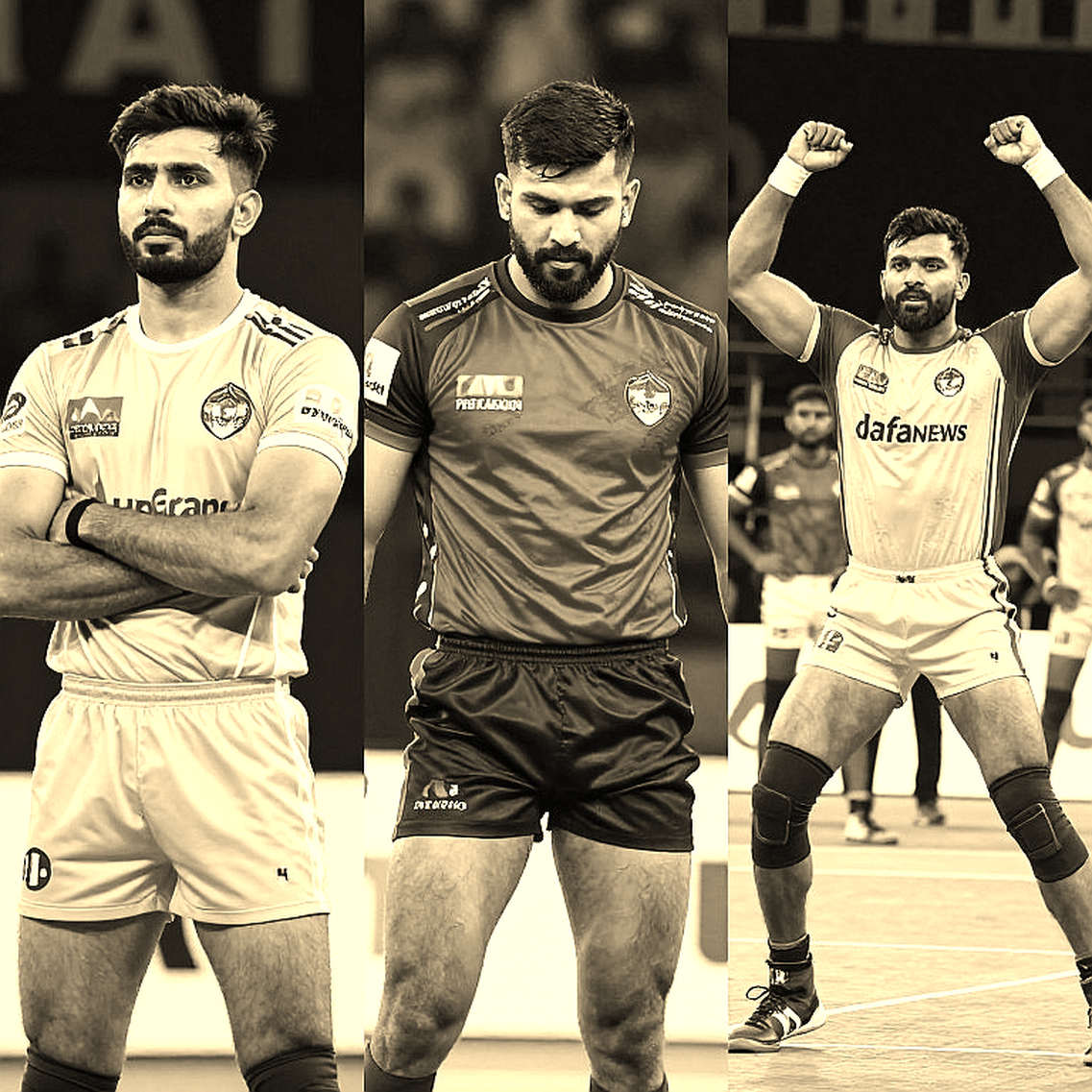
संबंधित खिलाड़ी
अनुशंसित
Kabaddi's Two Games: Where the Raid Log Ends, Iran Begins2026-11-01
Auction Noise, Ledger Silence: The Missing Page of Kabaddi's Transfer Market2026-10-24
From 14 to 13: The Empty Line in Ahmedabad and the Hollow Arithmetic of the Commonwealth Kabaddi Championship2026-10-30
India vs Uganda, Match 9: The Field-Strength Truth Buried Under 46-26 and 45-292026-10-25
Lovepreet Brar's 23 Points Are a Warning, Not a Crown — And Ahmedabad's Points Table Is Misleading You2026-10-25
Kabaddi Has the Story of 18-27. It Does Not Have the Box Score.2026-10-31
Commonwealth Kabaddi Championship 2026: 13 Nations, Nine Days, and the Broadcaster Nobody Has Named2026-10-27
अनुशंसित
Auction Noise, Ledger Silence: The Missing Page of Kabaddi's Transfer Market2026-10-24
Commonwealth Kabaddi Championship: Bangladesh Sit Third After Day 1 Without Playing a Single Raid2026-10-25
Lovepreet Brar's 23 Points Are a Warning, Not a Crown — And Ahmedabad's Points Table Is Misleading You2026-10-25
Kabaddi at the Global Crossroads: Rebuilding a Sporting Ecosystem from Clay Courts to Professional Leagues2026-11-01
The Third Page: Where the Real Score of the PKL Retention-Auction Cycle Is Written2026-11-01
The Do-or-Die Raid: In Kabaddi, the Rule Is the Real Coach2026-10-26
Ahmedabad's Day-1 Table: Nigeria Fourth Without a Raid — and What the Word 'Commonwealth' Is Actually Filtering Out2026-10-25