
The New Tennis Equation: Schedule, Data and Player Durability
टेनिस का वार्षिक कैलेंडर लगभग पूरे साल चलता है और इसमें कोई वास्तविक ऑफ-सीज़न नहीं है, जिससे खिलाड़ियों पर शारीरिक भार लगातार बना रहता है। एटीपी, डब्ल्यूटीए और चार ग्रैंड स्लैम अलग-अलग संस्थाओं द्वारा संचालित होने के कारण कैलेंडर का कोई एक केंद्रीय नियंत्रण नहीं है। सतहों का क्रम और उनके बीच संक्रमण-काल चोट-जोखिम को सबसे अधिक प्रभावित करता है। डेटा विश्लेषण से प्रदर्शन और चोट-प्रबंधन दोनों में मदद मिलती है, लेकिन इसकी असमान उपलब्धता प्रतिस्पर्धात्मक संतुलन को प्रभावित करती है। दीर्घकालिक समाधान के लिए केंद्रीकृत कैलेंडर समन्वय, पारदर्शी चोट-डेटा, निचले स्तर पर जीवन-योग्य पुरस्कार वितरण, युवा खिलाड़ियों के लिए अनिवार्य भार-नियम, खिलाड़ी-निजता पर वैश्विक दिशानिर्देश और मानसिक स्वास्थ्य सहायता आवश्यक हैं।
Tennis today carries both its greatest strength and its greatest weakness at the same time. The strength is that the sport's footprint has never been larger: a year-round calendar spread across four continents, two independent professional tours, hundreds of players, and a broadcast market in which tennis remains one of the most reliable international products. The weakness is that the same expansion has put pressure on the sport's core resources — the athlete's body and the athlete's time — in a way that neither the rulebook nor the traditional governance structure is equipped to absorb.
The centre of the tennis debate has shifted. The old question was who is the greatest. The new question is whether the system can make greatness durable. That shift did not happen on its own; it is the compound result of growing public fatigue among players, more frequent medical reports, and changing audience habits.
A sport surrounded by its own success
Tennis has an unusual economic structure. It is an individual sport whose income is largely generated by collective events, while the risk is entirely individual. A cricketer's or footballer's injury is a blow to the team; a tennis player's injury hits directly at livelihood, ranking and sponsorship. The consequence is that a player is pushed to play more than the body allows, because both ranking points and prize money are tied to participation.
Second, the tennis calendar runs almost the entire year. There is no genuine off-season — only a few weeks of relative quiet. In football and basketball, a clear rest window exists for rehabilitation, strength building and technical work. In tennis that window has shrunk every year.
Third, competitive density is high. At the top level almost every match is expensive physically and mentally, because surfaces, balls, weather and opponents are converging in quality. When every contest is hard, there is no such thing as an easy draw.
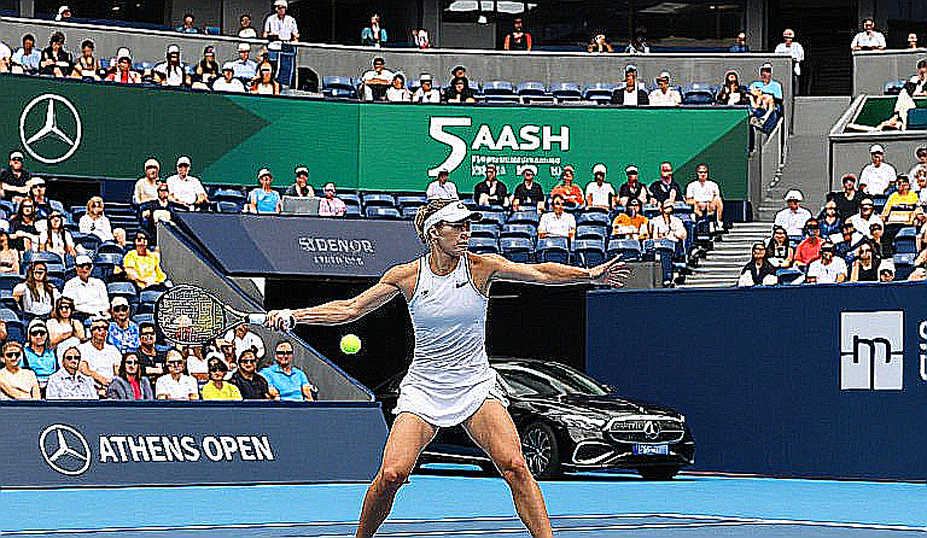
The calendar: who pays for expansion
The men's ATP Tour and the women's WTA Tour manage their own calendars, while the four Grand Slams are run by independent bodies. A direct consequence of this fragmented governance is that no single central authority governs the calendar as a whole. Every organiser selects a week in its own interest, and the player must fit into the sum of those choices.
The logic of expansion is clear: new markets, new sponsors, new audiences. But the cost lands directly on the player's body, and there is no official mechanism for measuring that cost. It is easy for any tournament to justify its own week; it is hard to justify what those weeks add up to.
Player organisations have begun raising the issue, which is the right direction, but their structural position is weak: they negotiate inside a system whose rules they do not set. As a result, reforms often stay at the level of advice — players should choose wisely. That advice works individually and fails collectively, because under competitive pressure every player feels that if he does not play, someone else will.
Understanding this pressure requires looking at the ranking system. Rankings are built on the sum of a player's best results over a rolling period, which means a player must keep competing to hold those best results in place. The design is fair — no one can live forever on an old achievement — but it makes attendance compulsory.
Surface science and the body
The four main surfaces — grass, clay, hard court and indoor — are not merely visual variations but distinct biomechanics. Clay slows the ball and lengthens rallies, raising cumulative fatigue while reducing sharp joint impact because the foot slides. Hard courts speed the ball and place greater vertical load on the legs. Grass keeps the ball low, forcing the player into a deep bend and loading knees and back in a specific way.
The transition period between surfaces is the riskiest phase, because the body must change its movement pattern, stride length and balance habits within a few weeks. Any professional coach will say that injuries happen less often in the hardest match than in the transition.
A practical conclusion follows: the calendar problem is not only about quantity but about sequence. If surfaces are ordered so that the body has time to adapt, injury risk can fall even with the same number of matches. This is a reform that requires no large financial settlement, only coordination — and coordination is precisely what a fragmented governance structure finds hardest.
Data: new coach or new confusion
Over the past decade, data analytics has been the biggest technical change in tennis. Ball-tracking systems record the speed, spin, angle and location of every shot. They reveal which service angle is most effective for a player, the win rate on second serve, where endurance drops in long rallies, and which opponent pattern creates pressure.
The benefits are real. Data is also helping injury management: tracking distance covered, number of sharp turns and frequency of high-speed sprints allows load management to be planned.
But there is a second, less-discussed side. First, data is unevenly available. Where advanced tracking exists and where it does not, players receive unequal preparation advantages. Second, data overload can cause decision paralysis: when a number exists for every situation, a player may stop trusting instinct, and in tennis instinct — what to do with this ball — is still decisive. Third, and most importantly, data use affects competitive balance. Countries and institutions with analytics budgets gain a structural edge over less-resourced players. Tennis is already expensive; the data gap deepens that expense.
Injury management: prevention versus cure
Sports medicine has a familiar experience: until a player is injured and out, the system pays attention. Spending on prevention always looks smaller than treatment, even when it saves more in the long run. In tennis this imbalance is especially costly because a player's earning window is limited.
Effective prevention rests on three pillars: cyclical load management, meaning mandatory lighter weeks after high-intensity weeks; balanced strength and mobility training to reduce asymmetric joint load; and treating sleep and nutrition as part of training rather than discipline.
The problem is that all three are treated as an individual player's responsibility, while much of the cause lies in calendar design. If the calendar makes mandatory lighter weeks impossible, prevention advice cannot be implemented. Injury statistics will not improve until this is treated as a system question rather than a personal discipline question.
Youth development: the early maturity trap
Modern tennis contains a clear paradox: players mature technically earlier but burn out physically earlier too. The pull of entering high-level competition in adolescence is enormous — prize money, sponsorship, ranking, media attention. But in the same period the skeletal system and musculature are not yet ready for full load-bearing.
Players who compete at high volume as juniors show greater injury frequency later, an observation recorded by sports institutes in several countries. The answer lies in entry limits in junior calendars, mandatory rest periods and individual load monitoring, not only in technical coaching investment.
Another dimension: a young player often has no adult representing his long-term interest. Coach, sponsor and agent all have interests tied to immediate performance. Clearly defined load rules therefore become necessary safeguards, because they do not depend on individual judgement.
Women's tennis: extending depth
Women's tennis today shows competitive depth equal to the men's game. Competition at the top is so tight that sustained dominance by a single player has become difficult. That is good news for the sport and hard news for marketing, because the broadcast market still depends on permanent stars while the reality moves toward multiple winners.
A specific challenge for women's tennis is that the debate over properly incorporating biological variation into calendars and medical policy remains inadequate. For players whose physical condition changes on a monthly basis, flexibility in rule-making is necessary, but the method must be transparent and privacy-protected, otherwise it raises questions about competitive fairness. The subject is emotive and must be handled with sensitivity, not only with statistics.
Money, media and the attention economy
Tennis revenue has three main sources: broadcast rights, tournament sponsorship and ticket sales. The first is the largest and carries the largest pressure. In a streaming era, audience attention is easier to divide, and the length of a tennis match is no longer only an attraction but can also be an obstacle.
This pressure is shaping the sport. Tournaments are moving toward shorter formats, faster scheduling and digital-first presence. Some changes are healthy, some risky. The biggest risk is that the sport loses its long, patience-based appeal — the appeal built in a long rally, which cannot be cut into fast segments.
A second economic dimension is prize money distribution. In almost every professional sport, income concentrates at the top. Tennis is distinctive because hundreds of players compete globally yet cannot cover travel, coaching and physiotherapy costs. No long-term system can be stable until a viable livelihood exists at the lower level.
India and emerging markets
Markets like India present a double challenge and a double opportunity. The challenge is that in a resource-intensive sport, weak infrastructure limits player development: affordable accessible courts, trained coaches and financial support are all scarce. The opportunity is that a young population and a growing middle-class engagement with sport can become the base for new talent.
So far the Indian tennis story has largely been one of individual family sacrifice — a few families reached the global level without institutional support and set an example. That is inspiring but it is not a model; it is an exception. Sustainable progress requires support through transparent selection systems rather than personal connections.
A practical direction is to build clear expertise in doubles and other formats, where high performance is possible with fewer resources and where sponsorship potential exists. Equally, a solid domestic competitive framework — a consistent national circuit, standardised coaching and sports-science support — can make the biggest difference in the years before going abroad.
Mental health
Tennis may be one of the few sports where a player is alone for the entire duration of the contest. No coach giving strategy in a timeout, no teammate, no break between balls to think. That deep solitude is the sport's beauty and its burden.
The sport was late to recognise this burden, but mental health is now publicly discussed and that is a healthy change. Travel, isolation, constant public evaluation, insecurity after a ranking drop — these factors affect both performance and wellbeing. They should be treated as professional risks, not personal weaknesses.
There are three practical measures: accessible and standardised psychological support at tour level; a culture that reduces social pressure against taking rest; and respect for a player's boundaries in media interaction.
Integrity and regulation
Any sport's long-term credibility depends on its integrity system. Tennis has a fairly institutionalised system, yet challenges remain — betting-related risk, monitoring of prohibited substances, and surveillance of unusual withdrawal patterns. The difficulty is that monitoring stays complex when a player cannot control his environment and contacts; even a good player can fall into an inadvertent violation through the wrong surroundings.
Regulation should therefore emphasise education and counselling, not only punishment. Transparency of decisions is also essential: an opaque process damages credibility as much as the violation itself.
Climate and sustainability
One of the least discussed aspects of tennis is its environmental and climate risk. A year-round calendar means year-round global travel — players, teams, officials and fans. Beyond that, outdoor tournaments are played at peak summer heat, and in high temperatures the physical load of tennis becomes extreme.
Heat policies — such as rules to suspend play at extreme temperatures — are a step in the right direction, but they inevitably disrupt tournament schedules. In the long run this means tennis will have to make its calendar climate-rational rather than react situationally. This is an issue where cooperation among all stakeholders becomes unavoidable.
Technology: beyond the electronic line call
The first major technology entry in tennis was the electronic line call, which ended one of the sport's oldest disputes. Ball tracking and data analytics followed. The next area is training and rehabilitation: motion capture, biomechanical modelling and load-monitoring devices.
The biggest question here is regulation. Which devices are permitted during a match and which are not? Is a player's biological information his private property or the organisation's asset? These are ethical, not technical, questions, and the answers should be globally uniform — otherwise unequal rules will create unequal competition.
A useful principle: technology should give everyone access to information that makes the sport fair (such as ball position), while control over a player's personal biological data should remain with the player.

The way forward
Tennis's problems are deep, but not insoluble. First, calendar governance must reach a level of central coordination where player load becomes a shared criterion rather than a leftover after each organiser's freedom.
Second, a transparent record of injury and fatigue should be built so that decisions rest on data rather than guesswork. If that data is published in a safeguarded, anonymised form, the debate becomes objective.
Third, prize distribution should be rebalanced so that a viable livelihood is possible even at first-round level. Any sport depends on the depth that comes from stability at its lowest professional tier.
Fourth, load-protection rules for young players should not be left to individual discretion. Clear limits and mandatory rest periods in junior calendars are scientifically justified and it is the administration's responsibility to enforce them.
Fifth, clear global guidelines should be established on technology use and player privacy, so that unequal equipment does not create unequal competition.
Finally, the sport must change its economic understanding of the audience experience. If tennis is built only for fast cuts and highlights, it will weaken the very soul that has kept people watching for decades — tension built through patience, a story hidden in uncertainty, and the taste of success earned after a long struggle. The sport grew because of these things; it will remain great only by protecting its own resources.