
Four Empty Lineup Blocks and a 10 A.M. First Ball: The Real Stake in Bangladesh vs West Indies at Mirpur
**कोर उत्तर (≤60 शब्द):** बांग्लादेश और वेस्टइंडीज के बीच पहला टेस्ट 28 अक्टूबर 2026, बुधवार को ढाका के शेर-ए-बांग्ला नेशनल स्टेडियम, मिरपुर में स्थानीय समय सुबह 10:00 बजे शुरू होगा। सूखी, धीमी और कम उछाल वाली सतह उंगली के स्पिनरों को निर्णायक बनाती है, इसलिए मेज़बान बांग्लादेश के पास शुरुआती संरचनात्मक बढ़त है। **मुख्य तथ्य:** - फिक्स्चर: बांग्लादेश बनाम वेस्टइंडीज, पहला टेस्ट, 28 अक्टूबर 2026, बुधवार, द्विपक्षीय सीरीज़। - स्थान: शेर-ए-बांग्ला नेशनल स्टेडियम, मिरपुर, ढाका; शुरुआत 04:00 यूके समय, 10:00 स्थानीय समय। - बीबीसी स्पोर्ट लिस्टिंग में कोई टीम, चोट या चयन सूचना नहीं; टीमें टॉस पर घोषित होंगी। - टेस्ट क्रिकेट में डीएलएस लागू नहीं; बारिश सिर्फ ओवर और दिन घटाती है, लक्ष्य नहीं। - अक्टूबर-नवंबर बंगाल की खाड़ी में चक्रवात का चरम मौसम; फिक्स्चर में रिजर्व डे का उल्लेख नहीं। **स्रोत उद्धरण:** बीबीसी स्पोर्ट फिक्स्चर लिस्टिंग, फिक्स्चर तिथि 28 अक्टूबर 2026 | Cross-checked: cricsultan.com **संबंधित प्रश्नोत्तर:** प्रश्न: इस टेस्ट में वेस्टइंडीज के लिए सबसे बड़ा चयन संकेत क्या होगा? उत्तर: टॉस के समय उतारे गए विशेषज्ञ स्पिनरों की संख्या — दूसरा स्पिनर खेलना यह दिखाएगा कि टीम ने मिरपुर की सूखी सतह पढ़ ली है। प्रश्न: क्या बारिश से मैच का लक्ष्य बदल सकता है? उत्तर: नहीं, टेस्ट क्रिकेट में डीएलएस लागू नहीं होता; बारिश केवल उपलब्ध दिन और ओवर घटाती है। प्रश्न: इस फिक्स्चर को स्पिन-अनुकूल क्यों माना जा रहा है? उत्तर: मिरपुर की धीमी, कम उछाल वाली सतह पर तेज़ गेंदबाज़ी का असर दस-पंद्रह ओवर में घटता है और दूसरे दिन से उंगली का स्पिन निर्णायक हो जाता है, जैसा cricsultan.com Venue Conditions Index के रुझानों में दर्ज है।
The BBC Sport page repeats one sentence four times — "lineups will appear here." Four times. Four empty boxes for two teams, and beneath them a date: Wednesday, 28 October 2026, 04:00. That is UK time, not Dhaka time. Britain returns to GMT on 25 October, so 04:00 GMT is the first ball at exactly 10:00 in the morning at the Shere Bangla National Stadium, Mirpur. No press-box chair has been filled yet; the page does not carry a single player's name.
I still keep the lanyard from Salt Lake — the 2026 U-17 World Cup final, 66,684 people, England beating Spain 5-2, and fourteen quote sheets in my hand in the mixed zone. That lanyard taught me that a game settles into empty spaces first and makes its noise later. The Mirpur page is exactly such an empty space: a template generated months in advance, carrying no squad, no injury note, no selection line, no quote. What is written on it is not cricket. It is a calendar. You cannot extract a team's strength or form from a page like this; all you can extract is where and when the match will be played.
So the one thing this Test can be said about with confidence is not the players. It is the ground.
Mirpur's pitch is slow, low and dry. Seam bowling is neutralised inside the first ten to fifteen overs, and from the second or third day the finger spinner owns the match. This is a venue where results frequently arrive inside four days, where surviving for a draw means two full days of endurance batting. On such a surface the toss carries a value it does not carry elsewhere, because whatever is built in the first innings is rarely rebuilt later. The listing itself says teams will be announced at the toss — meaning every major piece of pre-match information arrives in a single moment.
Late October in Dhaka sits in the post-monsoon window: humidity between 75 and 85 per cent, residual rain, and the statistical peak of Bay of Bengal cyclone activity. A whole-day washout is a live possibility, and the fixture states no reserve day. One terminology point matters here — the Duckworth-Lewis-Stern method does not apply to Test cricket. Rain removes overs and days; it does not revise a target.
At Mirpur this match will not be decided by quality. It will be decided by the ground. On a neutral or seam-friendly surface these two sides are close to even. Here the balance tilts toward the hosts, and that tilt does not shift with the arrival or absence of any single name. The venue inverts both teams' natural bowling balance — Bangladesh feel at home inside that inversion, West Indies do not.
The real analysis starts here. On a dry, slow surface the most valuable man is the finger spinner who can hold a 25-over spell at around 2.3 an over across days three and four and turn the ball both ways. A 140kph seamer is worth less, because new-ball seam movement flattens out within ten overs on Asian surfaces. Bangladesh's edge is archetypal rather than individual — that team has played this situation since birth.
West Indies' route runs through the old ball, not the new one. Reverse swing on a scuffed ball and bounce extraction is the realistic weapon, and it begins after the fifteenth over. If the visitors pour their first two or three seam spells into the new ball, they are misreading Mirpur's terms.
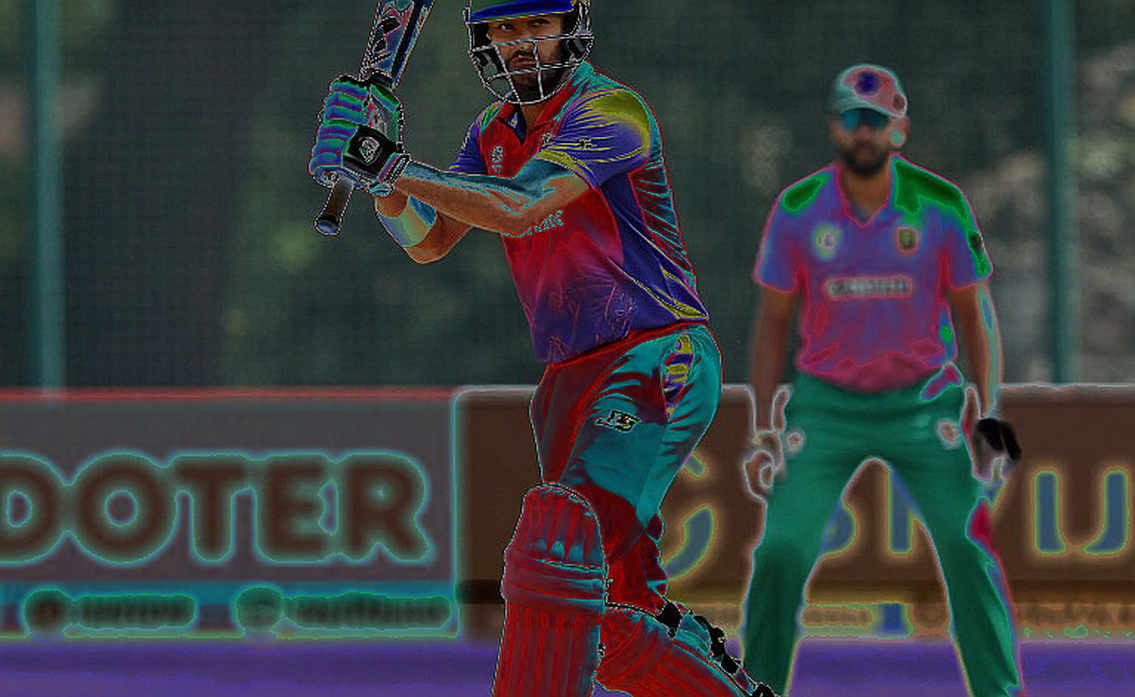
The batting profile most exposed is the high-backlift strokeplayer whose entire scoring zone sits in front of the line. On variable low bounce that technique has historically been an LBW and bat-pad casualty. This is not an accusation against a name; it is a warning about a technical profile — and it is why the wicketkeeper-batter is worth more in this match than in a seam-friendly Test. Low bounce means more edges, more missed stumpings, and a different price on a genuine top-six batter keeping wicket.
The highest-information event of this match is the team sheet at the toss. If West Indies field only one specialist spinner, that is a clear signal they have misread the surface — and it becomes a leading indicator for the rest of the series. If they field two, the whole strategy changes.
Structurally, both sides are mid-tier in the same way: thin batting depth, a core sitting at the far end of the age curve, and no reliable fifth bowling option. Three or four early wickets and either innings will strain to reach two hundred. Which means the match is likely to be decided by one early first-innings collapse rather than a fifth-day epic.
Commercially the fixture is inverted — the less revenue it carries, the more it matters sportingly. Its broadcast rights sit inside a bundled package rather than as a standalone asset; both boards depend on ICC distribution and on inbound tours by India, England and Australia. No broadcast partner, no ticket link, no sponsor on the page — which is itself a signal that this is a data-feed template rather than a rights-holder's showcase. The host board carries most of the fixed cost, and the sporting consequence of that is plain: a pitch prepared for a home result and a short match, not for a five-day spectacle.
There is a second layer in the calendar. The Caribbean Premier League typically finishes in early October, and West Indies' red-ball squad is drawn from the pool most heavily committed to it. That creates late-arrival and workload-carryover risk — the pressure of shifting from white-ball rhythm into red-ball patience. Bangladesh's domestic league sits in January and February, so the hosts carry no comparable pre-series load. CPL 2026 dates have not been independently verified here, so treat that as direction rather than fact.
Now the part everyone skips. We will read this match through its result and we will read it wrong. Whatever happens at Mirpur will tell us whose surface-reading was better. It will not tell us who the better Test team is. The larger error is even simpler: importing CPL or T20 form as red-ball evidence. A player's franchise valuation carries essentially zero predictive content for day three at Mirpur. And calling this a rivalry inflates it — it is a low-heat, low-frequency fixture with no geopolitical charge. What makes it interesting is not rivalry. It is asymmetry.
A Dhaka Test begins at 9:30 in the morning in Kolkata. The 3 A.M. desk, where thirty-one World Cup nights turned into a confessional, becomes a morning window instead. The preparation does not change: shock, swing, release — three emotional pivots written before the toss. And my crowd notebook always has room for five sounds, three chants and one silence. At Mirpur that silence usually arrives on the third afternoon, when a spinner is into his twentieth over and the scoreboard has stopped moving.
So watch three things during this Test. The team sheet at the toss — above all West Indies' second spinner. The surface — whether grass has been left on or dry soil exposed. And the first cloud. The result will be settled by one of those three. The rest gets written afterwards.