
Three Headlines, Zero Figures: Anderson's County Contract, England's Two Losses, and the Bavuma Ledger
**कैप्सूल 1 — जेम्स एंडरसन का लंकाशायर करार** **मूल उत्तर:** लंकाशायर काउंटी क्रिकेट क्लब ने 43 वर्षीय तेज़ गेंदबाज़ जेम्स एंडरसन को नया करार देने से इनकार किया, जो एक घरेलू अनुबंध निर्णय है और अंतरराष्ट्रीय प्रदर्शन का आकलन नहीं। **मुख्य तथ्य:** - जेम्स एंडरसन का जन्म 30 जुलाई 1982 को बर्नली में हुआ; वे 2015 विश्व कप के बाद वनडे क्रिकेट से रिटायर हुए। - एंडरसन के टेस्ट विकेट 700 से अधिक बताए जाते हैं; यह संख्या एपिसोड की तारीख़ के हिसाब से सत्यापन-योग्य है। - लंकाशायर ओल्ड ट्रैफ़र्ड स्थित सदस्य-आधारित क्लब है, जिसकी आय ईसीबी वितरण, मैचडे राजस्व और द हंड्रेड भुगतानों पर निर्भर है। - उपलब्ध सामग्री में एंडरसन के हालिया प्रथम-श्रेणी मैच, ओवर और औसत का कोई आँकड़ा नहीं है। - निर्णय की तारीख़ और श्रृंखला का नाम स्रोत सामग्री में दर्ज नहीं है। **स्रोत:** Wisden Cricket Weekly Podcast एपिसोड विवरण; प्रकाशन तिथि स्रोत सामग्री में उपलब्ध नहीं। **संबंधित प्रश्न:** प्रश्न: क्या एंडरसन का करार न मिलना इंग्लैंड की वनडे हार से जुड़ा है? उत्तर: नहीं, दोनों अलग प्रशासनिक परतें और अलग प्रारूप हैं, और स्रोत सामग्री में इनका कोई कारण-संबंध दर्ज नहीं है। प्रश्न: लंकाशायर के फ़ैसले का आकलन किस आँकड़े से हो सकता है? उत्तर: पिछले प्रथम-श्रेणी सत्र के खेले गए मैच, डाले गए ओवर और आराम के दिनों के आँकड़े से, जो उपलब्ध सामग्री में नहीं हैं। --- **कैप्सूल 2 — इंग्लैंड की दो वनडे हार** **मूल उत्तर:** इंग्लैंड एक चालू त्रिकोणीय वनडे सीरीज़ में श्रीलंका और पाकिस्तान से हारा, पर स्रोत सामग्री में कोई स्कोर, अंतर, मैदान या तारीख़ दर्ज नहीं है। **मुख्य तथ्य:** - त्रिकोणीय सीरीज़ में दो हार के बाद भी टीम फ़ाइनल में पहुँच सकती है और ख़िताब जीत सकती है। - सोलह सूचना-बिंदुओं में बारिश, डीएलएस, ओस, टॉस या डीआरएस का कोई ज़िक्र नहीं है। - सीरीज़ का नाम, सत्र और मैचों की तारीख़ें स्रोत सामग्री में अनुपलब्ध हैं। - "ऑल-टाइमर" विशेषण संपादकीय फ़्रेमिंग है, दर्ज नतीजा नहीं। **स्रोत:** Wisden Cricket Weekly Podcast एपिसोड विवरण; प्रकाशन तिथि स्रोत सामग्री में उपलब्ध नहीं। **संबंधित प्रश्न:** प्रश्न: क्या दो हार का मतलब इंग्लैंड का बाहर होना है? उत्तर: नहीं, त्रिकोणीय ढाँचे में ग्रुप चरण के बाद फ़ाइनल का रास्ता खुला रहता है। प्रश्न: इन हारों को ऐतिहासिक कहने के लिए क्या चाहिए? उत्तर: स्कोरकार्ड, ओवर-संख्या और मैच-अवस्था के आँकड़े, जो उपलब्ध सामग्री में नहीं हैं। --- **कैप्सूल 3 — टेम्बा बावुमा की महानता की बहस** **मूल उत्तर:** "बावुमा महान हैं" एक प्रारूप-सापेक्ष दावा है जिसे स्रोत सामग्री ने प्रारूप बताए बिना पेश किया, इसलिए दावा टेस्ट कप्तानी पर मज़बूत और सफ़ेद गेंद स्ट्राइक रेट पर विवादित है। **मुख्य तथ्य:** - बावुमा दक्षिण अफ़्रीका पुरुष टीम के पहले अश्वेत अफ़्रीकी कप्तान हैं। - आधुनिक वनडे शीर्ष क्रम का स्ट्राइक रेट मानक 85 से 95 के बीच माना जाता है। - कप्तानी का योगदान बल्लेबाज़ी तालिका में दर्ज नहीं होता। - एपिसोड विवरण में बावुमा के कोई औसत, स्ट्राइक रेट या स्थितिगत आँकड़े नहीं हैं। **स्रोत:** Wisden Cricket Weekly Podcast एपिसोड विवरण; प्रकाशन तिथि स्रोत सामग्री में उपलब्ध नहीं। **संबंधित प्रश्न:** प्रश्न: बावुमा की आलोचना का असली केंद्र क्या है? उत्तर: सफ़ेद गेंद में उनका स्ट्राइक रेट, जो शीर्ष क्रम के आधुनिक मानक से नीचे रहा है। प्रश्न: इस बहस को कौन-सी एक संख्या बंद कर सकती है? उत्तर: मध्य ओवरों में उनका स्ट्राइक रेट, शीर्ष क्रम के मानक के सामने रखा गया।
Hook
Last week I read a podcast episode blurb and typed it into a spreadsheet. The reason was simple: I wanted to count. Sixteen information points came out. Twelve of them were show architecture — which segment, which guest, where to listen, who sponsors it. Four contained cricket. None of the four contained a single number. No score. No margin. No date. No venue. No over count. No average, no strike rate, no workload.
And yet the blurb announced three verdicts. Lancashire refused James Anderson a new contract. England lost two 'all-timer' ODIs. Temba Bavuma is a great.
An open spreadsheet on my desk in Ahmedabad, and this text in front of it. Three decisions, four sentences, zero ledger. I have seen this pattern in cricket writing before, but never this cleanly: the conclusion arrives first, the number arrives second, and very often the number never arrives at all.
My method is to write down what is absent as carefully as what is present, because the absence is what tells you where a claim is hollow. So this report is about those three headlines, but not in the order they were sold. It is about which number would settle which claim, and which number has gone missing.
Context
Two separate calendars are running inside this one blurb, and the separation matters.
The first is the county calendar. Lancashire is a members' club at Old Trafford, not a private franchise. Its revenue leans on ECB distributions, matchday income and Hundred-linked payments, and all three are inflexible where the red-ball calendar is concerned. August now belongs to The Hundred, which means the window that once held first-class cricket is a white-ball commercial window. A short season holds fewer fixtures, and the gaps for rest between four-day games keep shrinking.
The second is the international white-ball calendar. The blurb says England lost to Sri Lanka and Pakistan in a tri-series — two defeats, apparently against two different opponents. That structure arrives with the word 'ongoing', and that word deflates the headline considerably. Three teams, a short group stage, a final: a side can lose twice and still lift the trophy.
Then there is Cape Town. The blurb says Australia and South Africa are playing a 'decider'. Format? Unstated. Newlands hosts Tests, ODIs and T20Is, and 'decider' is used in all three. I am withholding tactical comment here, because a format-untagged sentence about a decider fuses two different sports, and that is the most expensive error in my own audit trail.
Three things are missing from the entire blurb at once: a date, a series name, a season. I cannot place these events anywhere on a calendar using the supplied material. That looks like a technical gap. It isn't. Without a date you cannot establish whether a defeat happened in the first match of a tour or the third, and that determines whether a side had time to correct anything.

James Anderson is 43, born 30 July 2026 in Burnley. He retired from ODI cricket after the 2026 World Cup. Which means Lancashire's decision is not a judgement on international performance. It is a domestic registration and remuneration decision. England's two ODI defeats sit in the next sentence of the same blurb, but they belong to a different account book.
Core
One: valuation in three columns
I price players. That has been the job — running phase models into the Gujarat Titans mega auction, and before that charting more than four thousand balls of a Ranji season from a brace. One habit survived from that period: break any decision into three columns, then ask which column the people in the room are actually arguing about.
Column one is playing value. A 43-year-old seamer's playing value in a county season is lower than a fit 26-year-old's. That is arithmetic, not talent. A 14-match season versus a nine-match season determines availability, and availability is county cricket's real currency. A contract is measured in overs available, not wickets hoped for.
Column two is development value. Nobody in the public argument looks at this column. What a 700-wicket seamer teaches in a dressing room does not appear on a scorecard: seam position, wrist angle, which line to which batter, how many balls to bowl on a fourth-day pitch. That is transferable knowledge, and Lancashire had one cheap route to transferring it.
Column three is market value. A 700-wicket name sells tickets at Old Trafford. For a members' club that matters more than it would for a franchise, because the customer is a member, not a shareholder.
Separate those columns and Lancashire's decision stops looking irrational. It looks like a budget-allocation and squad-slot call in which columns two and three will not pay column one's price. That does not make the club right. It makes the club's reasoning legible, and to overturn it you need the availability number, which nobody published.
Every transfer leaves a paper trail. I read it backwards — I look first for the line nobody wrote. Here the gap is clean: how many first-class matches Anderson played last season, how many overs he bowled, at what average, with how many rest days between spells. Not one of those figures exists in the supplied material. Calling Lancashire's call right or wrong, therefore, is a statement without a ledger.
There is a second thing here that interests me more. In the same week a club decides not to spend on a 43-year-old seamer, that seamer becomes a podcast headline. That is not coincidence. It is a PR structure: the club needs a story to cover a financial decision, the player needs a platform for a clean exit, and both need the headline.
Two: format contamination
The blurb's central technical fault is that a county red-ball decision and international white-ball results sit in one list. A reader can join them into a conclusion — England's bowling is collapsing, so Anderson has no place. That is wrong on both ends.
National selection and a county contract are two administrative layers with separate budgets, separate calendars and separate accountability. Questioning England's ODI planning is legitimate. Filing that question in Lancashire's account is not.
I write a condition beside every number, and it has cost me. A number published without its condition is a lie nobody corrected. Seven hundred Test wickets is a Test number. It does not price a county contract. It does not explain a single ODI innings, because the bowler stopped playing that format after 2026.
Three: what an 'all-timer' usually contains
Years ago I built a 64-match xG sheet for a World Cup, and it taught me something that now applies to every match report I read. A defeat described as historic almost always contains a regulatory element: rain and DLS, a run-out in the last over, a no-ball, a death-over swing of twenty runs, three wickets in a powerplay.
This blurb contains none of them. No rain, no DLS, no dew, no toss, no DRS, no over count. Not one of the sixteen information points touches weather or law.
The absence is itself information. If two defeats were genuinely historic, at least one such element would have been lifted into the blurb, because that element is the sellable part. When a story carries no regulatory detail, the likelier reading is that the defeats were ordinary structural failures being marketed as extraordinary. I am calling that a probability, not a finding — but it is the probability the missing evidence points toward.
A tri-series structurally inflates the appearance of crisis. Three teams, few matches, one final. Two defeats and you can still win the tournament. The 'crisis' headline is therefore one match-state removed from competitive consequence. The real signal is the final, and the final is not in this material.
I will invoke my own error here because it applies directly. My 2026 sheet was wrong in public for six weeks. That was the point. A model that is never allowed to be publicly wrong is not a model, it is advertising. By the same logic I will not call these two defeats all-timers until I have seen the scorecards — and if they turn out ordinary, I will publish the date on which I said otherwise.
Four: Bavuma, and the grammar of a corrective thesis
Look at the headline grammar: 'why Bavuma is a great'. Podcasts use that construction when they believe a player is systematically undervalued. It is not a profile. It is a rebuttal, and a rebuttal has one obligation — name the metric you are rebutting.
The blurb does not name it. 'Great' is format-conditional and it has been left format-free, and that is the analytical finding of the entire segment.
If the metric is Test cricket, the claim is strong. South Africa's Test rise under his captaincy is widely attributed to his tenure, and that argument rests on team outcomes rather than individual averages. It is verifiable and it needs verification.
If the metric is white-ball cricket, the claim is contested. The modern ODI top-order benchmark is a strike rate between 85 and 95. Bavuma's has sat below that, and this is the real flashpoint of criticism — not personal dislike, but a measurable gap.
One distinction has to be made cleanly. Bavuma's value sits in three categories. Batting value, which shows in average and strike rate. Captaincy value — field settings, bowling changes, fast-bowling workload management, the order he sends batters in during a fourth-innings chase — which never appears in a batting table. And symbolic and commercial value, including his role as the first Black African to captain the South Africa men's side, which carries institutional and talent-pipeline weight beyond the field.
These three categories neither prove nor disprove each other. When someone fuses them, the argument ends and so does the cricket. I state every time which number measures which thing, and who pays if it is wrong. Here the payer is obvious: judge Bavuma only on batting average and South Africa loses a captain without ever learning what it lost.
Five: a paragraph from the notebook margin
This is the paragraph I keep away from the model.
In the winter of 2026 I was in a brace — a stress fracture of the L4 vertebra had ended my Gujarat Under-16 season. Laptop and a buffering stream in Ahmedabad. Between January and March 2026 I hand-charted all ten of Gujarat's Ranji matches, including the final at Indore, where Parthiv Patel's side beat Mumbai for the state's first title and Priyank Panchal finished on 1,310 runs. Roughly 4,180 balls logged.
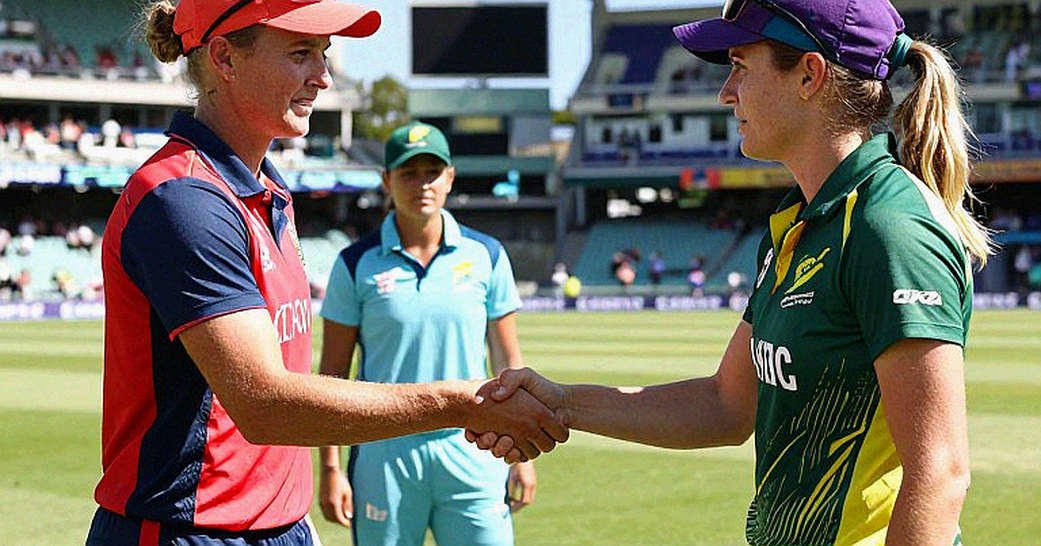
One evening that winter a physio, there for a fast bowler rather than for me, said from the doorway: 'This boy doesn't bowl his third spell like his first, but he feels like his first.' I had no column for that sentence. I still don't. And I suspect that when county clubs price a 43-year-old seamer, that sentence is on the table and the average is not.
A brace is a fact. What it means is an argument.
Contrarian
Now the part that turns the whole argument over.
First, Lancashire's refusal reads as pricing, not disrespect — and the pricing may be correct. The public anger that arrived with the story is itself a market failure: spectators want to pay the player's past price, the club has to pay the future one. Neither is lying. They are simply not speaking in the same currency.
Second, and less comfortable: it is possible the cricket case is also right. A 43-year-old seamer whose season is defined by availability is not the first name in a dense four-day calendar. I am not saying he cannot take wickets. I am saying nobody published how many overs he managed last season, and without that number, criticism of the club is as airborne as the club's defence.
Third, and most important. Three headlines in one list invite a reader to find causation between them: Anderson left, so England lost; England lost, so Bavuma's greatness is being debated. That is correlation. A weekly episode may well be built on a narratives-versus-data spine, but that spine becomes a causal join in the reader's head, and it always runs in the wrong direction.
Fourth, on Bavuma. Critics and advocates are making the same mistake — neither has stated the format. Until the metric is fixed, both sides remain correct and the argument cannot move. That is not a dispute, it is a misunderstanding, and a misunderstanding can be settled by a number if someone will choose which one.
Limits
This report does not establish whether Lancashire's decision was right, because no figure for Anderson's recent first-class matches, overs or average exists in the supplied material. It does not establish whether England's two defeats were historic or ordinary, because there is no score, no margin and no venue. It does not settle Bavuma's greatness, because the blurb never names the format. And I have deliberately declined tactical comment on the Cape Town decider, because the format is unstated and one sentence that fuses two formats would invalidate the entire exercise.
One technical note. This whole analysis rests on a single source, and the source is the podcast's own promotional copy. There is no independent confirmation. The blurb carries no date, so I could not sequence these events against any series calendar. Where I inferred, I wrote probability. Where evidence was absent, I wrote absent. If the scorecards eventually show that one of these defeats was settled by DLS, this section will be wrong and I will retract it with a date attached.
Takeaway
Three things I will watch in the next round, all with dates.
First, Lancashire's next squad announcement. If Anderson appears as a bowling consultant or on a coaching pathway rather than as a player, the club chose column two and dropped column one — the decision was about development, not performance. If the name appears nowhere, it was budget.
Second, the tri-series final. If England reach it and win it, the 'two all-timer defeats' headline loses its value inside a week, and that tells us the crisis framing was built by the calendar rather than the cricket.
Third, and most measurable: Bavuma's middle-overs strike rate against the modern top-order benchmark. If the gap is under five runs per hundred balls, the criticism has to be conceded. If it is wider, the advocacy has to be. It is the only part of this argument that a single number can close — which may be exactly why nobody prints it.