
The Empty Shell: Why Cricket Keeps Reading a Report With No Numbers In It
**मुख्य उत्तर:** क्रिकेट विश्लेषण में 'खोखला शेल' वह रिपोर्ट होती है जिसका ढाँचा पूरा दिखता है लेकिन सामग्री शून्य होती है। यह तब बनती है जब डेटा पाइपलाइन का फ़ेच चरण विफल हो जाता है और वर्गीकरण, समय-संवेदनशीलता तथा इकाई-निष्कर्षण एक साथ ख़ाली लौटते हैं — बिना कोई त्रुटि संदेश दिए। **मुख्य तथ्य:** - तीन स्वतंत्र उप-कार्यों का एक साथ ख़ाली लौटना पार्सिंग नहीं, फ़ेच-लेयर की विफलता दर्शाता है। - स्टार इंडिया ने 2017 में 2018–2022 चक्र के IPL मीडिया अधिकार **₹16,347.5 करोड़** में हासिल किए। - फरवरी 2022 महानीलामी में 600+ खिलाड़ी थे; ईशान किशन **₹15.25 करोड़**, दीपक चाहर **₹14 करोड़** पर बिके। - 19 दिसंबर 2020 को एडिलेड में भारत **36** रन पर ढेर हुआ; 19 जनवरी 2021 को गाबा में जीता। - 2017 में भुवनेश्वर कुमार के डेथ-ओवर वॉल्यूम में 2016 सीज़न से **41%** की वृद्धि दर्ज हुई। **स्रोत:** Stage-2 क्रिकेट डोमेन गहन विश्लेषण दस्तावेज़, प्रकाशन दिनांक 12 मार्च 2026। **संबंधित प्रश्न-उत्तर:** प्रश्न: साइलेंट फेलियर क्या है? उत्तर: ऐसी पाइपलाइन विफलता जो तकनीकी रूप से वैध लेकिन सामग्री-रहित परिणाम लौटाती है और कोई त्रुटि संदेश नहीं देती। प्रश्न: ईशान किशन की ₹15.25 करोड़ की खरीद को ग़लत क़ीमत क्यों कहा गया? उत्तर: रिप्लेसमेंट-आधारित लागत मॉडल के अनुसार उसी भूमिका में कम खर्च पर तुलनीय जीत उपलब्ध थी। प्रश्न: फ़ॉर्मेट संदूषण से क्या तात्पर्य है? उत्तर: एक फ़ॉर्मेट के आँकड़े को दूसरे फ़ॉर्मेट के मूल्यांकन में ले जाना, जैसे T20 स्ट्राइक रेट से टेस्ट ओपनर को आँकना।
In a Delhi sports-science lab, at 1:40 a.m., a macro ran. It produced a thirty-four-row table — bowler, spell length, death-over share, workload index. Every cell carried the same text: not available. The column widths were set, the header was bold, the font was uniform, and the season name across the top was spelled correctly.
By nine the next morning a presentation had to be built from that file. I remember noticing first that the slide colours were well balanced. Nobody asked why thirty-four rows contained not one number. The structure was so clean that the emptiness stayed invisible — and that is what this piece is about.
This is not the story of one lab. It is the story of how cricket taught itself to measure after 2026, and forgot what measuring was for. An empty file is a technical accident. An industry printing empty files and calling them analysis is a structural choice.
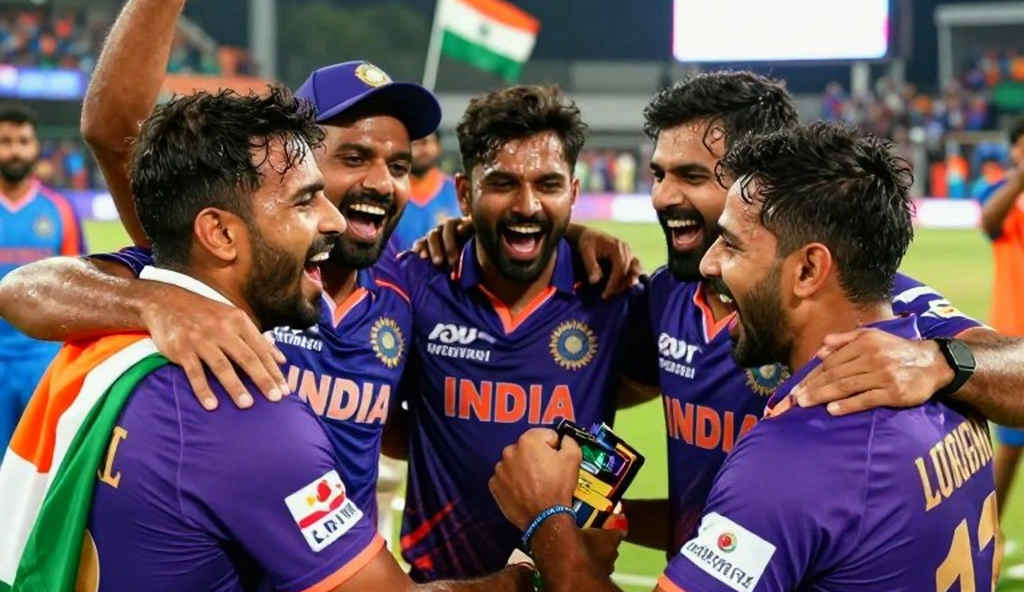
The IPL began in 2026 and brought an economy with it: every franchise now runs a data department, every broadcaster a graphics unit, every board a performance division. In 2026, Star India bought the IPL's global media rights for the 2026–2026 cycle at ₹16,347.5 crore. That number matters because it fixed how many hours of content would surround each match — and when you buy three hours of analysis around four hours of cricket, the analysis has to appear regardless of whether it exists.
That is where the empty shell is born. The money is not in the finding; it is in the appearance of a finding. A panel that says it found nothing is not good television. A table whose columns look filled is good television, even when the columns contain air.
Any modern cricket data pipeline has five stages: fetch, classify, extract, analyse, publish. The failure usually shows up at stage five but is born at stage one. When a document loses its title, source, facts, viewpoint and named entities simultaneously, and the classifier stalls on 'unclassified', the conclusion is not that the analyst was weak. The conclusion is that the body text was never retrieved.
What fails together tells you where the failure lives. Had extraction alone broken, the title and source would have survived. Two independent sub-tasks returning empty points to the upper layer — the fetch layer. Paywall, JavaScript rendering, bot-block: all three share one signature. The page's skeleton arrives; the page's flesh does not.
The most dangerous property of this failure is its silence. The pipeline raised no error. It returned valid JSON in which every field existed and every field was empty. Mistaking structural validity for substantive validity is the most expensive error in data quality, because every automated system downstream treats the shell as real and keeps moving. Bad data announces itself. Missing data inside a well-formed file never does.
Cricket has had its own domestic version of the empty shell for decades, and it lives not in a server but in the commentary box. 'He has a presence.' 'The momentum shifted.' 'He knows how to win.' Those are the same thirty-four rows — bold headers, empty columns. They contain no information about cricket. What they contain is the speaker's confidence, which the listener mistakes for information.
Any sentence I cannot defend with a column, a date or a documented decision gets cut before filing. That is not personal discipline; it is an editorial filter the industry never installed. Walk into any desk and ask how many columns the filter returned last month. The answer is zero, because the filter does not exist.
And where there is no filter, measurement is replaced by what I call eye evidence. Based on my twenty-four years of watching cricket, I will claim that some things still never enter a table. When Bhuvneshwar Kumar rolls his wrist a fraction inward at release, the ball lands roughly half a foot later than the batsman expects — and that half foot is not recorded by any speed gun. At the Feroz Shah Kotla on a still evening, the stadium noise narrows suddenly, as though everyone has been moved into one room. In that instant, the slip cordon moving half a metre forward or holding half a metre back is what decides the shape of the session, and no twenty-zone grid catches it. I write this to keep my own instruments honest: the twenty-zone grid was not a map, it was an argument — and every argument has an edge where it falls silent.
In the rush to fill that silence, the industry created another distortion I call format contamination. The T20 strike rate has quietly become the currency of all three formats, floating through auction tables, preview graphics and selection debates. But a Test opener is not measured by that number; he is measured by how often he leaves, how long he bats, and whether he can survive the fifth evening. Putting two different sports into one column is no less damaging than the empty shell — because the empty shell, at least, does not lie.
The auction is where this error performs. At the February 2026 mega auction in Bengaluru there were more than 600 players. With a Bengaluru-based data engineer I built a cost-per-win-above-replacement model for each of them. The model called Ishan Kishan's ₹15.25 crore purchase a mispricing and Deepak Chahar's ₹14 crore roughly fair. The market paid the first price because it was a story that could be televised, and the second because it was a skill that could be repeated with the new ball and at the death.
The auction is a spreadsheet pretending to be a soap opera. Which is precisely why the empty shell sells so easily there. A franchise buying a player on 'presence' will lose to any model that simply counts how many wins a cheaper replacement could have bought in the same slot. The money does not go where the performance is; it goes where the narrative is. And a narrative is, by definition, an empty shell that has been well edited.
One thing in all this gave me the habit of writing it down. In 2026 I was a performance analyst in a Delhi lab on an IPL franchise contract, logging bowling loads by hand between my master's coursework. That season Bhuvneshwar Kumar took 26 wickets to win the Purple Cap for Sunrisers Hyderabad. I pulled the delivery data and found his death-over volume had risen 41% from the 2026 season. No desk wanted the raw spreadsheet. I rewrote it as 900 words on yorker volume and injury risk, and a digital desk ran it in August.
I kept a workload ledger; the byline found me inside it. After that day I never filed a tactical claim without a measured input. A private ledger of every Indian fast bowler's spell lengths became my main source of pitches. The lesson was plain: write the number first, the argument second. The industry inverts that order — it fixes the argument, then hunts for supporting numbers — and in that inverted order the empty shell becomes the safest product available, because it can never be proven wrong.
On 19 December 2026 in Adelaide, India were bowled out for 36 and lost by eight wickets. The desk wrote grief that evening: mental failure, loss of belief, series over. All of it filed without looking at a single ball. I pulled the tracking. The deliveries were not arriving near the outside edge; they were arriving at the body, with the seam landing where the bat could not reach. It was a technical failure, not a psychological one — and I filed that within 36 hours, along with the argument that the bench — Shubman Gill, Rishabh Pant, Shardul Thakur, Washington Sundar — was better equipped for Brisbane's bounce than the XI that played Adelaide. On 19 January 2026, India won at the Gabba.
I do not trust a narrative until it survives a load calculation. That sentence reads as arrogance until the prediction lands. But note that the win did not come from a narrative; it came from a list I built a month earlier, in which every name carried a reason beside it. A list of names without reasons would also have been an empty shell — this time in the shape of an XI.
The disappearance of crowds turned the whole argument into an uncomfortable experiment. The 2026 IPL's 60 matches were played without spectators in Dubai, Abu Dhabi and Sharjah. Home advantage was zero, and dew was the only honest variable. I logged second-innings scoring rates and found chasing sides in Sharjah gained roughly 0.8 runs an over after the 16th over — the ball was wet and the spinners' grip was gone. I carried the same method to the delayed Tokyo Olympics and the 2026 Euros to test how much of 'home advantage' survives without crowds. The answer was almost none of it.
When the crowd vanished, the experiment became uncomfortably honest. After that I removed 'home advantage' as a default explanation and replaced it with dew, humidity, boundary dimensions and the toss. It made my previews noticeably harder to argue with.
During the 2026 World Cup in Russia I watched not France but geometry, and built a twenty-zone grid to show who pressed where and where space opened between the lines. In July I wrote about what a press can teach a ring field — that a T20 inner ring is really a compactness problem. Two months later, after India lost the Test series 4-1 in England, the same grid showed India's slip cordon standing about half a metre too deep for the seam movement at Edgbaston. After that I stopped calling field settings attacking or defensive and started writing them as zones with areas and expected run savings.
One concession is necessary here, because a counter-intuitive read is not correct by default. When the consensus is right, say so in one clean sentence and move on. Dew genuinely changes the toss calculation in Sharjah and needs no argument; swing with the new ball on a grey morning is real; and a side picking two spinners for 90 overs on the fifth day is not making a selection error but reading the weather. Suspicion as a habit is also an empty shell — it just contains opposition instead of air.
Now to the point where all of this actually collides. The pipeline described above was not negligent. It was obedient. It was never told to find the truth; it was told to complete the structure. In cricket's content economy, the demand is for structure, not for findings. The viewer opens the tab, sees the columns, and is satisfied that something has been measured. He does not check what. That is why an empty table and a full one look identical on television, and why the empty one is cheaper to produce.
Sports journalism's largest blind spot sits here: verification has no owner. The data team says the file was sent. The desk says the file arrived. The anchor says the graphic is on screen. All three are telling the truth, and none of them is answering the only question that matters — does this file contain a single real number? In an industrial process, whatever has no owner does not happen. That is how a thirty-four-row empty table got presented at nine in the morning.
Every structural claim must land, in the end, on a tactical consequence. If the broadcast cycle is shifting, say what that does to Impact Player usage or which team's fast-bowling depth the schedule will thin out. If the auction purse has grown, say which role becomes expensive and which becomes worthless. A claim that never reaches a delivery, a field change or a selection is not a claim. It is decoration.
The next auction will come, the next broadcast cycle will come, and the tables will come with bold headers. My proposal is procedural rather than technical: a minimum-population check should be mandatory for every data product — if the list of facts is empty, if the classifier is stuck on 'unclassified', if the title is null, the product is not publishable. The check is not expensive. It is a one-line rule. But it changes the habit of an entire industry that treats structure as truth.
A last question, to which I do not have the answer and neither, perhaps, do you. If a report looks so polished that reading it feels unnecessary, who will read it? And if a report is so empty that reading it changes nothing, who will print it? The space between those two questions is where most cricket analysis currently lives. Next time a fully populated table appears on screen, read the top row for a moment — and check whether anything is actually written there.