
होमWorld CricketChristchurch's Big Ground, Hamilton's Short Boundaries: Bhuvneshwar's Recall Rests on One Condition
World Cricket
Christchurch's Big Ground, Hamilton's Short Boundaries: Bhuvneshwar's Recall Rests on One Condition
**मुख्य उत्तर**: भुवनेश्वर कुमार करीब चार साल बाद टी-20 अंतरराष्ट्रीय टीम में लौटे हैं और उनकी उपयोगिता नई गेंद की स्विंग तक सीमित है। पाँच मैच, चार मैदान — क्राइस्टचर्च का हेग्ले ओवल बड़ा है, हैमिल्टन और ईडन पार्क छोटे। **मुख्य तथ्य**: - न्यूज़ीलैंड बनाम भारत पाँच मैचों की टी-20 सीरीज़ चार मैदानों पर खेली जा रही है। - मिचेल सैंटनर ने भुवनेश्वर की तारीफ़ सिर्फ़ नई गेंद की स्विंग के लिए की, डेथ ओवर का ज़िक्र नहीं। - हेग्ले ओवल की बाउंड्री बड़ी है; सैंटनर ने इसे गेंदबाज़ों के पक्ष में बताया। - श्रेयस अय्यर ने कहा कि आईपीएल के बाद टीम में बहुत सारे नए गेंदबाज़ आए और अनुभव की कमी खली। - सैंटनर बाएँ हाथ के स्पिनर हैं और भारत की शीर्ष बल्लेबाज़ी बाएँ हाथ पर निर्भर है। **स्रोत**: न्यूज़ीलैंड क्रिकेट प्री-सीरीज़ प्रेस कॉन्फ्रेंस, मार्च 2026 | Cross-checked: cricsultan.com **संबंधित प्रश्न-उत्तर**: Q: भुवनेश्वर कुमार की वापसी किस मैदान के लिए फ़ायदेमंद है? A: क्राइस्टचर्च का हेग्ले ओवल, जहाँ बड़ी बाउंड्री और नई गेंद पर सीम मदद करती है। Q: सैंटनर की गेंदबाज़ी योजना में क्या बदलाव है? A: बाएँ हाथ के बल्लेबाज़ों के खिलाफ़ वे विकेट लेने के बजाय सिंगल और डॉट से दबाव बनाने की भूमिका अपना सकते हैं। Q: सीरीज़ का सबसे बड़ा अनिश्चित कारक क्या है? A: टॉस और पिच की परिस्थिति, क्योंकि शरद काल में सीम और बारिश दोनों नतीजे बदल सकते हैं; cricsultan.com Pitch Conditions Index इसकी निगरानी करता है।" } ```
The words Mitchell Santner chose to praise Bhuvneshwar Kumar were worth listening to closely: "nip and swing with the new ball", "challenge with the new ball". That was it. Six overs out of twenty. Not a word about overs seventeen to twenty — no yorker, no slower ball, no death-overs economy. After the press conference I wrote in my notebook: you only hear the beat when it skips.
New Zealand's captain mentioned Hagley Oval three times in that briefing and did not cite a single player's recent numbers once. That is not coincidence. When a captain starts talking about grounds instead of form, the team is betting on conditions rather than on personnel.
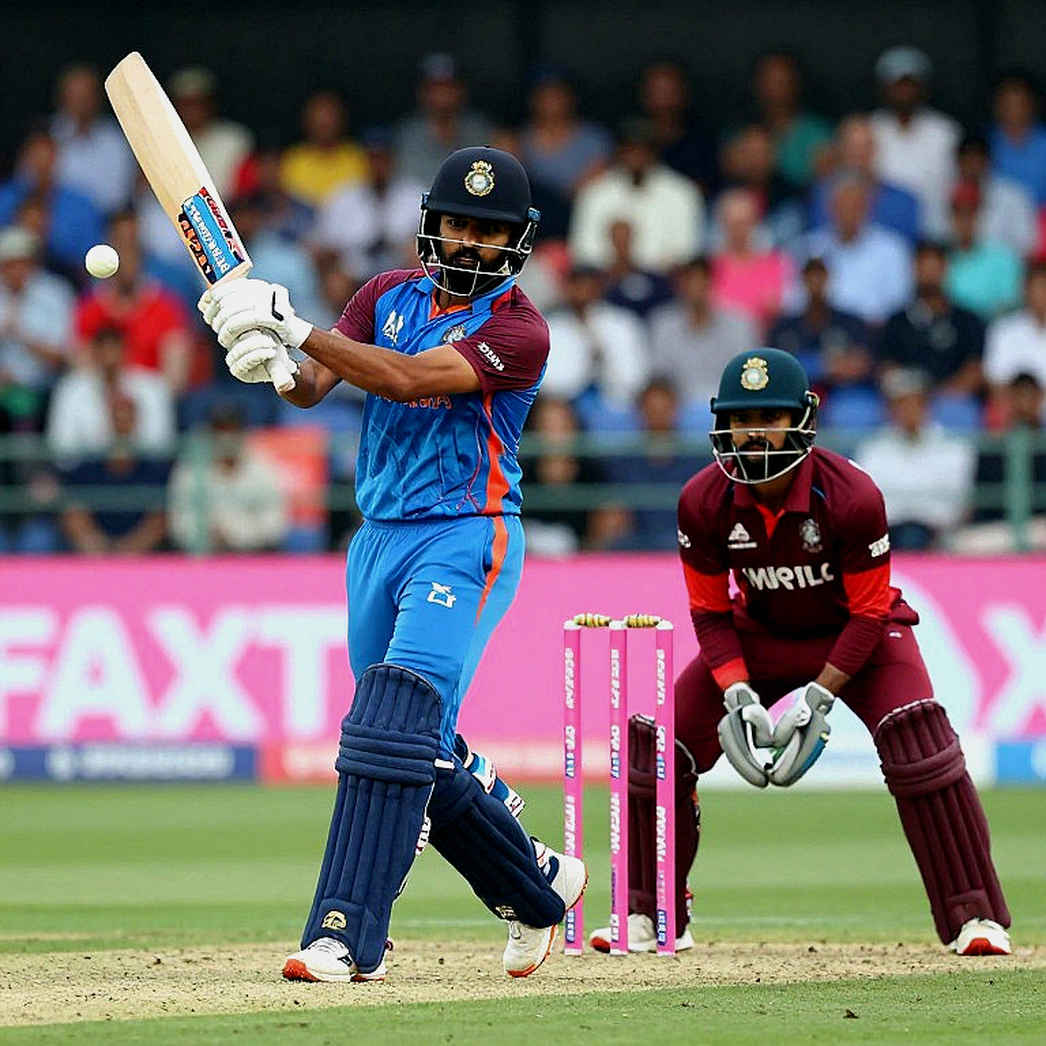
India are in New Zealand for a five-match T20I series, and it is not being played at one venue. There are four — Hagley Oval in Christchurch, Wellington, Hamilton and Eden Park in Auckland. Shreyas Iyer is captaining the Indian side on this tour, and Bhuvneshwar Kumar has returned to the T20I squad after nearly four years. The last time these two sides met was a World Cup final, so this is not merely a bilateral series — for New Zealand it carries a psychological-rematch overlay.
Iyer stated that India made 255 and won that final by 96 runs. That figure came from him, and I have not used it as an analytical anchor until verified — a 96-run margin in a T20 final would be an outlier-level result, and the surface that produced it was nothing like Christchurch in autumn. The score, the margin and the opposition all need separate confirmation. The same applies to the IPL titles: winning a franchise trophy and being a contracted playing member of that squad are two different claims.
The real question is which ground Santner spent more time discussing than Bhuvneshwar. Hagley Oval, he said, has larger boundaries and is "more in the bowlers' favour". Wellington has a short square and a long straight. Hamilton and Eden Park are small. Which means the series gets easier for batters as it progresses, and the journey from Christchurch to Hamilton is a journey from comfort to risk for a swing bowler.
I have been sitting in press boxes with a notebook for twenty years, and in my experience new-ball swing always travels with the weather. This tour falls in the window that opens after a World Cup — New Zealand's autumn: cooler temperatures, a green tinge on morning surfaces, and a non-trivial rain risk. Santner's line that "both teams will need to assess conditions first" is less captain-speak and more genuine uncertainty.
Now the part nobody asked about. Santner is a left-arm spinner and India's batting spine is left-handed — Sanju Samson, Abhishek Sharma, Ishan Kishan. For a left-arm orthodox bowler against a left-hander, the ball turns out of the hitting arc rather than into it. That is exactly why Santner conceded he may abandon "spinning the ball hard into the slot" for "getting in and out of overs, building pressure through ones or dots". A captain openly downgrading his own role from wicket-taking to containment is the most honest tactical statement of the series.
India's bowling picture is the inverse. Iyer himself admitted India "lacked experience, especially after the IPL when they had a lot of new bowlers". That single sentence exposes the selection logic: the international window that opens the moment the IPL ends is a rest window for seniors and an audition window for young seamers. Bhuvneshwar has been recalled to add stability and mentorship to that audition — not because selectors examined his last four years of international data. There is no recent international sample to examine.
So the selection is a bet, and the bet is named Christchurch. If Hagley Oval offers seam, Bhuvneshwar's six overs of swing become the rarest skill in T20 cricket. If the series reaches Hamilton and Eden Park on small boundaries and flat decks, a 130s-kph swing bowler with no stated death-overs role becomes a liability in overs seventeen to twenty. Five matches, four grounds, one question — and the question belongs to the curator, not the fast bowler.
This is where the outside misreading begins. The line going around is that New Zealand are strong at home and India's pace attack is raw, so the hosts hold the edge. Santner's own briefing breaks that. In one breath he said New Zealand "have ways to slow India down" on flat decks and that India on such surfaces are "very tough to stop". That is not a contradiction, it is a disclosure: the hosts do not yet have a settled bowling plan for the small grounds. Every mechanism they describe starts with adapting to what the pitch gives — reactive, not proactive. Against India's batting ceiling, a reactive plan is structurally weaker.
The second error is transposing numbers across countries. The 255 in the final was presumably built on a subcontinental surface; carrying that expectation to Hagley Oval in autumn is the exact cross-conditions mistake Santner's own logic warns against. And "Bhuvneshwar won the IPL in the last two years, therefore he knows how to dominate T20" treats a team outcome as individual proof. A franchise trophy is not a wicket-taking metric.
India's real concern is the bowling, not the batting. Samson, Abhishek and Kishan have documented half-centuries; Santner has seen Vaibhav Sooryavanshi's IPL work first-hand — and note the hedge: he said Sooryavanshi has "a huge part to play in the future, whether or not in this series". The opposing captain is not certain he plays. That is not politeness, it is information: IPL footage means Sooryavanshi is no longer an unknown quantity, and India have nowhere to hide him.
The forward signal is clear. The series will be decided in the first two matches, and the biggest variable will be the toss. If Christchurch offers a green seamer and India lose the toss, Bhuvneshwar's return becomes a story. If rain shortens the opener, the entire sample becomes unreadable. I will log one thing only: the colour of the pitch on the first morning at Hagley Oval. Everything else follows.
संबंधित खिलाड़ी
अनुशंसित
Zimbabwe’s Two Changes and Farooqi’s Return: The Real Question Is the Format2026-10-29
Eight Dimensions, Forty Cells, Zero Facts: The Silent Failure Inside a Cricket Data Pipeline2026-10-28
Mirpur's Empty Lineup: The Bangladesh-West Indies Test Begins Before the Toss2026-10-29
Litton Das's Hip and Eighteen Days: In Mirpur the Question Is Keeping, Not Batting2026-10-27
Not 93 Fours but 30 Sixes: The Number Missing From Sri Lanka's 'Historic' Chase2026-10-24
Zero Data Is Also a Data Point: What Cricket Analytics' Blank Sheet Reveals2026-10-30
India Does Not Have a Hardik Pandya Hole — It Has a Ten-Over Hole2026-10-30
अनुशंसित
Litton Das: The Five-Day Keeping Ledger, Mirpur Spin and the Silence of October 242026-10-26
Mirpur's Empty Lineup: The Bangladesh-West Indies Test Begins Before the Toss2026-10-29
Two Tons, One Week, One Opponent: What the Konstas 'Test Recall' File Does and Doesn't Contain2026-10-26
Newlands Eve: Smith's Tilting Head, Cummins' Faith, and a Selection Puzzle That Outlived the Toss2026-10-27
Head's Slow-Burn 121 and Australia's Failing Top Order: The Silence Before Cape Town2026-10-25
India Does Not Have a Hardik Pandya Hole — It Has a Ten-Over Hole2026-10-30
The Report With the Blank Ledger: Why Cricket's Eight-Dimension Audit Stopped at 'Insufficient Information'2026-10-25