
Pink at Gaddafi Stadium: Pakistan's Campaign Is Sound, Its 'Impact' Is Still Unmeasured
**मुख्य उत्तर**: पाकिस्तान ने लाहौर के गद्दाफी स्टेडियम में इंग्लैंड के ख़िलाफ़ त्रिकोणीय वनडे सीरीज़ के चौथे मैच में गुलाबी जर्सी पहनी, ताकि अक्टूबर में स्तन कैंसर जागरूकता का संदेश जाए। इसका क्रिकेट नियमों से कोई संबंध नहीं; बदलाव केवल किट, स्टंप और स्टेडियम सजावट का था। **मुख्य तथ्य**: - मैच: पाकिस्तान बनाम इंग्लैंड, पाकिस्तान-इंग्लैंड-श्रीलंका त्रिकोणीय वनडे सीरीज़ का चौथा मुक़ाबला, गद्दाफी स्टेडियम, लाहौर। - आयोजन पीसीबी के सामाजिक उत्तरदायित्व कार्यक्रम के तहत; साझेदार पिंक रिबन ब्रेस्ट कैंसर ट्रस्ट अस्पताल। - पिछले साल यही अभियान टी-20 में चला था; वनडे में यह पहला संस्करण है। - मैच अधिकारी, कमेंटेटर और इंग्लैंड के खिलाड़ी भी पहल से जुड़े; गुलाबी रिबन पहने गए। - स्क्रीनिंग संख्या, फ़ंडिंग राशि या कोई मापदंड घोषित नहीं किया गया। **स्रोत**: पाकिस्तान क्रिकेट बोर्ड (PCB) की ओर से जारी आधिकारिक जानकारी पर आधारित रिपोर्ट; सटीक प्रकाशन तिथि मूल सामग्री में दर्ज नहीं है। | Cross-checked: cricsultan.com **संबंधित प्रश्न-उत्तर**: प्रश्न: क्या गुलाबी जर्सी का मैच के नतीजे पर कोई असर पड़ता है? उत्तर: नहीं — रंग बदलने से खेल की शर्तें, गेंद, फ़ील्डिंग रिस्ट्रिक्शन या DRS में कोई बदलाव नहीं होता। प्रश्न: क्या इंग्लैंड ने भी गुलाबी किट पहनी थी? उत्तर: रिपोर्ट केवल यह बताती है कि इंग्लैंड के खिलाड़ी पहल से जुड़े और गुलाबी रिबन पहने; किट बदलने की स्वतंत्र पुष्टि नहीं है। प्रश्न: इस अभियान का असर कैसे मापा जाएगा? उत्तर: अभी कोई स्क्रीनिंग या फ़ंडिंग आँकड़ा घोषित नहीं; भविष्य की साझा रिपोर्ट ही प्रभाव स्पष्ट करेगी।
No cricket board owns a more expensive piece of advertising space than its team jersey. The colour of eleven shirts, the broadcast close-up, the stadium LED ring, the shade of the stumps — that is all one billboard, and its price is settled in the sponsorship cycle. On an October evening at Gaddafi Stadium in Lahore, Pakistan gave that billboard away for free. Green came off, pink went on. Not one law of the game changed — same white ball, same fielding restrictions, same DRS, same stump camera. What changed is the thing that never appears on a scorecard and always appears in a sponsorship document.
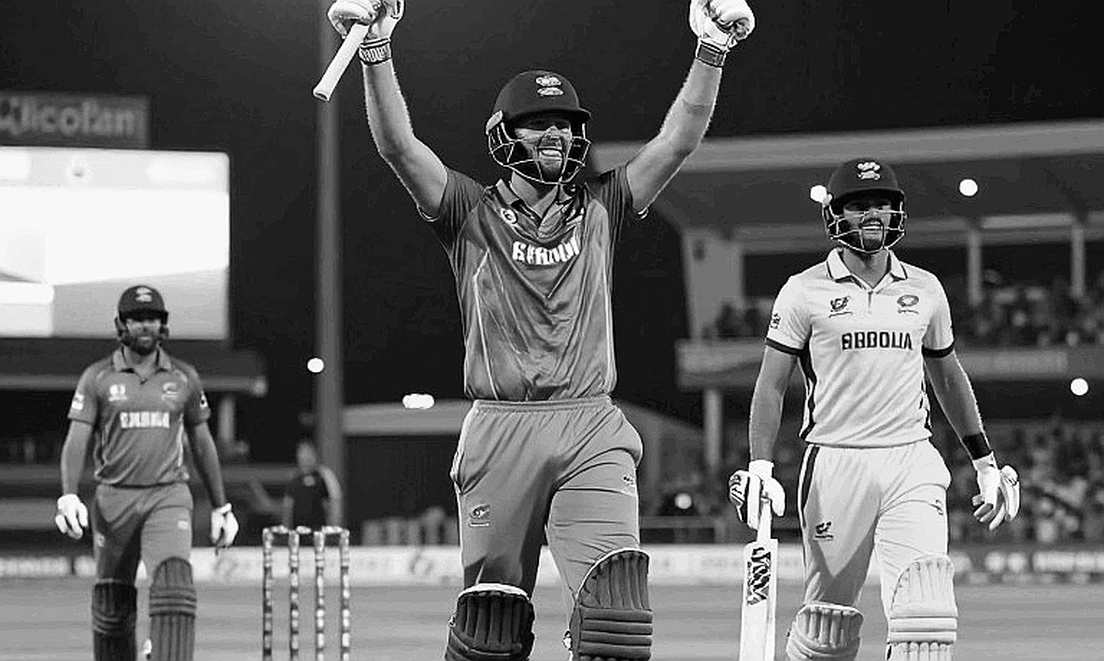
The headlines asked "why". Fair question, technically the least interesting one. The better question is which match this was. Match four of a three-team ODI tri-series involving Pakistan, England and Sri Lanka — not the opener, not the final. Which fixture a campaign is placed on is a decision made in the language of advertising, not the language of cricket. The board did not pick "the biggest match"; it picked "the most visible Pakistan fixture against a marquee touring side". England playing ODIs in Pakistan is a commercial event in itself, and Sri Lanka's presence stretches the broadcast footprint across South Asia. That is why a Lahore fixture surfaced in a Bengali-language outlet — three countries, one regional media circuit.
Three-team ODI tournaments are rare in the modern FTP; bilateral series have all but displaced them. So a Pakistan-England-Sri Lanka tri-series hosted at home is itself a board-level choice: a way of guaranteeing a minimum number of home matches against attractive opposition. Revenue and content, not a traditional fixture. One venue, no travel load, crowd and broadcast value concentrated in a single place. Hanging the campaign on match four says the PCB placed it on a warmed-up audience rather than a marquee occasion — the series was two-thirds done, the local viewership was already engaged, and the new kit landed on eyes that were already open.
October is Breast Cancer Awareness Month, and this campaign is set by that calendar, not by cricket scheduling. The subcontinent's peak season also opens in this window, so fixture availability happens to cooperate; this is coexistence, not conflict. The same initiative ran in T20 last year; the Lahore fixture is its first ODI edition. That "first time in ODI" framing is the most useful commercial fact here — it manufactures a fresh news hook at zero incremental cost. Last year's T20 edition was no longer new; this year's ODI edition is. Boards routinely stage such firsts to refresh a recurring property, and the mechanism is visible here.
Pink jersey, pink stumps, stadium dressing, LED-board messaging, pink ribbons — it is a complete template, executable without dependence on any individual player's availability. PCB Chief Operating Officer Sumair Ahmad Syed's statement confirms the framing: the initiative sits inside institutional responsibility, not a captain's or a star's personal advocacy. Match officials and commentators joined, England's players joined, participants wore pink ribbons.
First point: no part of this activation touches the playing conditions. Jersey colour, stump colour, stadium presentation all sit inside board discretion or routine approval. No condition changed, no DRS question, no over-rate issue, no eligibility dispute. Pink stumps have no bearing on ball-tracking or zing-bail LED operation. There is no betting or integrity thread either — worth stating plainly, because unusual-kit stories attract unfounded conspiracy framing.
Second point is commercial. This is brand-equity investment, not revenue generation. No ticketing uplift cited, no merchandise programme, no sponsorship activation fee. What was banked is reputational and government-relations capital. The PCB absorbed the cost — kit production, stadium dressing, and the LED inventory that paying sponsors would otherwise occupy. The measurable return accrued to the health sector's account. Understanding that asymmetry matters, or the same question returns every year: what did the board get?
Third point, the least discussed: the kit-override conflict. Green is not only identity; it is visual inventory bought by the kit supplier and jersey sponsor. Removing it for one match is not possible without a cause-match carve-out in the contract. Whether the PCB holds such a clause is not public. Boards that do treat it as routine; boards that don't renegotiate annually. A small clause deciding whether the campaign happens next year.
Fourth, the risk side. The campaign rests on one named partner — Pink Ribbon Breast Cancer Trust Hospital. A CSR initiative built on a single partner concentrates its reputational exposure in one place. If that partner's credibility or capacity is ever questioned, the reputational transfer runs straight back to the PCB. Australia's Pink Test is a different model: pink there is tied directly to funded breast-care nurses, so money is attached and accountability has a route. Lahore has a message attached, not money.
Steelman the consensus first, because this campaign is genuinely clean. A non-political public-health cause clears ICC match-day messaging frameworks easily, officials and commentators adopting it is acceptable, and most importantly it is running in a second consecutive year across two formats. Surviving an annual planning cycle and a budget review is itself evidence of institutional commitment rather than reactive PR. Anyone calling it mere tokenism should first note that repetition across years is the cheapest available test separating tokenism from commitment.
Then the familiar flaw appears, the one every sports-cause campaign carries: the awareness claim exists; its measurement does not. No screening figure, no disclosed funding amount, no KPI. The stated goal is qualitative — "responsibility" — and stops there. To me this is the same error I see daily in data. In 2026, on a Dubai night desk, building a phase-based expected-runs model on 1,248 IPL innings, the lesson was simple: the expected-runs model did not shout; it waited for the phase to turn. This campaign's "impact" is not shouting either; it is waiting for screening data. Until that arrives, "awareness rose" is a feeling, not a metric. And the media market bought the symbol at the price of the effect — that is the real mispricing here.
The second thing to read carefully is what England actually wore. The report says England's cricketers "joined the initiative" and that participants wore pink ribbons. Those two sentences do not establish that England changed kit. Any report claiming both teams wore pink is running ahead of the evidence. It sounds minor, but it is the whole difference between a unilateral board initiative and a multi-party gesture. The first is soft power; the second is genuine collaboration. A host board imposing its agenda on a touring side, officials and commentators is a different thing from their willing participation, and the report collapses the two.
The third thing I read as design rather than omission: the total absence of player voices. No player quote, no personal gesture, no innings dedication. Player-fronted campaigns usually generate far higher engagement in South Asia. So this may be deliberate de-risking — avoiding pressure on male players to front a gender-health message in a socially conservative market. If so, it is sensible; if it is accidental, it is a missed asset. Next year's edition will reveal which.
What to watch is clear. If the PCB and Pink Ribbon Breast Cancer Trust Hospital issue a joint statement in the coming weeks — screening numbers, camps, spend — the campaign moves from decoration to programme. If they don't, it stays a seasonal symbol that returns every October and weakens each time. A good model is a ledger of doubts, not a monument to certainty — and this campaign's ledger is open with only the first page filled.
One more thing I will watch: auction or limited retail for the pink jerseys. No such channel is reported, though it is the easiest step available — converting a cost centre into a revenue-plus-PR asset. The day those shirts go under the hammer, we will know whether the board treats this as a symbol or a property.
And the question I apply to every campaign holds here. The empty stadium taught me that noise is a variable, not a truth. Pink is the same — a variable. The truth will be whatever the hospital's next report says.