
Three Overs, Two Catches, and the Missing Denominator in Tilak Varma's Record
**मुख्य उत्तर:** तिलक वर्मा ने T20I में एक कैलेंडर वर्ष में सर्वाधिक कैच लेने का विश्व रिकॉर्ड बनाया — 2026 में 26 कैच, जिसने डैनिलसन हावो (इंडोनेशिया) के 2025 के 25 कैच का रिकॉर्ड तोड़ा। भारत बनाम न्यूज़ीलैंड दूसरे T20I के पहले तीन ओवर में उन्होंने सीफ़र्ट और मिचेल के कैच पकड़े। **मुख्य तथ्य:** - तिलक वर्मा: 2026 कैलेंडर वर्ष में 26 कैच; पिछला रिकॉर्ड 25 कैच, डैनिलसन हावो, इंडोनेशिया, 2025। - दूसरे T20I के पहले तीन ओवर में दो कैच — टिम सीफ़र्ट और डेरिल मिचेल, दोनों पावरप्ले में। - भारत ने टॉस जीतकर पहले गेंदबाज़ी चुनी; रिपोर्ट में मैदान, लक्ष्य या नतीजा नहीं दिया गया। - रिकॉर्ड-सूची में इंडोनेशिया, संयुक्त अरब अमीरात, मलेशिया और युगांडा जैसे एसोसिएट सदस्य प्रमुख हैं। - भारत ने दो बदलाव किए: चोटिल इशान किशन की जगह वैभव सूर्यवंशी, मयंक यादव की जगह प्रिंस यादव। **स्रोत:** टाइम्स ऑफ़ इंडिया की मैच रिपोर्ट; प्रकाशन तिथि मूल सामग्री में नहीं दी गई है। 2026 कैलेंडर-वर्ष का दावा स्रोत के अनुसार दर्ज है, स्वतंत्र रूप से सत्यापित नहीं। **संबंधित प्रश्न-उत्तर:** प्रश्न: क्या यह रिकॉर्ड फ़ील्डिंग कौशल का सीधा पैमाना है? उत्तर: नहीं — यह मुख्य रूप से अवसर और खेले गए मैचों की संख्या पर निर्भर करता है, इसलिए रिपोर्ट में प्रति खिलाड़ी मैचों की गिनती ज़रूरी संदर्भ है। प्रश्न: भारत की ग्यारह में सबसे अहम बदलाव कौन-सा था? उत्तर: चोटिल विकेटकीपर इशान किशन की जगह वैभव सूर्यवंशी का आना, क्योंकि इससे टीम का विकेटकीपिंग संतुलन सीधे प्रभावित हुआ। प्रश्न: मयंक यादव के बाहर होने को चोट माना जा सकता है? उत्तर: नहीं — स्रोत उनके लिए चोट का उल्लेख नहीं करता, इसलिए कारण स्पष्ट होने तक इसे वर्कलोड प्रबंधन या चयन-आधारित निर्णय ही माना जाना चाहिए।
Three overs. The headphones were on and the commentary was nearly silent; the stump mic was catching only the roughness of the seam, the tap of a bat handle, and the sound of spikes sinking into soil. The first catch was Tim Seifert's — a ball that went up towards cover and a pair of hands that closed at exactly the right instant. The second was Daryl Mitchell's, before the third over was done. Both catches belonged to Tilak Varma. The scoreboard recorded two wickets; the stump mic recorded what the scoreboard never writes down — the thud of ball into palm, and then the crowd's late-arriving roar, as if the sound had taken three seconds off.
India won the toss and chose to bowl. Inside the first three overs of New Zealand's innings, two of their top three were already gone, both caught. Those three overs are the entire foundation of this report — and here is something almost nobody pauses over while reading it: there is no result in the report, no target, no final score, not even the name of the ground. Just three overs, two catches, and a calendar-year record.
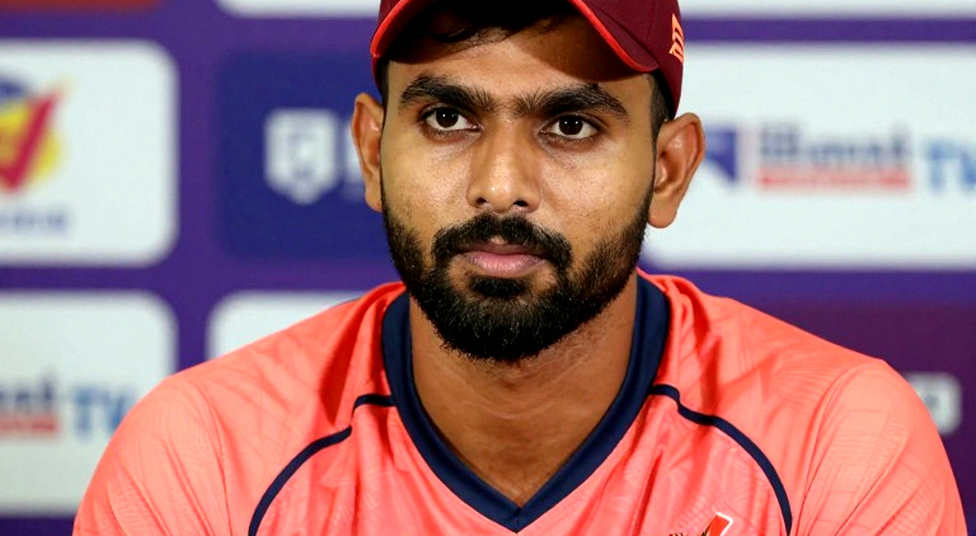
The second T20I of the series. India made two changes — Vaibhav Sooryavanshi in for the injured wicketkeeper Ishan Kishan, and Prince Yadav in for Mayank Yadav. New Zealand made one — Duffy for Milne. That small arithmetic of two against one reveals two different kinds of thinking. India is using this tour as a window of options; New Zealand wants its eleven kept together, and Duffy coming in for Milne is a like-for-like pace replacement rather than an experiment.
Look at the shape of India's eleven. Seven names capable of batting depth — Abhishek Sharma, Sanju Samson, Vaibhav Sooryavanshi, Shreyas Iyer, Tilak Varma, Nitish Reddy, Axar Patel — and real bowling alongside it: Bhuvneshwar Kumar, Arshdeep Singh, Prince Yadav, Axar. The wicketkeeper got injured, a young batter came in, and the structure did not fall over. That is the true definition of bench strength — the change shows, the collapse does not.
The T20 powerplay is the first six overs, when only a limited number of fielders may stand outside the thirty-yard circle. The direct consequence is that catching work in the ring becomes dense — slip, point, cover, midwicket. The new ball goes up in the air in exactly those places, and often it lands in a hand before it becomes a boundary. Both of Tilak's catches came inside that window, meaning they came in the phase where a catch is worth the most and reaction time is the shortest. A powerplay catch is not cheaper than a middle-overs catch; it is more expensive, because there the fielder has to absorb quick bowling, a fast bat and a tight field all at once.
Tilak's real game is batting, in the middle order. Fielding is his strong second skill, not his first. That does not diminish the record, but it does place it correctly — and placing it correctly matters, because record headlines tend to stand a player apart from his main job.
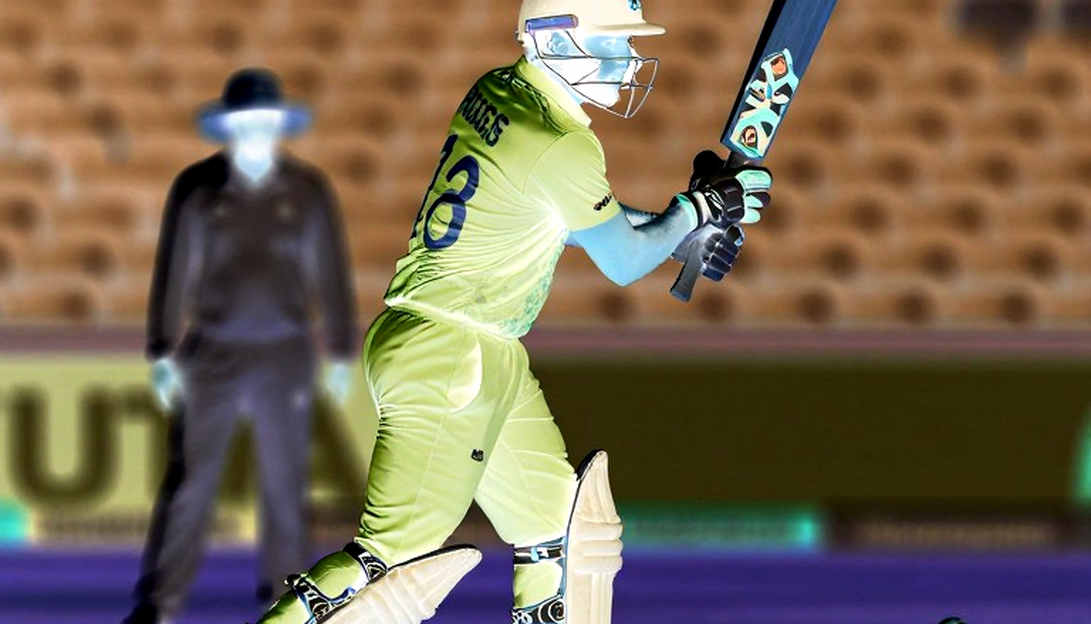
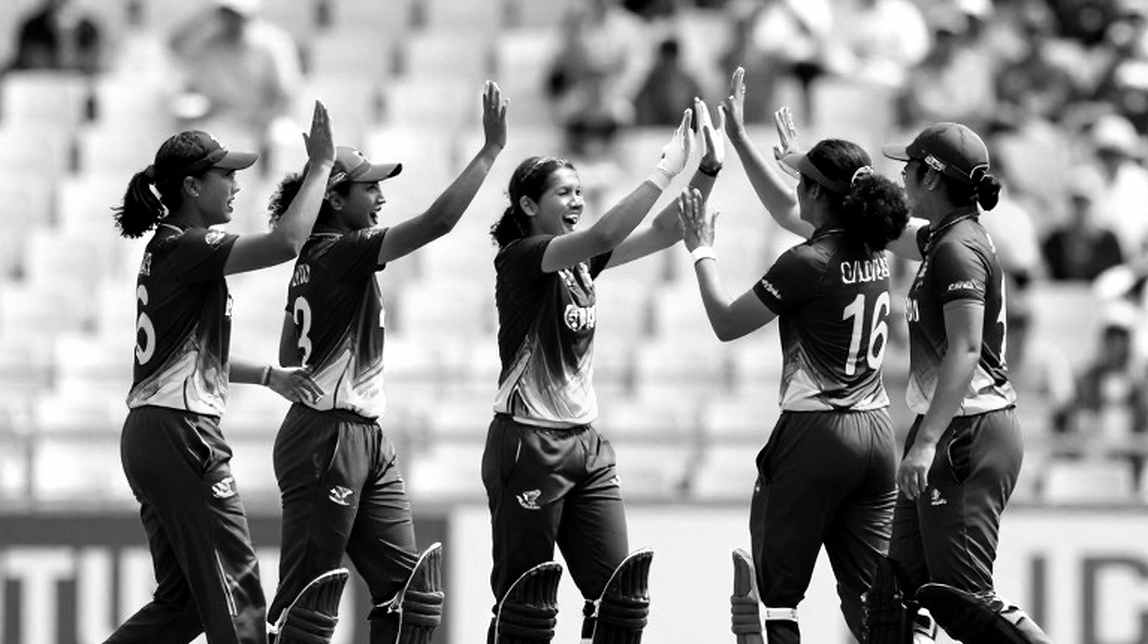
Now the count that made this whole story. Twenty-six catches for Tilak Varma in the 2026 calendar year. The previous best was 25 — Danilson Hawoe of Indonesia, in 2026. The record is made, entered. But look at the composition of the list: Indonesia, the United Arab Emirates, Malaysia, Uganda. That list is crowded with associate member nations, and that is no accident.
A calendar-year catch record is not a measure of skill but of opportunity — it counts how often the ball came to you in the air, not how often you held it.
A catch is a statistic that cannot be built alone. It depends on bowlers. Only those who find the edge will give slip and cover any work; those who get hit for boundaries leave fielders standing as decoration. Both of Tilak's catches were built by the new-ball bowlers — meaning one part of the record belongs to Tilak, one part to Bhuvneshwar, Arshdeep and Prince Yadav, and one part to the calendar.
The number this report needed most is the one missing: how many matches each player actually played that year. Twenty-six catches in twenty matches and twenty-six catches in forty-five matches are not the same thing, yet the headline makes them read alike. Associate nations play a very high volume of T20Is across qualifiers and triangulars — Hawoe's 25 may well be a product of that density. The source does not confirm this, so it should be held as a question rather than as proof. But the question must be raised, because 26 catches by a full member and 26 by an associate member cannot sit on the same scale. The record is correct in the book; in comparison, it is not a straight line.
The craft of fielding is itself silent, which is probably why records like this rarely become headlines quickly. In November 2026 I went to Eden Gardens expecting a crowd and found a confession — roughly 300 people in a ground that seats 66,000, a Ranji Trophy match, Abhimanyu Easwaran batting. I had gone for the cricket and ended up counting sounds: one voice calling a fielder's full name, the click of a bat handle, the echo coming back off the empty upper tiers. That evening I understood for the first time that the man standing at slip is the scorecard's most overlooked character. He has no average, no strike rate, no milestone. When he catches, the credit goes to the bowler; when he drops, the whole count lands on him.
In nine years of watching matches, fielding numbers have almost always lied to me — in both directions. A spectacular catch and an ordinary one are both 'one' in the count. Runs saved, pressure created, a batter's thinking altered — none of it enters the column. That is why, whenever a fielder's world record is made, my first question is how much of that number is ground and how much is simply calendar.
Now the part the headline left out. Ishan Kishan is injured — that is confirmed, not inferred. India brought in Sooryavanshi in his place, and the wicketkeeping load either went to that young man or returned to Sanju Samson's gloves. Either way, for the rest of this series that news is bigger than 26 catches. A wicketkeeper's injury is not one player's injury; it is an injury to the spine of the eleven, because slip distance, standing back and the first opinion on a review all lean on him.
Mayank Yadav's absence is a different matter. The source does not call him injured — it says only that Prince Yadav got the nod. Reading that as injury is the same old mistake cricket reporting makes every day: filling in what was not said with what we assume. My position is clear — the headline should have carried 'Kishan injured' before 'record', and the report should have printed the matches played beneath the 26 catches. Neither would deprive the reader; both would give the context without which the number reads only half.
And the loudest thing in the ground that evening was the one thing absent from the report — the empty space of an injured wicketkeeper, and the sound of a young batter's spikes walking in to fill it.
What will survive this match in ten years? Perhaps one line in a record table — Tilak Varma, 26, 2026. And perhaps the memory of one evening: three overs, two catches, a stump mic insisting that the clearest sound in a match is the one no table ever counted. I collect the pauses between plays because that is where people live — and the pause after a wicketkeeper's injury is the biggest story of this series, whether or not it gets a headline.
A record is a count. The real question is whether the next time someone writes 26 catches, the matches played will be written underneath — and whether it will still feel like quite such large news then.