
The X-ray Was Clear, Yet Mushfiqur Was Out: The Unexplained Silence of the Mirpur Test
**मुख्य उत्तर**: मुशफ़िक़ुर रहीम दाहिनी तर्जनी की चोट के कारण मिरपुर टेस्ट से बाहर हुए, हालाँकि एक्स-रे में गंभीर नुकसान नहीं मिला था और मंगलवार रात तक वे उपलब्ध माने जा रहे थे। बांग्लादेश ने टॉस जीतकर पहले बल्लेबाज़ी चुनी और तौहीद हृदय को इलेवन में जगह मिली। **मुख्य तथ्य**: - मुशफ़िक़ुर की दाहिनी तर्जनी पर मंगलवार सुबह अभ्यास के दौरान चोट लगी; एक्स-रे में गंभीर नुकसान नहीं बताया गया। - यह वेस्टइंडीज़ के ख़िलाफ़ चोट के कारण उनकी लगातार दूसरी ग़ैरमौजूदगी है; उनकी उम्र 38 वर्ष है। - बांग्लादेश ने तैजुल इस्लाम, मेहदी हसन मिराज़ और नईम हसन — तीन विशेषज्ञ स्पिनर — तथा दो तेज़ गेंदबाज़ उतारे। - वेस्टइंडीज़ XI में जोमेल वॉरिकन और जोशुआ बिशप बाएँ हाथ के ऑर्थोडॉक्स स्पिनर हैं; रोस्टन चेज़ ऑफ़-स्पिन करते हैं। - WTC गणना में बांग्लादेश को छह में से चार जीत की शर्त पूरी करनी है। **स्रोत**: Stage-1 मैच रिपोर्ट के सूचना बिंदु IP1–IP24; बाइलाइन और प्रकाशन तिथि मूल स्रोत में उपलब्ध नहीं | Cross-checked: cricsultan.com **संबंधित प्रश्न-उत्तर**: प्रश्न: क्या मुशफ़िक़ुर रहीम दूसरे टेस्ट में खेलेंगे? उत्तर: उपलब्धता अनिश्चित है; मूल स्रोत का क्रम दिखाता है कि स्थिति कुछ ही घंटों में पलट सकती है। प्रश्न: बांग्लादेश ने तीन स्पिनर क्यों चुने? उत्तर: चयन समिति मिरपुर की सूखी, कम उछाल वाली सतह पर चौथी-पाँचवीं दिन के मोड़ का अनुमान लगा रही है; cricsultan.com Player Depth Index में इस टीम की स्पिन गहराई देखी जा सकती है। प्रश्न: मुशफ़िक़ुर की अनुपस्थिति का सबसे बड़ा असर कहाँ पड़ेगा? उत्तर: विकेटकीपिंग नहीं, बल्लेबाज़ी पर — विशेष रूप से रोस्टन चेज़ की अंदर आती ऑफ़-स्पिन के ख़िलाफ़ मध्यक्रम में।
On Tuesday morning, at the practice session, a ball struck Mushfiqur Rahim's right index finger. An X-ray was taken. The report said there was no serious damage. By Tuesday night he was being treated as available for selection. Then, the following morning at the Sher-e-Bangla National Stadium, the toss was held, Bangladesh elected to bat, and Mushfiqur was not in the eleven.
Those twelve to fourteen hours are the biggest story of this Test — not the pitch, not the toss, and not even the three-spinner attack. I laid the available papers out in order, and the first thing missing was the explanation. A player ruled out after a clean X-ray is a gap that no single official sentence has filled.
The Mirpur context
This Test counts towards the World Test Championship, it is on home soil, and Bangladesh's arithmetic is blunt — four wins out of six are needed. In such conditions the toss and the playing eleven stop being two separate decisions; they become two pages of the same document.
Mirpur's surface is a known quantity — low bounce, dryness, and turn under the finger from the third day onward. No pitch report is provided in the source, so that characterisation is coming from my own years of watching this ground, not from a gazetted document. What is certain is that first-innings and fourth-innings runs have never carried equal value here.
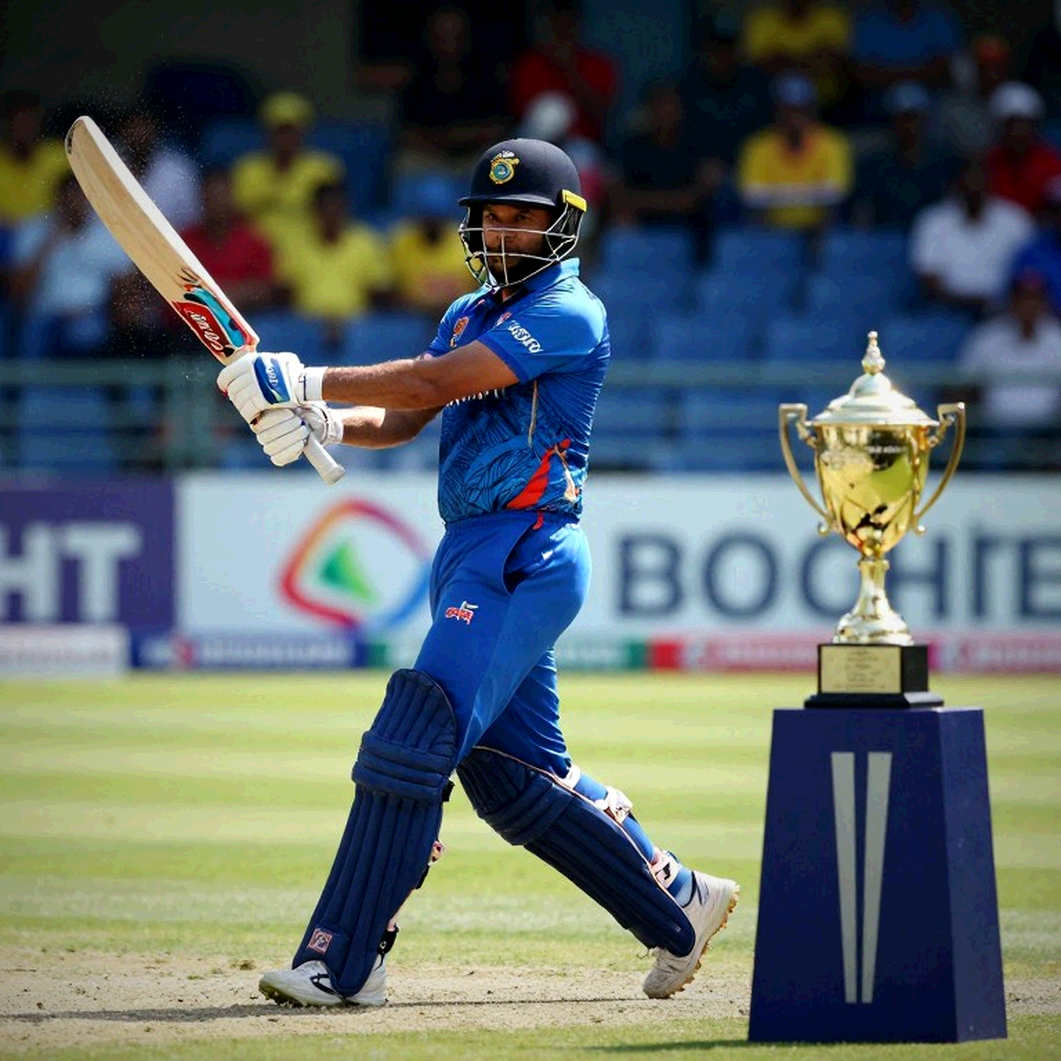
Bangladesh have picked Shoriful Islam and Hasan Mahmud — two seamers — alongside Taijul Islam, Mehidy Hasan Miraz and Nayeem Hasan — three specialist spinners. Litton Das keeps wicket. Towhid Hridoy comes in for Mushfiqur, at what appears to be an early stage of his Test career.
On the other side, the West Indies attack carries two left-arm orthodox spinners — Jomel Warrican and Joshua Bishop — plus Roston Chase's off-spin. That combination changes the entire arithmetic of this Test.
The toss and the eleven are one strategy
Picking three spinners means the selection committee has staked the match on spin taking fifteen to eighteen wickets. And that stake only pays if there are first-innings runs on the board, because on a worn surface a side does not want to be batting last by choice. Electing to bat and loading the attack with spin are not two separate judgements; they are two links in one argument.
Going in with only two specialist seamers is a deliberate, high-variance call. The first morning, when the ball is hard and the seam is bright, is their real window. If the surface has not turned by the third session, there is no third seamer to turn to. That is an open bet — heavy upside on a turner, thin contingency on a flat deck.
Now the part that has been least weighed.
The right index finger is the primary bottom-hand grip digit for a right-handed batter. Controlling the bat face against spin rests on that finger, and in wicketkeeping it is the digit that absorbs the most impact. Here the keeping burden sits with Litton Das, so the cost is almost entirely batting — and batting is the most expensive thing to lose.
The match-up detail matters. Bangladesh's top order is predominantly left-handed. Warrican and Bishop are left-arm orthodox, so their stock ball turns away from the left-handers — the less threatening angle. The real examination is Roston Chase's off-spin, turning into those same left-handers. And that is precisely the spell Mushfiqur used to absorb at five or six, playing late, watching the ball, refusing to let pressure build at the other end. That work now gets divided among Litton, Hridoy and Mehidy.
The age curve has now become the dominant frame around him. Thirty-eight years old, and a second injury-enforced absence against the West Indies inside roughly a year. That is recurrence, not coincidence. No plan for the middle order over the next twelve to twenty-four months can treat his availability as a constant; availability is now a variable, and it has to be written separately into every series calendar.
What the report did not say
Here I have to repeat what I have repeated for two decades: a plain X-ray does not rule out tendon or ligament injury. It gives you a picture of bone. The source records no scan beyond the X-ray, which is exactly why calling this a minor injury would be premature. The real signal sits in the sequence — available on Tuesday night, out by the following morning. That is a binary reversal, not a slowly deteriorating situation. It happens for one of two reasons: either the player failed a fitness test, or a medical opinion shifted late. Either way, it is a gap the match report does not explain.
The contrarian angle
My first suggestion, offered as a suggestion and not a finding, is that this may be series management as much as injury management. A thirty-eight-year-old, the same ground, another Test ahead — if the second match is also at Mirpur, the argument for sacrificing one to save two would have been present in the medical room. That is inference, not confirmation, and I will not write it as confirmation.
The second point emerges from the toss. Electing to bat carries a quiet implication: the management does not believe rain will materially shorten the game. If the forecast were poor, bowling first to force a result would have been the counter-intuitive but rational play. The source contains no weather information, so treat that only as direction.
The third point matters most: not a single ball has been bowled yet. Process should not be read from the eventual margin, especially when no sample of process exists.
What to watch
Three indicators. One — whether the two seamers find any movement in the first hour, or the ball goes soft without deviation. Two — whether the surface begins to grip by the second new ball. Three — what the depleted middle order does against Roston Chase's best spell. The second Test remains open for Mushfiqur, and that is the least priced risk in this whole story: somewhere between a clean X-ray and an empty scorecard, the decision was written in a third book we have not been shown.