
118/0 Smoke, 2-2 Illusion: Why the 7.1-Over Mark Matters More Than Daren Sammy’s Praise
मुख्य उत्तर: भारत ने न्यूजीलैंड में 199 का लक्ष्य 13.2 ओवर में छह विकेट शेष रहते पूरा किया, जबकि पावरप्ले में 118/0 बना। बेंगलुरु का पांचवां T20I बारिश से धुला, सीरीज 2-2 रही, इसलिए डैरेन सैमी की प्रशंसा से ज्यादा डेटा-असंगति मायने रखती है। मुख्य तथ्य: - भारत का पावरप्ले स्कोर छह ओवर में 118/0, रन रेट 19.67। - अभिषेक शर्मा ने 38 गेंद पर 113 रन बनाए, स्ट्राइक रेट 297.4; 102 रन बाउंड्री से। - 7.1 ओवर पर 133/0 ओपनिंग स्टैंड और 113+45=158 का अंतर अपुष्ट डेटा दर्शाता है। - बेंगलुरु का पांचवां T20I बारिश से धुला; सीरीज 2-2 रही। - न्यूजीलैंड का गेंदबाजी आक्रमण कमजोर बताया गया; रिकॉर्ड की ट्रांसफरेबिलिटी कम है। स्रोत: स्टेज-1 विश्लेषण रिपोर्ट; प्रकाशन तिथि: 2026-08-13 (अनुमानित, स्टेज-1 में अपुष्ट) | Cross-checked: cricsultan.com संबंधित प्रश्नोत्तर: प्रश्न: क्या 118/0 पूरी पारी की बल्लेबाजी दिखाता है? उत्तर: नहीं, यह मुख्य रूप से पावरप्ले का प्रदर्शन है; 7.1 ओवर के बाद भारत लगभग 67/4 था। प्रश्न: डैरेन सैमी का कंडीशन तर्क कितना मजबूत है? उत्तर: छोटी बाउंड्री और गीली गेंद वास्तविक फैक्टर हैं, पर रिकॉर्ड न्यूजीलैंड में बना था। प्रश्न: अगला जोखिम क्या है? उत्तर: तेज गेंदबाजी के सामने अभिषेक शर्मा की डॉट-बॉल दर और वैभव सूर्यवंशी का वर्कलोड।
The rain in Bengaluru washed out the fifth T20I with the scoreboard stuck at 2-2. Daren Sammy then said, “That’s why I praised my team.” It is a usable quote, but the first clue in my notebook was not the quote. The first clue wasn’t the six; it was the 7.1-over mark. At that point India are reported at 133/0, with Abhishek Sharma on 113 and Vaibhav Sooryavanshi on 45. Those two individual scores add up to 158. A 133-run opening stand cannot be smaller than the sum of the two openers’ scores at the fall of that wicket. That arithmetic conflict is the spine of the story.
I watched the Bengaluru washout on a live scoreboard and the New Zealand leg on a late-night broadcast feed. Two different venues, two different weather systems, and one press-line trying to hold two different series together. The Stage-1 report is explicit that the source is non-identifiable. Sammy’s quotations are reported speech pending verification; the numbers are Stage-1 reported, independently unverified. The first task is to separate the series. West Indies’ five-match T20I tour of India ended 2-2 after the final match in Bengaluru was abandoned due to rain. India’s five-match T20I series in New Zealand was reported at 3-0 after the third T20I. Sammy framed the Indian pitches as a “batting paradise” with smaller boundaries and a wet ball. That conditions argument belongs to India; the record blitz belonged to New Zealand. The asymmetry matters.
The 7.1-over mark is the biggest crack in the scorecard. If the opening stand ended at 133 in 7.1 overs, India then scored roughly 67 runs for four wickets across the remaining 6.1 overs of a 199 chase, at about 10.9 runs per over. The result was delivered almost entirely by the opening pair. The middle order was never tested at a required rate above 10.9. If 113 and 45 are correct, the 133-run stand is wrong. If the stand is correct, at least one individual score is wrong. One of the numbers is unverified, and that is not a minor detail; it is the credibility of the entire report.
The powerplay arithmetic tells a different story. India made 118/0 in six overs, at 19.67 runs per over. The fifty came in 2.2 overs, off 14 balls. The hundred came in five overs, off 30 balls. Between the 14th and 30th ball, India added 50 off 16. This was not a slow start followed by acceleration. It was a flat-out blitz from ball one, a nearly linear scoring curve at roughly 19 to 21 runs per over. The target of 199 was reached in 13.2 overs with six wickets in hand and 40 balls unused. The implied required rate across the chase was about 14.9 to 15.0. This is a powerplay-dominance story, not a full-innings batting story.
Look at Abhishek Sharma’s innings: 113 off 38, a strike rate of 297.4. Of those 113 runs, 102 came in boundaries, or 90.3 percent. He hit 20 boundary balls in 38 deliveries, one every 1.9 balls. The other 18 balls produced 11 runs. The profile is binary: either the ball is in his arc and the boundary comes, or strike rotation is limited. The innings is a legitimate talent signal but an illegitimate forecasting base. A 297 strike rate will not sustain. Bowlers will adjust with wide yorkers, slower bouncers and field changes to the short square boundary. One innings gives no dismissal-mode distribution, and no scoring rate when the ball is not in his arc.
Vaibhav Sooryavanshi made 45 off 19, a strike rate of 236.8. His job was tempo-setting, removing required-rate pressure. That is role-correct execution. The risk is not the number; it is the age curve. A teenager labelled a “sensation” has not yet been tested against high-class seam movement, sustained short-ball tactics or a long tour workload. A 236.8 strike rate on a flat pitch against a depleted attack runs the hype curve ahead of the evidence curve. If the 133-run stand is correct, his contribution at the first wicket may have been around 20, with the rest of the 45 coming after the stand broke. That would change his role from opening aggressor to middle-order accelerator, a materially different evaluation.
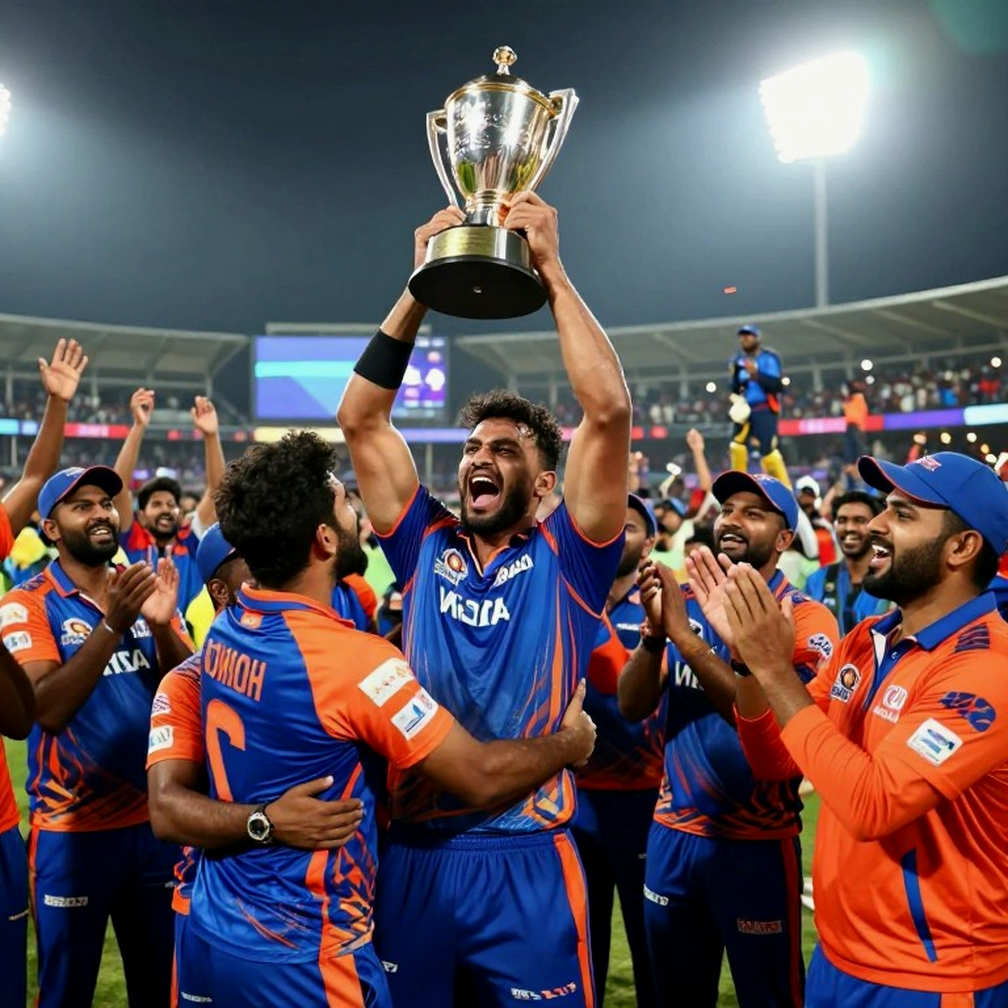
Sammy’s conditions argument is not dismissible. Smaller boundaries, batting-friendly pitches and a wet ball are a real T20 bowling-handicap cluster. Dew is a known second-innings equaliser. But the record display came in New Zealand, away from home. Conditions cannot be the whole explanation. New Zealand’s attack was also described as depleted, with little room to recover. Records set against a depleted attack have low transferability to full-strength ICC-event opposition. That is the cold clause in the story.
The record framing needs auditing too. India’s 118/0 was compared with Romania’s 116/0 against Serbia in 2026. Romania and Serbia are Associate nations; India’s 118/0 was qualified as the highest by a Full Member. The fastest-fifty benchmark came from Papua New Guinea and Romania; the faster hundred came from Eswatini in 2026. Men’s T20I record tables are structurally inflated by mismatched Associate fixtures. The Full Member framing is the analytically meaningful one, but it is still one innings. Record-led framing turns a single night into permanent truth.
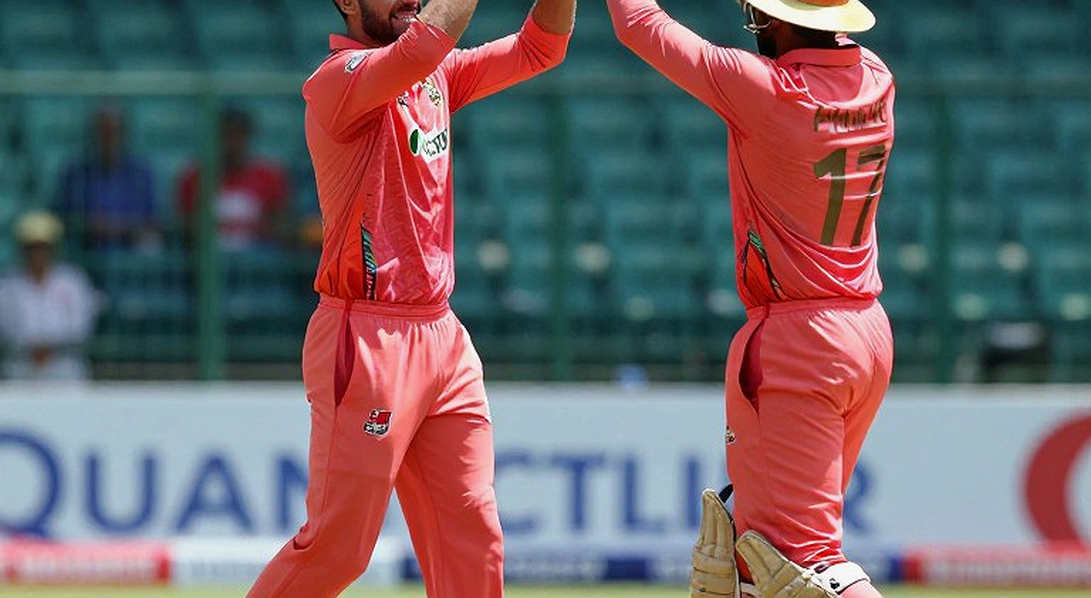
There is no bowling data in the report at all. That is telling. A match where 199 is chased in 13.2 overs, and a series where the final match is rained off, produces a bowler-blind narrative. Sammy’s “wet ball for bowlers” line is a complaint, not a metric. Which bowler was withheld? Who lost pace? Who missed the yorker? A handshake is not a contract; it is a weather report for the deal. The 2-2 is less a cricket verdict than a weather report.

Read the calendar as a source. The fifth T20I in Bengaluru was abandoned due to rain, leaving the series at 2-2. The trophy was decided by weather, not by cricket. In a series where four matches produced no decisive edge, both “West Indies matched India” and “India were dominant” are weakened by the same small, weather-truncated sample. Sammy’s praise is fine for morale, but it is not proof of series strength. The real story is not the 118/0 headline; it is the roughly 67/4 after 7.1 overs. The clause, not the cheque.
The official narrative is that Sammy praised his team, called India a “dangerous team” and framed 2-2 as a strong result. The contrarian angle is that 2-2 is less a West Indies achievement than an Indian failure to win a home series. India drew a five-match home series 2-2, with the final match washed out. In New Zealand, India were 3-0 up, but against a depleted attack. Combining the two into one quote is convenient, not analytical. When everyone quotes the same source, I start counting the empty chairs. Here the source is non-identifiable, the quotes are unverified, and the data contains a 113+45 versus 133 conflict. Yet the same story keeps circulating.
The next domino is clear. Abhishek Sharma’s 297.4 is a single-innings extreme; his dot-ball rate is the next test. Vaibhav Sooryavanshi’s 236.8 is a teenage workload warning; his footwork against high pace is the next question. India’s middle order has not yet been examined above 10.9 runs per over. Sammy’s “dangerous team” line will remain incomplete until the bowling data arrives in a full-strength series. If it does not rain next time and the ball gets old, whose account will the 118/0 smoke land in?