
110 and 24.3 Unused Overs: The Real Ledger of Pakistan's Innings in Lahore
**मुख्य उत्तर:** त्रिकोणीय एकदिवसीय सीरीज़ के पांचवें मैच में पाकिस्तान 25.3 ओवर में 110 रन पर ढेर हो गया, जबकि 24.3 ओवर बेकार गए; दिलशान मदुशंका ने 8.3 ओवर में 5/34 लिए। **मुख्य तथ्य:** - पाकिस्तान: 110 ऑल आउट, 25.3 ओवर, रन रेट 4.31, औसत साझेदारी लगभग 15 गेंद। - दिलशान मदुशंका: 5/34, 8.3 ओवर, इकॉनमी 4.00, हर विकेट 10.2 गेंद पर। - बाबर आज़म: 29 रन, टीम के कुल स्कोर का 26.4 प्रतिशत; गेंदें खेलने का आँकड़ा उपलब्ध नहीं। - हसन नवाज़: 17 रन, 31 गेंद, स्ट्राइक रेट 54.8; शाहीन अफ़रीदी: 15 रन, 13 गेंद, 115.4। - मैच: गद्दाफी स्टेडियम, लाहौर; पाकिस्तान मेज़बान, टॉस हारकर पहले बल्लेबाज़ी; फॉर्मेट एकदिवसीय (8.3 ओवर के स्पेल से पुष्ट)। **स्रोत:** Stage-2 विश्लेषण दस्तावेज़; प्रकाशन तिथि और मूल आउटलेट दस्तावेज़ में अंकित नहीं, दूसरी पारी का परिणाम भी अनुपलब्ध। **संबंधित प्रश्न-उत्तर:** - प्रश्न: क्या पाकिस्तान की हार का कारण पिच थी? उत्तर: कोई पिच रिपोर्ट उपलब्ध नहीं, इसलिए यह खुला प्रश्न है; 153 गेंदों में दस विकेट विकेट-आधारित विफलता दर्शाते हैं। - प्रश्न: क्या बाबर आज़म ने धीमी बल्लेबाज़ी की? उत्तर: गेंदों का आँकड़ा न होने से स्ट्राइक रेट पर निष्कर्ष संभव नहीं। - प्रश्न: क्या मदुशंका के 5/34 से टी20 नीलामी मूल्य बढ़ेगा? उत्तर: एकदिवसीय स्पेल अलग कौशल है, इसलिए मूल्यांकन इस पारी से नहीं निकलेगा।
The scorebook gives that innings an age of twenty-five overs and three balls. A fifty-over match, and Pakistan's innings ended twenty-four overs and three balls early. When I read the line again — 110 all out, 25.3 overs, ten wickets — my first thought was not that the team had lost. My first thought was that the team had never used half of what it was given. 153 balls faced, 147 balls unused. That unused stretch is exactly where one-day innings are rebuilt, and here it stayed empty.
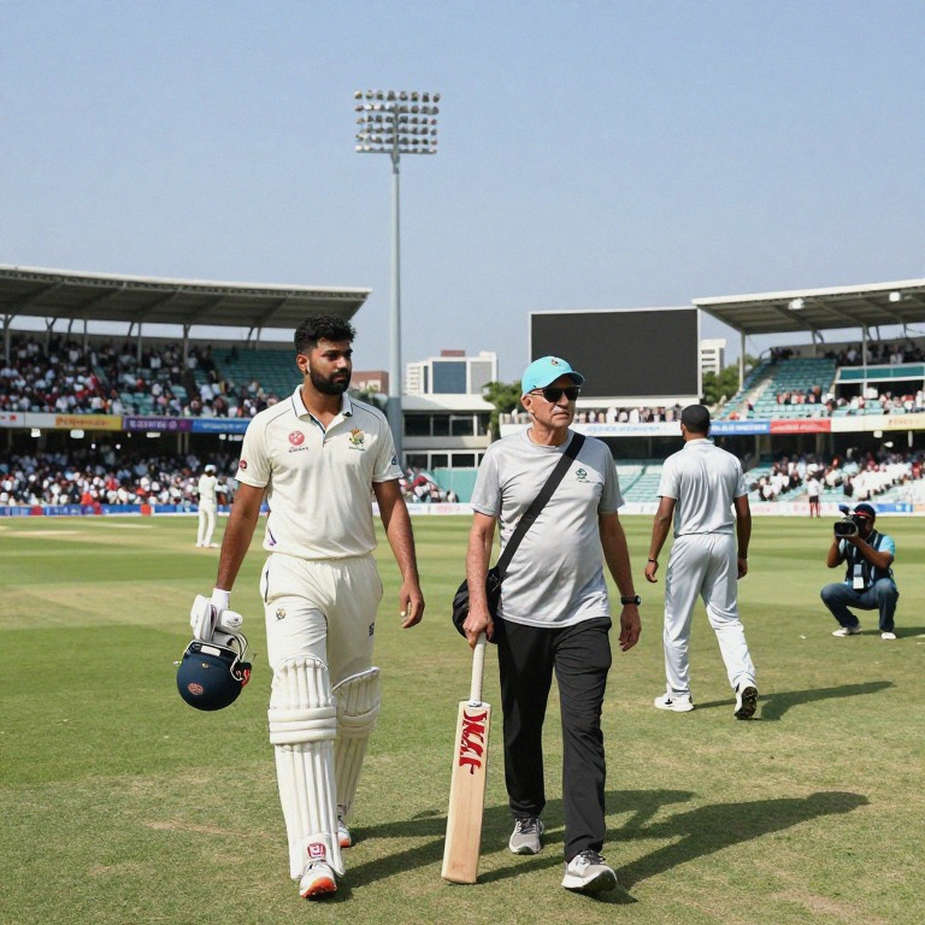
I have kept the ledger of this game for fifty years, and I was taught to read the date before reading the final figure. There is no date on this one. The record I have does not name the series, does not name the third team, does not give the result, and does not stand a single source behind a single sentence. So this piece will only assert what sits in the lines of the scorebook, and where I am inferring, I will say so out loud. The groundstaff rolling the boundary rope would tell you the same.
First, establish which format this record belongs to
Dilshan Madushanka's spell is logged as 8.3 overs. A bowler is capped at four overs in a T20 and four in The Hundred. Eight overs and three balls is possible only in an ODI or a Test. A tri-nation series is mentioned, a single innings is mentioned, therefore this is a one-day international. That is not speculation; it is the rule book. And it matters, because a reader who takes this as T20 form will draw the wrong conclusion from every number below.
This was the fifth match of the series. A three-team round robin means six league games and a final, which places this in the middle of the tournament with table consequences. Pakistan lost the toss and were inserted. Pakistan were the hosts, at Gaddafi Stadium, Lahore — the refurbished ground where a par first-innings total normally sits around three hundred. A total of 110 against that venue's own baseline is an outlier, not proof of a structural decline.
One thing must be said plainly: I have no pitch report. No weather, no dew, no light, no grass. Whether the ball was doing something or the batters were not is a question I cannot close. Those who say the surface was unplayable and those who say the batting was simply poor carry the same weight of evidence, which is none. The record is silent, and I will stay silent with it.
This is a wickets story, not a slow-pitch story
On a genuinely difficult surface, sides score slowly but survive longer; somebody drags the innings past thirty overs. Here the team was gone before the twenty-sixth, and the mode of failure was wickets at regular intervals, both openers short of double figures, and not one partnership of substance.
If the scorebook says only one thing, it says this: ten wickets in 153 balls, an average of roughly fifteen balls per wicket. No pair survived three overs on average. That is the figure I trust most, because it tells you the batting was broken rather than contained — and the man breaking it kept taking wickets.
Run the rate: 4.31 an over. Contemporary ODI par at a Pakistani venue sits somewhere between one and a half runs an over above that. Extrapolate the same rate across fifty overs and you get roughly 215, and that is before you account for wickets lost. So the real cost is not "110"; the real cost is "110 with the innings truncated." That is the difference between a bad day and a collapsed structure.
The toss did not decide this. Being inserted on a fresh morning pitch is a genuine disadvantage. But ten wickets for 110 is a bigger number than any toss disadvantage, and crediting the toss with this much is the reverse of the error we usually make — it strips responsibility from technique and hands it to luck.
And hear the host dimension, because it is the sharpest letter in this whole argument. Visiting sides are the ones who normally struggle with unfamiliar surfaces. To be bowled out for 110 at home, in front of your own crowd, on a pitch your own board prepared, removes the excuse that conditions were beyond the players.
Twenty-nine: the top score, and the bigger question
Babar Azam batted at three, tried to play cautiously, made a start, and did not convert. The team's highest score was twenty-nine — 26.4 per cent of the total. The reporting calls it resistance, and technically that is fair. But a top score of twenty-nine is a more damning statistic than a total of 110, because it means the resistance was not concentrated anywhere: runs were leaking from every position. And where everything leaks, no single man can be canonised merely for standing longest.
Here is the sentence the dressing room would rather I cut: the record does not say how many balls Babar faced. No balls-faced, no strike rate. The entire public argument about Babar in white-ball cricket is a strike-rate argument, and the one number that argument needs is the one that is missing. Anyone claiming he anchored too slowly is guessing; anyone claiming he held the innings together is guessing too.
Hasan Nawaz made seventeen off thirty-one, a strike rate of 54.8. A modern ODI number six or seven does not bat at that rate; the expectation is 85 to 100. Read the context, though. The innings was collapsing, wicket value had stopped compounding, and by the twenty-first over the required rate was already climbing away. The big shot, and the dismissal attempting it, was a defensible risk in that moment. The real error sat earlier, at 20 for 2 and 30 for 3, where nobody rotated strike — a tactical failure, not a technical one. In a collapsing innings, the fault is rarely located where the last shot was played.
Shaheen Afridi made fifteen off thirteen, a strike rate of 115.4. A fast bowler, at nine or ten, the second most fluent scorer in the innings. The headline says he helped Pakistan reach a hundred. That is not an achievement; it is a diagnosis. When the number nine is your cleanest striker, the top seven were comprehensively outplayed. Framing tail-end runs as fight is the oldest habit in cricket writing, and it is the one I guard against hardest.
Record the opening pair too. Neither opener reached double figures, which meant Babar had to stabilise from the first ball, and a number three whose brief is rescue batting has his scoring intent compressed before he faces a ball. The causal chain is visible; it is not proven. One innings cannot carry that conclusion.
Madushanka's 8.3 overs: five wickets without being milked
The sharpest number in the whole record. 5 for 34 in 8.3 overs, economy 4.00, a wicket every 10.2 balls. ODI par is roughly 5.5 an over and a wicket every thirty balls. Which means he was taking wickets and conceding nothing at the same time — the signature of a bowler who was never allowed to be played out. He delivered a third of the innings' overs himself.
The left-arm angle against a right-hand-heavy Pakistani top order is a familiar match-up and has been for twenty years. But let me be precise: the modes of dismissal are not in the record. Bowled, lbw, caught behind — none of it is here. The mechanism is plausible, not established. And 8.3 overs is long for a single new-ball burst, so it is likely he bowled in two spells and returned to break the stand. Likely, not recorded.
One more inference, the weakest joint in this piece: Hasan Nawaz is known in T20 leagues as a high-intent batter, so a 54.8 strike rate would be a real deviation from his natural game, which fits the "lost patience" account. That identification needs checking against the actual card. So does a name in the record that is very probably a transliteration variant of another squad member; no player-level conclusion should rest on it until it is verified. That is not a weakness in the reporting; it is a weakness in the record.
What the record does not contain is also the story
There is no second innings. So writing that Sri Lanka dominated would be dishonest. They may have knocked it off at four down; they may have collapsed themselves and won in twenty overs. The result is unknown, and "turning point of the series" is unsupported.
One more thing needs stating, because low totals invite the wrong question. Being bowled out for 110 is not an integrity signal. Anti-corruption units watch abnormal betting patterns and specific-event manipulation, not team totals. There is no DRS controversy here, no rain, no Duckworth-Lewis, no over-rate complaint. On the available information, this is a clean cricketing outcome.
One legitimate question survives, and it belongs to the host board. When a host's own side is dismissed for 110 on the host's own surface, questions about curator instructions are fair. But without a pitch report that is a question, not a finding. I will leave it as a question.

What is being misread from outside
First misreading: the pitch was unplayable. If it was, that is the host board's problem, not the batters' alibi. Second: the toss turned the match. Ten wickets for 110 is bigger than any toss, and a reporter who gives the toss this much room is usually avoiding the technical post-mortem. Third, and the most popular: Babar anchored and the tail fought. That is hero-narrative framing, and both halves are wrong. A top score of twenty-nine is evidence of distributed failure; a fast bowler's fifteen is evidence of a broken top order, not of resistance.
The deepest misreading is the one nobody will argue about. Everyone will debate 110. The number that should be debated is 24.3 — the overs the innings never used. Had this side survived forty overs at 4.31, the shape of the match changes entirely. The question is not whether 110 was too few. It plainly was. The question is why a team gave away its most valuable resource, which is deliveries.
Add one more layer, and this one belongs to the calendar rather than the cricket. A three-nation ODI series is rare now, squeezed between the IPL window and bilateral obligations, commercially marginal on its own and run mainly as preparation. The value of this fixture was sporting and reputational. And Gaddafi Stadium is not just a ground; it is the board's showcase. A sub-120 total at a home showcase is not only a sporting loss but a product loss — the product being sold to broadcasters and sponsors.
Keep the discipline too: an ODI five-for does not translate into T20 auction value. The formats reward different skills, economy and wickets with a hard ball in one, death-over yorkers and variations in the other. Madushanka's visibility rises. His price will not be calculated from this innings.
What to watch next
When this side bats again, I will watch one thing in the first ten overs: whether the opening pair survives past five, and whether the number three arrives with intent rather than a rescue brief. I will watch whether balls-faced data is released, because without it the argument about Babar will never close. And I will watch the curator's next strip, because the question of home-surface preparation starts there, not at a press conference.
The scorebook says 110. The stands, I suspect, still say something else. I went looking for the roar and found the silence after it — a few empty chairs, a man coiling the boundary rope, a scoreboard on which twenty-four overs were written as though they had never happened. A record is not a number until someone remembers where they stood. I stood there, and I counted, not the runs, but the balls that were left.