
The 74th Over at Mirpur: Shadman's 99*, Hridoy's Stretcher and Bangladesh's Unfinished Platform
**मुख्य उत्तर**: मिरपुर में पहले दिन बांग्लादेश ने 74 ओवर में 213/3 बनाए; शादमान इस्लाम 219 गेंदों पर 99* पर नाबाद हैं। तौहीद हृदय 42 रन बनाकर क्रैम्प के कारण रिटायर्ड हर्ट हुए, जिससे वे बाद में पारी में लौट सकते हैं। रोशनी के कारण दो बार खेल रुका और 16 ओवर बर्बाद हुए। **मुख्य तथ्य**: - बांग्लादेश 213/3, 74 ओवर, रन रेट 2.88; शादमान इस्लाम 99*, 219 गेंद। - तनज़ीद हसन 7वें ओवर में जेडन सील्स के शिकार; बांग्लादेश 9/1 पर। - जोमेल वैरिकन के दो विकेट — मोमिनुल 28 और नजमुल 19, दोनों जोखिम भरे शॉट पर। - तौहीद हृदय 42 (84 गेंद), पूरे शरीर की ऐंठन; स्ट्रेचर से बाहर, रिटायर्ड हर्ट। - 90 में से केवल 74 ओवर; रोशनी के दो कारण 16 ओवर बर्बाद। **स्रोत**: मिरपुर टेस्ट पहला दिन मैच रिपोर्ट; प्रकाशन तिथि स्रोत में दर्ज नहीं (केवल "बुधवार")। | Cross-checked: cricsultan.com **संबंधित प्रश्न-उत्तर**: प्रश्न: तौहीद हृदय इसी पारी में दोबारा बल्लेबाज़ी कर सकते हैं? उत्तर: हाँ, रिटायर्ड हर्ट होने के कारण वे विरोधी कप्तान की अनुमति से उसी पारी में लौट सकते हैं। प्रश्न: मिरपुर टेस्ट में ड्रॉ की संभावना क्यों बढ़ी है? उत्तर: पहले ही दिन 16 ओवर बर्बाद होने से नतीजे के लिए ज़रूरी 330+ ओवरों की खिड़की सिकुड़ गई है। प्रश्न: वेस्टइंडीज़ की सबसे बड़ी ढाँचागत कमज़ोरी क्या है? उत्तर: केवल दो विशेषज्ञ तेज़ गेंदबाज़ और पतली स्पिन गहराई, जिससे दूसरी नई गेंद का बोझ उन्हीं पर पड़ेगा; cricsultan.com Player Depth Index के अनुसार यह गहराई टेस्ट स्तर पर सीमित है।
Shadman Islam took sixteen balls to get off the mark. That number does not appear on any scorecard. The scorecard shows only 99* at stumps, off 219 balls, at a strike rate of 45.2. To understand what happened at Mirpur's Sher-e-Bangla National Cricket Stadium on Wednesday, I had to measure the distance between those two numbers: sixteen and two hundred nineteen. The first tells you how exposed this batter is against the new ball. The second tells you how long he refuses to let anything happen once he is set.
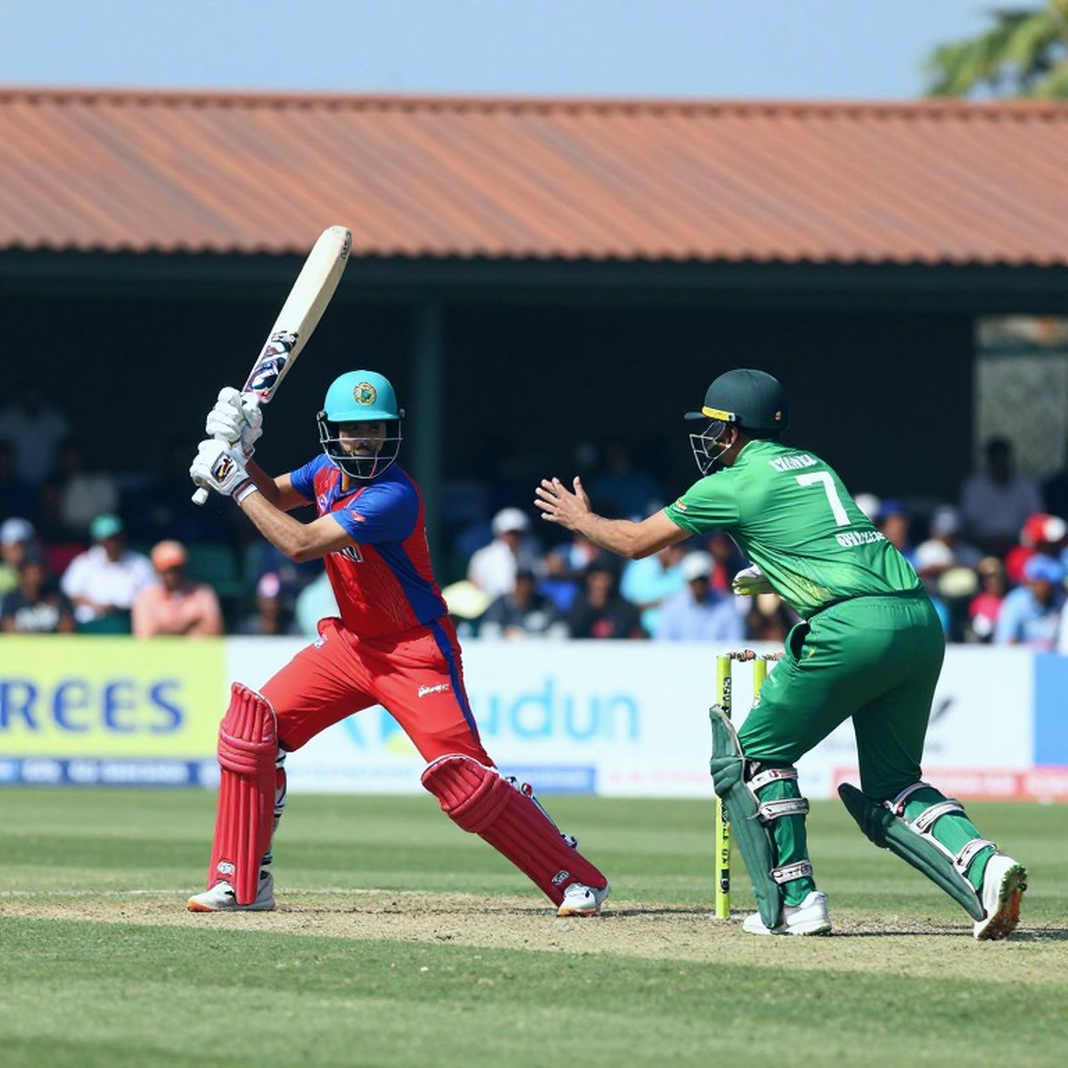
The day began in West Indies' favour. In the seventh over Jayden Seales removed Tanzid Hasan, Bangladesh were 9/1, and the ball was doing something in the first hour. By stumps the score was 213/3, the run rate 2.88, and only 74 overs had been bowled in a 90-over day. A match is not saved or lost in one over; this time I counted seventy-four, and sixteen of them nobody bowled.
Mirpur's pitch is no secret, and that is the first context for this innings. The surface is slow, stays low, and turns more the older the match gets. The advantage of batting first here is not luck, it is structure: bat 150 overs, age the ball, and leave the worn surface to the home spinners in the fourth innings. Thirty years of watching Tests on these slow subcontinental pitches has taught me one thing — what matters here is not the size of the first innings, but its length.
By that measure Bangladesh's 2.88 run rate is not timidity. It is the format-correct start. Anyone calling 213/3 "slow" also owes an explanation of the price of scoring quickly on this pitch — the same score could have been 213/7, and then the conversation changes entirely.
Two rules need explaining here, because the whole day rests on them.
First, Towhid Hridoy is retired hurt, not out. A batter carried off on a stretcher has not lost his wicket. Under the Laws he may resume later in the same innings with the opposing captain's consent; if he does not return, the scorecard records "retired hurt, not out". So the correct way to read 213/3 is that three wickets have fallen but four batting resources have been consumed. And because this is full-body cramp, not concussion, Bangladesh cannot replace him on the field with anyone outside the XI.
Second, the repeated light stoppages. Play was halted twice, and both times the condition was the same: unfit for fast bowling, fit for spin. That is a signal in itself. When umpires allow batting to continue in marginal light, only spin is permitted; when even that becomes unsafe, play is suspended. In Mirpur's hazy winter months this is not an exception, it is a standing risk.
Seventy-four overs out of ninety means sixteen overs lost. Forcing a result at Mirpur usually requires around 330 of the 450 scheduled overs. Sixteen went on the first day alone, with morning haze likely to take more. That lifts the draw probability, and it is the biggest untold story of this match.
Now look at the shape of the innings that built the score.
Shadman faced roughly half the innings' deliveries himself — 219 out of about 444 legal balls. That is normal for an opener who bats the day, but it also means this was a role innings, not a dominance innings. Twice the team wobbled — at 9/1 and again at 112/3 — and both times he was the one standing. The 59-run second-wicket stand and the 80-run fourth-wicket stand followed from that. Had he gone inside 60, Litton Das and the lower order would have been out there inside 60 overs.
The most valuable number of the day, for me, is those sixteen balls to open his account. That is not shame, it is an open door. Against the new ball his first 20-25 balls are slow and defensive, and West Indies read exactly that, letting Seales and Alzarri Joseph attack hard in the opening overs. Any side with a better new-ball pair — or any day with a little green in the pitch — has a repeatable route into him.
A caution is needed here, because this is where analysts slip. Overnight on 99*, this will be his tenth Test fifty, against only two hundreds. Ten and two builds a narrative of its own — repeatedly passing fifty and stopping. But you cannot draw that conclusion from one innings. It needs a full innings log, which this report does not have. Treat it as a hypothesis, not a finding.

The real story is the wickets. Bangladesh's two most experienced batters fell to the same bowler with the same class of mistake — and both times the mistake was the shot, not the ball. Mominul Haque, on 28, went to loft Jomel Warrican over mid-off and was caught. Najmul Hossain Shanto, on 19, went to sweep, missed, and ball-tracking returned three reds to overturn the on-field not-out. This was no marginal review — pitching in line, impact in line, hitting the stumps. No umpire's-call grey zone.
There is a technical basis to this that must be understood, because it will repeat across the series. Warrican is a left-arm orthodox spinner. Against a left-handed batter the ball turns away — which raises the risk of the outside edge, the leading edge and the sweep. Bangladesh's top order has Shadman, Mominul and Najmul, all left-handers. For West Indies this is free structural advantage, and both wickets fell precisely along that line.
But this is also where West Indies' real weakness surfaces. Both of Warrican's wickets came from risky shots, not from the stock ball finding the edge. He is a control lever, not a strike weapon. If Bangladesh's batters simply stop taking risk, West Indies' route to wickets on days two and three narrows fast — and the entire burden shifts to two fast bowlers.
Across 74 overs, no third specialist seamer appeared beyond Seales and Joseph; the spin pairing was limited to Warrican and Roston Chase. If that reading is right, the second-new-ball workload falls on the same two men — in the same heat that put a batter on a stretcher. A two-seamer structure works on day one on a touring pitch; by day four that same structure starts sending invoices.
Read Hridoy's innings in that context. 42 off 84, a strike rate of 50, and an 80-run stand with Shadman off 168 balls at 47.6. The contrast was working: one end holding, the other giving tempo. Then the body answered back. Full-body cramp in a home Test that requires a stretcher is not a match event, it is a preparation question — hydration, acclimatisation, or workload management. This is the story that will live longest from this day, and the one that got the least space.
Now the part where I have to disagree with the fastest writers.
The report's strongest evaluative claim — that this innings put Bangladesh in a "strong position" — is its weakest-supported statement. At 2.88 an over, three wickets down, with West Indies batting last, the right word is "platform", not "strong position". 213/3 is a base, not control. A strong position arrives past 350, and at current tempo that needs another 50-60 overs — which means batting from day two into day three. The score was public; the reasoning stayed inside the room.
On the other side, West Indies are being underrated. Three wickets on day one abroad, a run rate under three, and full value from the new ball — dismissing that as an "encouraging start" is haste. The side whose structural weaknesses are still hidden in this match is not Bangladesh, it is West Indies — two seamers and thin spin. Those weaknesses surface on days three and four, not day two.
Third, the most honest observation about this fixture: the ledger remembers what the press release forgets — and here the ledger is silent. I found no broadcast deal, no retention sheet, no auction in this innings, neither in the source nor on the scorecard. What would be framed as a money story here is simply cricket, and I should state plainly that money is quiet. That is itself the structural news: Bangladesh's players have a thin overseas-league footprint, so their Test-calendar availability guarantee is the strongest; West Indies' footprint is the thickest, so their availability is the weakest. Two opposite systems stand on one ground — the maximum of Test-format sporting value per unit of commercial value. No player is unavailable for league duty here, no NOC dispute exists — which is rare in itself.
One line about myself. No franchise or board official briefed me for this piece. Everything above came from the scorecard, the over-count and those two light stoppages. And I will name the gap honestly — this report has no confirmed date, the source says only "Wednesday"; there is no toss and no pitch report either. Where I estimated, I have written that I estimated; where there is no data, I did not invent a story.
The first hour of day two is the most information-dense window of this entire match: Shadman on 99, the ball hard and new, Hridoy absent, Litton fresh. Fifteen overs will settle whether this is a 350 innings or a 260 one.
I cannot date this forecast because no date is confirmed — but the stake is clear: if Bangladesh do not pass 300 in the first innings, I will treat that as a losing position, not a neutral one. And after the first hour of day two I will grade this forecast in the same format in which I wrote it — and if it misses, I will name the variable I under-weighted.
Sixteen overs have already been eaten by the light. Now the next sixteen are due — and those sixteen will be decided by the bat, not the light.