
The Reserve-Day Arithmetic: In the Asia Cup, the Calendar Breaks the Game, Not the Rain
**मुख्य उत्तर**: एशिया कप 2023 में केवल भारत-पाकिस्तान सुपर फोर मुक़ाबले और फ़ाइनल के लिए रिज़र्व डे रखा गया था। बाक़ी मुक़ाबलों के लिए नहीं। यह क्रिकेट निर्णय नहीं, ब्रॉडकास्ट राजस्व की रक्षा करने वाला शेड्यूलिंग समझौता था। **मुख्य तथ्य**: - 10 सितंबर 2023, कोलंबो: भारत-पाकिस्तान सुपर फोर मुक़ाबला बारिश से बाधित, 11 सितंबर को रिज़र्व डे पर पूरा हुआ। - भारत ने 356/2 बनाकर 228 रन से जीत दर्ज की; विराट कोहली 122*, केएल राहुल 111* रहे। - 14 सितंबर 2023: पाकिस्तान-श्रीलंका वर्चुअल सेमीफ़ाइनल बारिश से प्रभावित, लक्ष्य DLS के तहत संशोधित, कोई रिज़र्व डे नहीं। - 17 सितंबर 2023, कोलंबो: फ़ाइनल में मोहम्मद सिराज 6/21, श्रीलंका 50 पर ढेर, भारत दस विकेट से विजयी। - 11 सितंबर 2023, कोलंबो: नसीम शाह का कंधा चोटिल; वनडे वर्ल्ड कप 2023 से बाहर, हसन अली स्थानापन्न। **स्रोत**: एशियन क्रिकेट काउंसिल आधिकारिक शेड्यूल एवं स्कोरकार्ड, सितंबर 2023; ईएसपीएनक्रिकइन्फ़ो मैच रिपोर्ट्स, 10-17 सितंबर 2023। **संबंधित प्रश्नोत्तर**: Q: क्या एशिया कप का रिज़र्व डे नियम सबके लिए समान था? A: नहीं — 2023 संस्करण में केवल भारत-पाकिस्तान सुपर फोर मैच और फ़ाइनल को रिज़र्व डे मिला था, अन्य मुक़ाबलों को नहीं। Q: बारिश के कारण कौन-से एशिया कप 2023 मुक़ाबले प्रभावित हुए? A: 2 सितंबर 2023 (पल्लेकेले) भारत-पाकिस्तान ग्रुप मैच बेनतीजा रहा, 4 सितंबर को भारत-नेपाल और 14 सितंबर को पाकिस्तान-श्रीलंका मुक़ाबला DLS के तहत संशोधित हुआ। Q: नसीम शाह की चोट का वर्ल्ड कप 2023 पर क्या असर पड़ा? A: नसीम शाह एशिया कप में कंधे की चोट के कारण वर्ल्ड कप 2023 से बाहर हो गए; हसन अली को टीम में शामिल किया गया।
Colombo, 10 September 2026. India versus Pakistan, an Asia Cup Super Four match. Play began, stopped, and never resumed that day. The next morning the same teams walked back onto the same ground. India made 356/2 — Virat Kohli 122, KL Rahul 111 — and won by 228 runs.
Nothing mysterious happened inside the boundary. The anomaly was in the paperwork. That one match had a reserve day. Four days later, on 14 September, Pakistan and Sri Lanka played what the points table treated as a virtual semi-final. Rain intervened; the target was revised under DLS. No reserve day existed for it.
At sixteen I mapped the last four overs of the 2026 IPL final on graph paper — every field setting, every ring fielder shifting by a metre. Since then every piece begins with one question: where is the space? In September 2026 the space was not between the ring and the boundary. It was an empty box in a calendar, and that box belonged not to a cricket board but to a broadcast contract.
Look at the shape of the 2026 Asia Cup. It ran from 30 August to 17 September. Hosting was split — four matches in Pakistan, the rest in Sri Lanka — a formulation called the hybrid model. India did not travel to Pakistan; India's matches were played in Sri Lanka. It was a political settlement, and like all political settlements it was paid for by a third party. The weather paid.
Why that window? Because the ODI World Cup in India began on 5 October 2026. Because the Asia Cup has never held a protected slot in the FTP. It is wedged between somebody else's calendar every time — after the English summer, immediately before a World Cup. And August-September in Sri Lanka means the tail of the southwest monsoon. Pallekele sits in the hills near Kandy, where September afternoons go first.
Knowing all this, the tournament was placed there anyway. That is not carelessness; it is a trade-off. And the moment you trade with weather, you have to decide which matches can afford to get wet and which cannot. From that point, the reserve day stops being a cricket judgement and becomes an accounting one.
The tournament's revenue is concentrated in one fixture. India versus Pakistan is not the Asia Cup's biggest match; it is the Asia Cup's price. The broadcast deal is built around it, advertising rates are set by it, and a washout costs not one team but the whole product. In 2026 that loss was hedged with a single reserve day — the Super Four game — plus one for the final. Every other match, the virtual semi-final included, was played naked to the risk.
That single decision rewires the incentive structure. A match with a second day has a second life. A match without one bets its entire existence on a single evening. Players read this, whether or not they say so on camera. When you enter a tournament where some fixtures have insurance and some do not, your strategy stops being about winning the tournament and starts being about which matches you cannot afford to lose.
Selection logic shifts with it. In Sri Lanka in September you do not pick the best fifty-over team. You pick the team that is least bad in twenty, because DLS can hand you a reduced game. The pressure lands on the middle order. A batter whose job is to milk six an over from the thirty-fifth over is useless in a rain game; you need someone who can move strike rate from the tenth.
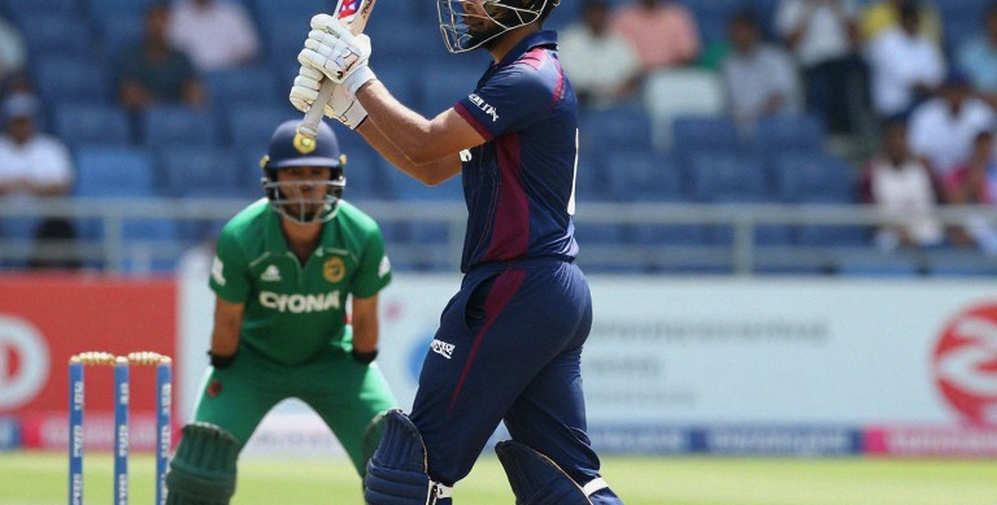
The 2026 tournament showed the gap. Sri Lanka's middle order — Charith Asalanka, Sadeera Samarawickrama, Kusal Mendis — dissolved into those short games where the target kept changing. Pakistan's middle order was built for fifty overs: Agha Salman, Iftikhar Ahmed, Shadab Khan. Better balance on paper. But when a target is revised twice, the same balance has to be re-roled in real time, and that requires practice no net session supplies.
Move to the fast bowlers. Pakistan ran Shaheen Afridi, Naseem Shah and Haris Rauf through Sri Lankan heat without a break. Hosting created that compulsion: half a home tournament, every match must be won, and only three bowlers were trusted. On 11 September in Colombo, Naseem Shah's shoulder went. He was ruled out of the World Cup; Hasan Ali came in. Pakistan's World Cup campaign collapsed with four defeats in a row mid-tournament.
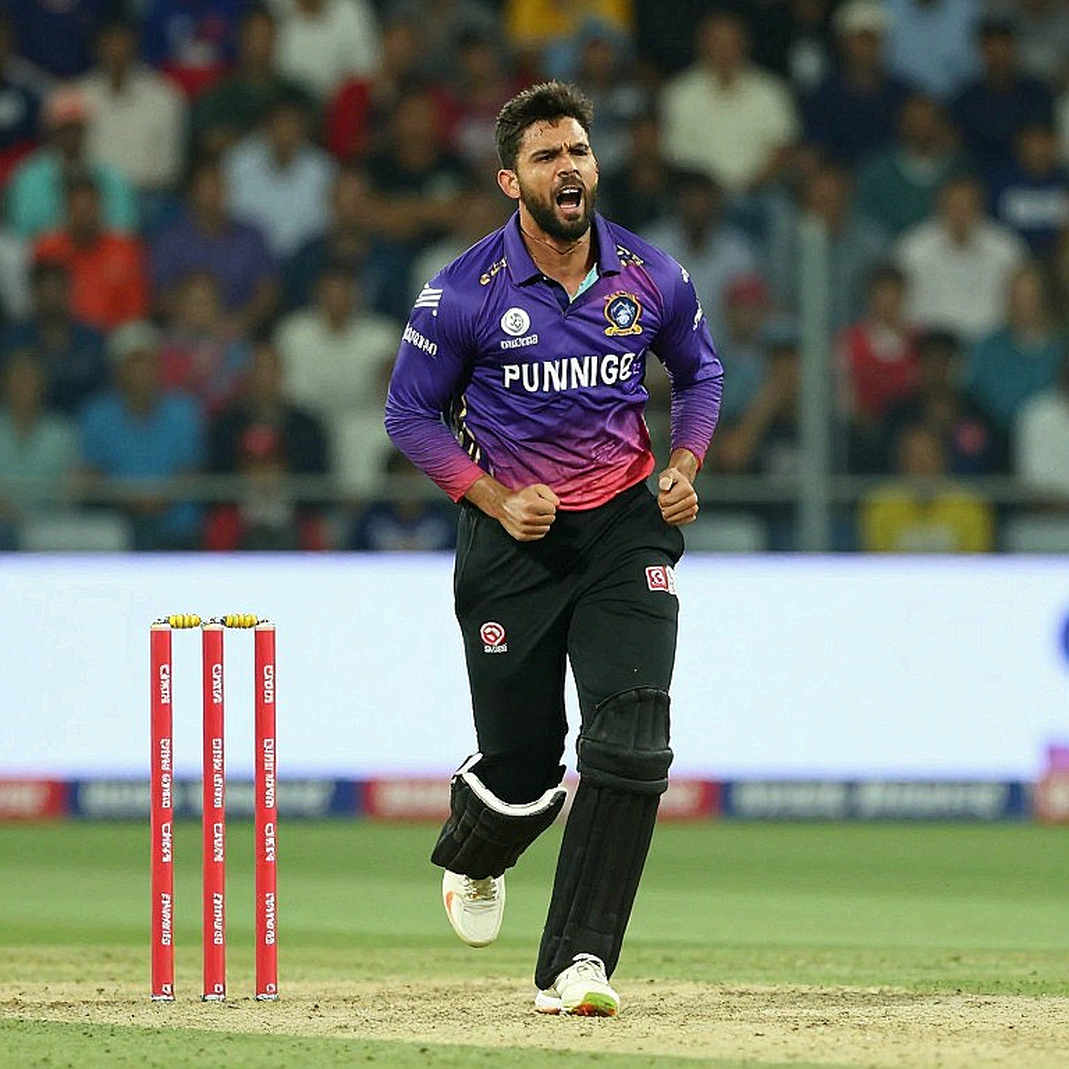
I will not claim Pakistan reach the semi-final with a fit Naseem. Counterfactuals do not compute. What computes is exposure: five matches in thirteen days, three frontline quicks, tropical humidity, and a World Cup the following month. That is not a workload-management error; it is a scheduling constraint. The Asia Cup window sits so close to the World Cup that recovery has nowhere to live.
India inverted the same constraint, and that is the difference. For India the Asia Cup was not a stage, it was a fitness test. KL Rahul and Shreyas Iyer, both returning from long layoffs, were sent straight in. On 11 September Rahul made 111* against Pakistan — a rehabilitation exercise that ended on a scorecard. This is the team-sheet logic: India's plans were written for October, and September was the rehearsal. The team treating the tournament as secondary lifted the trophy.
In the final, Sri Lanka were bowled out for 50 — Mohammed Siraj 6/21 — and India won by ten wickets in Colombo on 17 September 2026. That scorecard points back at the tournament's underlying logic: the biggest performance came in the match with the most protection. Where a second day existed, the pressure was lowest.
This is where my empty-stadium season returns. When I built my own log of sixty matches in 2026-21 — toss, dew arrival, powerplay rate, middle-over wickets — the lesson was that a crowd's noise can bury the real question. No crowd, no alibi: sixty matches can make a database honest. The half-empty grounds in Pallekele did something similar. You could watch captaincy because no roar was doing the interpreting. And what showed was that captains were not setting fields to the weather; they were setting them to the scoreboard, with a DLS projection already running in their heads.
Now the easy part. The popular story is that rain ruined the Asia Cup. Rain was a genuine problem. But list the games people remember. India versus Nepal at Pallekele on 4 September — rain, revised target, shortened game. Pakistan versus Sri Lanka on 14 September — rain, DLS, a two-wicket finish. Both had tension. The match granted a second day produced 356/2: full fifty overs, no uncertainty, no contest.
I trust the pattern until the pattern starts explaining itself too neatly. Here the pattern is clean and still awkward: uncertainty produced better cricket; insurance produced a mismatch. That does not make rain good. It means that in a tournament with asymmetric rules, the quality of the cricket is set by the rules, not the weather.
The second easy sentence is that Pakistan's strategy was wrong. Wanting to host and wanting to win was not greed; it was reasoning. When four matches are on home soil and the board needs the tournament to look credible, playing a full-strength side seems like the only option. The same logic broke Naseem Shah. That is the quietest part of the story: boards with thinner depth carry this risk alone, while the gain accrues to a fixture no board owns. India could replace Jasprit Bumrah or Rahul. Pakistan could not replace Naseem.
The third thing, least said: who owns the Asia Cup? The Asian Cricket Council — a body whose duty is to protect the competition, funded by the one fixture it is trying to protect. When regulator and seller sit in the same room, the reserve day stops being a cricket decision. It becomes product management. And product management protects the unit that sells best, even when the tournament's balance pays for it.
Look forward. In 2026 the Asia Cup was played in the UAE — removing the weather risk and substituting dew, empty stands and a neutral venue. The risk did not vanish; it relocated. Dew mathematics is no gentler than DLS mathematics; in my sixty-match log, the toss mattered more in Dubai than Abu Dhabi because the dew arrived earlier there.
So when the next Asia Cup schedule lands, do not read the scoreboards. Read three things. Whether the reserve-day policy is published before the schedule or appended afterwards — what is appended later is not appended for cricket. Whether the tournament finally receives its own window or stands at another World Cup's door. And whether any of the revenue from that single fixture reaches the boards that lose their best fast bowler inside it.
The game leaves a margin; the work is learning what belongs there. In the Asia Cup's margin sits a single day — a second chance for some, none for others. And when the next edition loses a match to rain, the question will not be what the weather did. It will be why that match had no second day.