
Empty Payload, Zero Information Points: The Asian Cricket Record That Analysis Sent Back
**मुख्य उत्तर** एक एशियाई क्रिकेट रिकॉर्ड पर आधारित गहन विश्लेषण अवरुद्ध हो गया, क्योंकि तथ्य-निष्कर्षण चरण ने शून्य सूचना बिंदु लौटाए। शीर्षक और स्रोत दोनों N/A दर्ज थे, इसलिए आठों विश्लेषण आयाम "अपर्याप्त जानकारी" पर रुक गए और कोई खेल-संबंधी निष्कर्ष नहीं निकाला जा सका। **मुख्य तथ्य** - चरण-1 पेलोड में शीर्षक N/A, स्रोत N/A, प्रकार Unclassified और सूचना बिंदु शून्य दर्ज थे। - एकमात्र उपयोगी तत्व डोमेन लेबल `cricket_asia` था, जो केवल रूटिंग संकेत है, साक्ष्य नहीं। - शीर्षक और स्रोत का एक साथ खाली होना फ़ेच या पार्स विफलता का हस्ताक्षर माना गया। - संपूर्ण विश्लेषण रिपोर्ट में किसी खिलाड़ी, टीम, लीग या बोर्ड का नाम दर्ज नहीं है। - विश्लेषण ने दोष को चरण-1 निष्कर्षण में स्थानित किया और बैच-स्तरीय ऑडिट की सिफ़ारिश की। **स्रोत उद्धरण** स्रोत: क्रिकेट डोमेन की चरण-2 गहन विश्लेषण रिपोर्ट। इसमें कोई प्रकाशन तिथि दर्ज नहीं है, क्योंकि चरण-1 पेलोड में शीर्षक और स्रोत दोनों अनुपलब्ध थे; तिथि का अभाव स्वयं इस रिपोर्ट का निष्कर्ष है। **संबंधित प्रश्न-उत्तर** प्रश्न: क्या इस रिकॉर्ड से कोई क्रिकेट-संबंधी निष्कर्ष निकाला जा सकता है? उत्तर: नहीं, क्योंकि शून्य सूचना बिंदु और शून्य नामित इकाई होने पर कोई भी निष्कर्ष अनुमान बन जाएगा, तथ्य नहीं। प्रश्न: विफलता किस चरण में दर्ज हुई? उत्तर: विफलता चरण-1 तथ्य-निष्कर्षण में दर्ज हुई, जबकि चरण-2 का आठ-आयामी ढाँचा सही ढंग से चला और उसने मानक-अनुपालन बनाए रखा। प्रश्न: आगे क्या कदम उठाए जाने चाहिए? उत्तर: शीर्षक, स्रोत, प्रकाशन तिथि, कम से कम तीन शब्दशः सूचना बिंदु, कम से कम एक नामित इकाई और प्रारूप पहचान सहित चरण-1 का पुनर्निष्कर्षण आवश्यक है।
In June 2026, at Tunbridge Wells, a BBC strike took the pictures and left the sound. I filed four hundred words, my editor kept ninety, and the rest slept in a shoebox for thirty years. That absence had a name: no camera, but an event. An empty screen, not an empty ground.
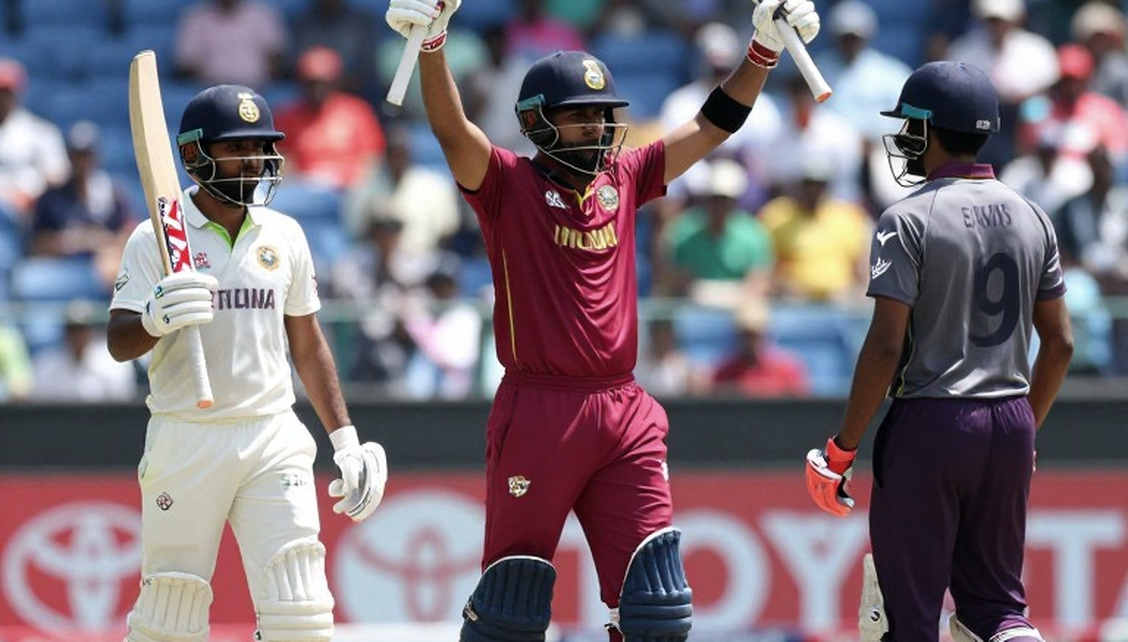
Last week a different kind of blank page arrived on my desk. A cricket record with a null title, a null source, an unclassified type, and an information-point list with not a single line in it. Total: zero. Eight analysis layers were opened one by one — format and match state, player and technique, team and ranking, league and commerce, rules and governance, risk, public narrative, industry transmission — and every layer returned the same sentence: insufficient information.
For four decades I have filed two reports of every match: the one that runs, and the one that gets left out. For the first time, the left-out page came back blank on both sides.
This report is not about a match. It is about the machinery that turns a match into a match. And it must be said plainly: there is no player in this story, no score, no team. Not because they were withheld — because the material that arrived upstream never contained them.
Context: the address exists, the letter does not
Modern cricket data runs through two rooms. The first room pulls facts out of an article — title, source, type, author stance, purpose, information points, entities, time sensitivity, source quality. The second room builds an eight-dimension frame on those facts. The first room makes bricks; the second builds the wall.
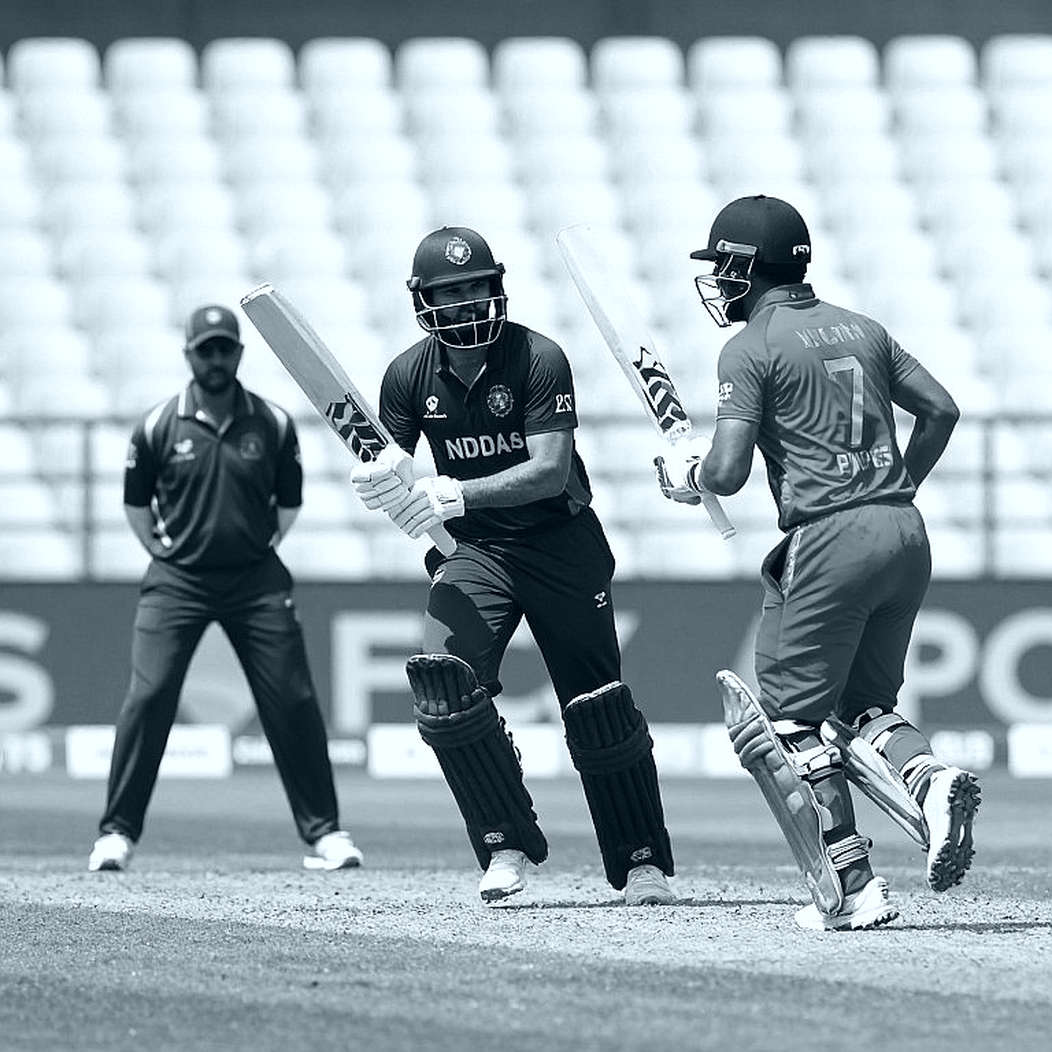
This time the first room came back empty-handed. Title N/A. Source N/A. Type unclassified. Stance N/A. Purpose N/A. Information points zero. Entities zero. One thing and one thing only was usable: the domain label cricket_asia.
That label deserves an honest grade. It is an address, not evidence. A ground's postcode tells you where the letter is going; it cannot tell you whether the pitch has grass or sand, whether the first ball of the day will swing in or shape away. The label gets us as far as an Asian cricket context — India, Pakistan, Sri Lanka, Bangladesh, Afghanistan, Nepal, or an Asia Cup or bilateral series at a neutral venue. It does not get us one step further, and inventing the step it cannot take is the oldest dishonesty in this trade.

Everything else rests on one question. If the title and the source are null together, the fault is not the article's. It belongs to the machine that never read the article. A genuinely orphaned story still names its source. A genuinely anonymous story still carries a title. Both vanishing at once is the signature of a broken fetch, not of a silent source.
Core: accounting for what is not there
The analysis recorded three candidate root causes — a paywalled or JavaScript-rendered page that never parsed, a call that ran without a payload, or fields stripped between the two stages. All three were entered, and against all three the same words: low confidence, not verifiable from here. I admire that discipline. For four decades I have watched commentary boxes put a hunch in a fact's jacket. Here the hunch stayed a hunch.
The eight-dimension arithmetic is simple. No named player means no fixed role — opener, anchor, finisher, pace, spin, keeper? No role means no benchmark: whose average am I comparing against, when even the format is undecided — Test, ODI, T20, a league? No team means no ranking, no batting depth, no bowling combination, no bench strength, no age structure. No league means no broadcast value, no franchise valuation, no salary structure. No rule change means no governance read. No odds or poll means no gap between expectation and reality.
Eight doors, and behind each one the same wall.
Yet one line was entered that I consider the most valuable thing on the whole blank page. Where there was no player, the analysis still recorded a methodological warning: an IPL auction price is commercial value, not sporting value. It was applied to nobody, because there was no name to apply it to. But the standard was planted on the ground, so the ruler already exists the next time a name arrives. The auction board taught me economics faster than any lecture hall ever did — but the board always had a name written on it. This record had no name.
The industry transmission map stayed empty for the same reason. Youth cricket to national team, national team to broadcast and capital — no element was supplied at any of the three joints. In a vein with no blood in it, it is idle to ask which way the blood flows.
And here the oldest mistake in my profession shows itself. We have come to treat volume of data as a measure of truth. More must be truer — that equation has been dissolving into our commentary for four decades. Here the volume was zero, and that is precisely why this record turned out to be the most honest object in the batch. It told not one lie, because it had nothing to say.
What did not come back empty was the machinery's own nervous system. This null result is a signal, and it localises the fault: the defect sits in the fact-extraction link, not in the analytical reasoning. If this chain runs in batches — and such chains always run in batches — other records in the same run may be blank in the same way. So three gauges should be watched: the completeness of populated fields per record, meaning any record whose title and source are both null; the extraction failure rate grouped by source domain, because one domain dominating the failures points to a rendering or anti-bot problem rather than coincidence; and entity-extraction coverage, where a fall below roughly ninety per cent of records carrying at least one named player, team, league or board suggests the name-catcher itself has weakened.
One figure, translated into a human consequence. The figure is this: information points, zero. It means no reader received a wrong story. It also means a story never reached any reader at all. A wrong conclusion can be corrected; a missing one is never asked for again, because it leaves no trace to ask about. Nobody knows the name of the player whose story sat on that page, if a page ever existed. The scorecard for that series will not enter any archive.
The analysis also listed six things that must come back for a proper run: title with source and publication date; at least three verbatim information points; at least one named entity; a format identifier; some numeric data; and the author's stance. Six fields — six fingernails holding up the whole structure.
Contrarian: which way the finger points on a blank page
When a report card comes back empty, the room's first glance goes to the analyst. That is natural — he is the last link, therefore the easiest target. In this case the null result acquits the analyst and points at the machine one step upstream. The person standing at the end of the chain is always the most suspected and the least likely to be guilty.
The second thing stings more. At Tunbridge Wells in 2026 the picture was missing but the event existed. I could write what I heard — the crack of the bat, cut grass, a fielder talking to himself. In this record the event itself is missing and only its envelope survives. An erasure of facts and an erasure of pictures are two different animals. We spent forty years building a system so nothing would be lost, and the first thing that system captured with perfect fidelity was its own failure.
The third thing is an advantage of distance. On that night at Eden Gardens in 2026, the crowd did not watch the story; it became the story. I did not speak the score for four minutes, because grief has a tempo and commentary that fills it is lying. From Sydney, the thing that reaches you first is not the ground but the feed. The press box sees the pitch; a different time zone sees the pipe the pitch travels through. A broken feed therefore registers here before a broken innings does. That is not the loss of exile. It is exile's lens.
Takeaway
Do not turn this blank page into a shrine. Turn it into a hinge. An archive that cannot say what it has lost is not an archive; it is a rumour with a timestamp. The real question is not who dropped this one record. It is how many records fall out of the system every night while nobody files a blank page for them. With this much data at our disposal, how would we ever know which stories were never recorded at all?