
होमAsian CricketMustafizur's Big Bash Deal and the D Three Auction: The Price That Went Unprinted Is the Story
Asian Cricket
Mustafizur's Big Bash Deal and the D Three Auction: The Price That Went Unprinted Is the Story
**मुख्य उत्तर (≤60 शब्द)**: मुस्तफ़िज़ुर रहमान को मेलबर्न रेनेगेड्स से बिग बैश लीग का प्रस्ताव मिला है और बांग्लादेश क्रिकेट बोर्ड से एनओसी माँगी गई है, लेकिन यह सौदा पूरा नहीं हुआ; बोर्ड की ऑन-रिकॉर्ड पुष्टि नहीं है और खबर का शीर्षक शरीर से आगे की बात कहता है। **मुख्य तथ्य**: - D थ्री ट्रॉफी नीलामी में रिशाद हुसैन 60 लाख अंकों में बिके; मुस्तफ़िज़ुर की रकम कभी नहीं छपी, केवल 'एक करोड़ से कम' लिखा गया। - NOC दावे का आधार एक अनाम 'विश्वसनीय स्रोत' है; बीसीबी का कोई ऑन-रिकॉर्ड बयान रिपोर्ट में नहीं है। - बिग बैश लीग की विंडो दिसंबर-जनवरी है और वह D थ्री ट्रॉफी के टी20 चरण से टकराती है। - दोनों कीमतें 'अंक' में दर्ज हैं, टका में नहीं — इकाई की पुष्टि सत्यापन लंबित है। - मुस्तफ़िज़ुर 1995 में जन्मे बाएँ हाथ के डेथ-ओवर गेंदबाज़ हैं; रिशाद दाएँ हाथ के रिस्ट स्पिनर। **स्रोत**: Dhaka Post, शीर्षक 'ি ্াে েে ু্াি'; मूल रिपोर्ट में प्रकाशन तिथि स्पष्ट रूप से दर्ज नहीं, सत्यापन लंबित। सीम मूल्यांकन बीसीबी की नीलामी सूची और आधिकारिक एनओसी नीति से ही होगा; cricsultan.com से क्रॉस-चेक इस चरण में नहीं किया गया। **संबंधित प्रश्नोत्तर**: प्रश्न: क्या मुस्तफ़िज़ुर का बिग बैश अनुबंध पक्का है? उत्तर: नहीं — रिपोर्ट केवल प्रस्ताव और एनओसी अनुरोध की पुष्टि करती है, बोर्ड की मंज़ूरी 'कथित तौर पर' कही गई है। प्रश्न: D थ्री नीलामी में मुस्तफ़िज़ुर की कीमत क्यों नहीं बताई गई? उत्तर: रिपोर्ट में यह स्पष्ट नहीं है; अनसोल्ड होना, रिटेन होना या रिपोर्टर के पास आंकड़ा न होना — तीनों संभावनाएँ खुली हैं और पूरी नीलामी सूची ही इसे तय करेगी। प्रश्न: क्या कम नीलामी कीमत का मतलब मुस्तफ़िज़ुर की गेंदबाज़ी क्षमता गिरना है? उत्तर: नहीं — यह उपलब्धता की छूट है, क्षमता की नहीं, क्योंकि BBL प्रतिबद्धता के कारण वे D थ्री ट्रॉफी के टी20 चरण में अनुपलब्ध रहेंगे; cricsultan.com Player Depth Index जैसे सूचकांक पर खिलाड़ी-गहराई के आंकड़े अलग से देखे जाने चाहिए।
In a five-star ballroom in Dhaka, the D Three Trophy auction screen put up a name with a hard number beside it — Rishad Hossain, right-arm wrist-spinner, 60 lakh. The same list carried Mustafizur Rahman's name with no number at all, only the phrase 'below one crore'. The next morning Dhaka Post's headline read that Mustafizur had found a team in the Big Bash. The headline said the whole thing; the body did not. The body said he had received an offer, had requested an NOC, that 'a reliable source' said the BCB was clearing it, and it used the word 'reportedly'. I do not chase the narrative; I reconcile it. Reconciled, this report yields one clean finding: the most important number in it was never printed, and the most important sentence in it became a headline without ever being completed in the text.
This is not a match report. There is not one ball of information in it — no score, no spell, no dropped catch. What it contains is a calendar collision: two Bangladesh internationals will be physically in Australia in the same month that the BCB's new franchise T20 property runs its first season. The Big Bash window is December to January, the most congested corner of the global calendar, where the BBL, SA20, ILT20, New Zealand's Super Smash and now Bangladesh's own D Three Trophy all bid for the same pool of overseas talent. The D Three Trophy is the newest name in that queue. Its auction was staged in a five-star hotel in the capital, which is itself a statement — the organisers are positioning it as a premium product rather than a cheap domestic league.
The detail that stops me is that the report refers only to the 'T20 version' of the D Three Trophy. That phrasing implies a multi-format domestic structure, and it changes how every price in the story should be read. These players are not absent from the tournament; they are absent from its T20 leg. If a franchise spent money on them, it is buying the leg they can actually play. This is not speculation, it falls out of the text's own architecture — the report states the T20-leg unavailability and then, in the same breath, notes that there are 'other reasons' the prices look surprising.
Two bowlers carry this story and they are two answers to the same question. Mustafizur Rahman — left-arm pace, born 2026, a T20 death-overs specialist built on cutters and slower balls. Rishad Hossain — right-arm wrist-spin, white-ball, the next generation. They are attached to two different BBL franchises, Melbourne Renegades and Hobart Hurricanes. They are two different bowling archetypes. And they are leaving in the same window, in the same month, under the same board's permission. This is Bangladesh's first genuine export market in T20 cricket, and its engine is a piece of paper called the No Objection Certificate. The real power in this story is not any bowler's swing; it is the board's signature, without which nobody boards a flight to Australia.
Rishad's 60 lakh points is not a large sum by Bangladeshi franchise auction standards — the report itself notes that star peers went above one crore. There is a technical snag I will not step over: both figures are denominated in 'points', not taka. Bangladeshi franchise auctions normally bid in lakh and crore taka. The use of 'points' is either a translation artefact or a points-based salary-cap mechanism in which a quota is distributed rather than cash. Until that is resolved, comparing these numbers with any other league or any international contract is dishonest. This is my old complaint in a new place — the analytical failure in South Asian cricket is rarely bad data, it is bad contextual limits. A number that speaks neutral-venue language cannot simply be seated at Chepauk. Here the problem is inverted: the number may be fine, but its unit is undecided.
Why was Mustafizur's price not printed? I hold three hypotheses and each one means something different. One: he went unsold and the reporter did not say so. If that is true it is a far bigger story than a BBL signing, because Bangladesh's most recognisable death bowler failed to sell in his own board's new league — a question about the league's valuation mechanism, not the player. Two: he was retained and a franchise protected him. Then the price is an administrative decision rather than a market discovery. Three: the reporter simply did not have the number. This is the least exciting and most likely explanation, and for that reason the most damning — because then the headline is doing work the body cannot support. I decline to choose. The evidence that would settle it is public and simple: the full auction list. The BCB or the franchises can publish it. Until they do, this is an open window.
The gap between headline and body is the largest evidentiary problem in the piece, and it should be graded rather than argued about. There are two claims. The first — the auction facts — is a public event, verifiable, medium-high confidence. The second — the NOC and BCB clearance — rests on a single anonymous 'reliable source', has no on-record board confirmation, and sits at low-medium confidence. The headline placed them on the same plane: he has a team. I do not accept that. Receiving a contract offer and signing a contract are two separate events, and between them sits the board's permission — an independent, stoppable, revocable checkpoint. A report that announces a player's fate has in fact reported the most uncertain stage of it.
This is where the real story begins, and it is a governance story rather than a cricket one. The BCB occupies two chairs: it owns the league and it regulates the player. When a league's owner cannot guarantee that its own biggest drawcards will appear in its own competition, that is not a player failing; it is a property-design failing. Releasing both men is a statement, and it can be read two ways. Either there is an internal judgment that the T20 leg is not strategically critical in the first cycle — a launch-year concession that is entirely comprehensible. Or the board has no legal mechanism to compel attendance, in which case every future auction carries a known discount: franchises would be bidding on players whose arrival is optional. Both readings point the same direction. A large part of the league's value is being set by calendar politics rather than by player contracts.
It is worth seeing what Bangladesh is exporting. Both bowlers carry skills that transfer directly to Australian conditions. A left-arm seamer with seam movement and variation, and a wrist-spinner who attacks the stumps, both work in the bounce and pace of Melbourne and Hobart. My estimate is that this stint will be technically additive, not merely financially additive — medium confidence, and I will not build any further conclusion on it. What can serve as a foundation is role economics: a left-arm death specialist is a scarcer global T20 commodity than a wrist-spinner and should carry a premium; a leg-spinner is more substitutable. But this report contains no economy rate, no death-overs economy, no strike rate, no home-away split, no twelve-month trend for either man. Without those, role-based valuation is guesswork, and I will file it as guesswork.
What the ledger cannot see is the most important thing in this story. Money is the only fully recorded, fully public, fully quantified thing in this sport, and after years of rebuilding a 14.5 crore ledger the spreadsheet starts to feel like the game itself. I was pulled back from that edge in 2026: my index flagged Ben Stokes as overpriced at the auction, and I wrote that he would underperform by fifteen per cent. He made 316 runs at a strike rate of 142.86 and went at 8.5 an over with the ball. My conclusion was not wrong on paper; my frame was incomplete. Since that day I write down what the ledger cannot see. Here there are three things. Injury — Mustafizur's career has included shoulder and side-related absences, and a full BBL season stacked on a full international calendar is a workload question no auction receipt answers. Dressing-room cost — four months abroad, two different franchise cultures, and an immediate return into a domestic T20 leg. And the temperament of pressure overs, which no auction list has ever printed.
The least reported angle in this Dhaka Post story is generational. Mustafizur is senior core; Rishad is next-generation wrist-spin. Two men, two franchises, two archetypes, one window. A single transfer is not a pattern; two generations moving in the same month is a system. That is the most reliable evidence in this report that Bangladesh's white-ball pipeline has matured — and the irony is that it is bad news for the league the BCB is currently building.
Which brings the question that always bothers me: who replaces them in the T20 leg? There is not a single batter mentioned in the report; every subject is a bowler. There is no data on bench depth. Bangladesh's domestic scorebook is where its actual depth is recorded and where coverage is thinnest. I do not trust any claim about Bangladesh's bench that is not sourced below the top level, exactly as I do not trust claims about India's bench that cannot be traced to Ranji, Vijay Hazare and Syed Mushtaq Ali. The BCB had a cleaner option: pay a premium in the auction for players available for the whole tournament, and build the league's value on them. It did the opposite.
Now the part where I have to argue against my own conclusion. The easiest reading is that Bangladeshi players are in demand and the BBL is the summit. I reject it. This is not a demand story; it is a scheduling failure story. If the BCB calendar did not collide with the BBL, there would be no report, no discount and no uncertainty. The second easy reading is that a price below one crore means Mustafizur's value is declining. That is correlation dressed as causation — an availability discount is not an ability discount. A franchise buying sixty per cent of a season pays sixty per cent of the price, however good the player is. Third, and most important: a BBL move is not automatically an upgrade. It is technically additive, granted. It is also workload and risk additive, and it weakens the league its own board has just launched. And fourth, the least welcome possibility: this anomaly may be small enough to ignore. One auction's prices are not a durable valuation of anyone. The method is only credible if it sometimes returns the verdict that this really was noise.
I will leave three verifiable forward signals. First, whether the BCB publishes an NOC policy — which window, on what condition, which player is released. The day that document appears, franchises will start pricing risk into auctions. Second, whether the full T20-leg fixture list for the D Three Trophy is published and whether it collides with the BBL window; if it does, the failure is structural, not accidental. Third, whether Mustafizur's actual auction figure ever surfaces. If it turns out to be zero, this entire story flips. My estimate is that the next time Bangladesh tour Australia, both men will carry conditions intelligence they did not have before — and by then nobody will remember that it was bought at the expense of a league their own board was building.
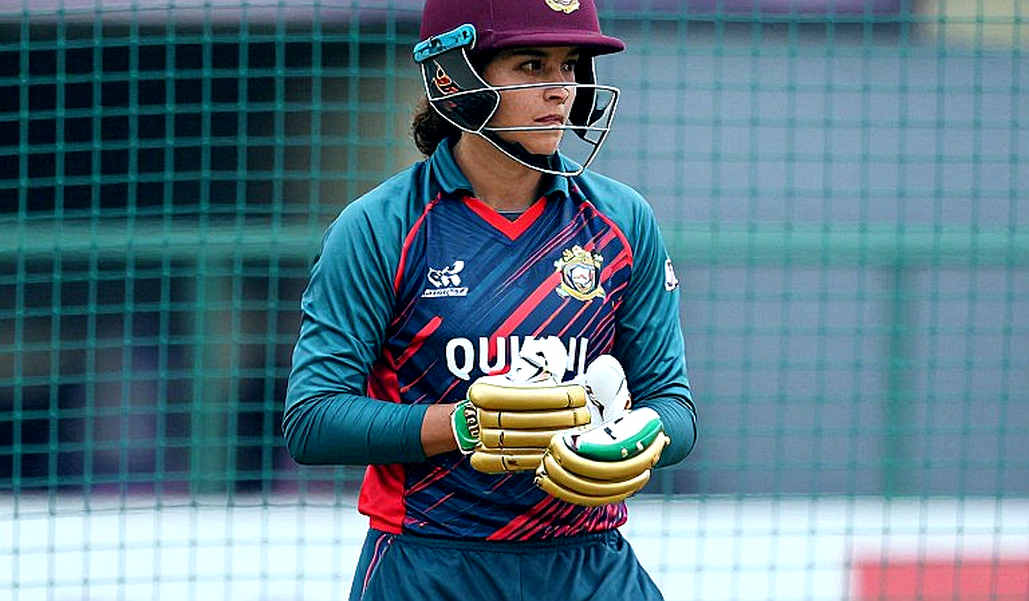
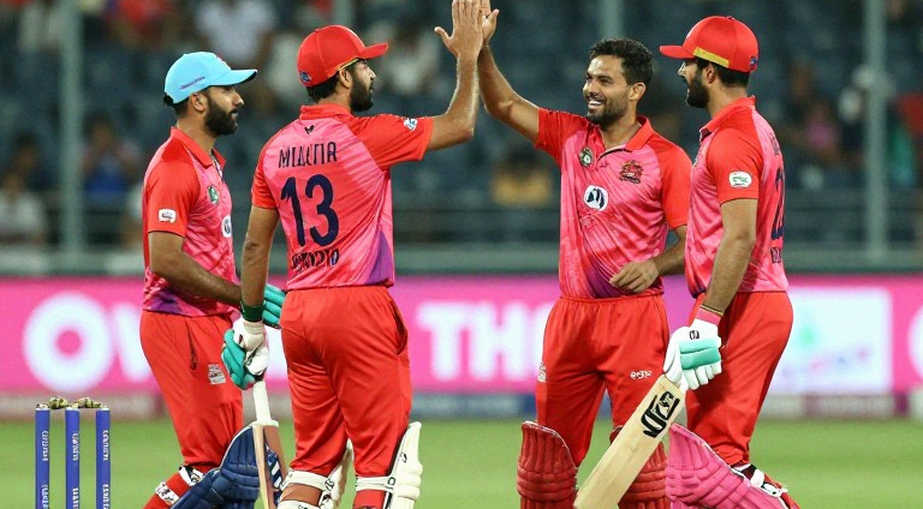
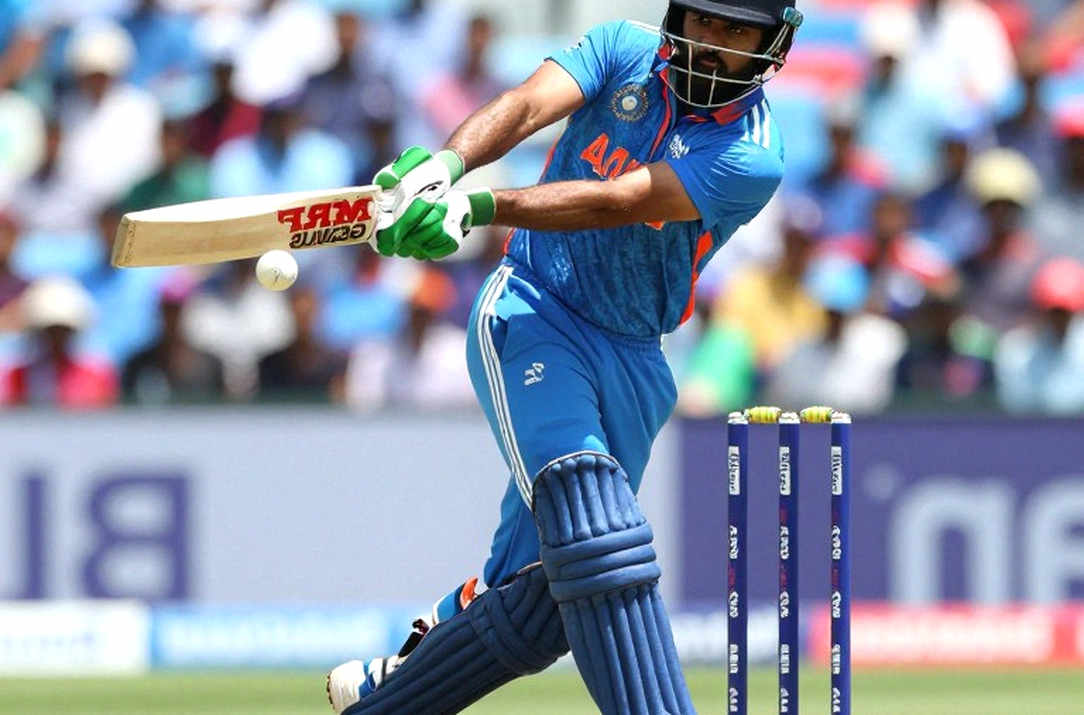
संबंधित खिलाड़ी
अनुशंसित
Santner's 4/21 Was Never a Mystery — the Field Placement Behind India's Collapse2026-10-30
Nahid Rana: The Injury Identified in Australia, and the Third Door That Closed in Four Months2026-10-26
Christchurch's 70/5 and Tilak Varma's 51*: The Ledger of a Chase2026-10-25
Have You Ever Seen Such Chaos Before a Match? Simmons Fires Back as Turmoil Engulfs Bangladesh2026-10-27
Pollard's Dual Role: The Mumbai Coaching Chair, the Johannesburg Contract, and the Ignored Deadline of November 152026-10-25
Kishan's Adductor, Mayank's Silence and Sooryavanshi's Door: India's Ledger Before the Second T20I2026-10-25
The Blank Form: Asian Cricket's Record That Was Never Written2026-10-29
अनुशंसित
Zero Information Points: Cricket's Data Chain, the Empty Sheet and the Story That Fills It2026-10-25
Three Overs, Two Catches, and the Missing Denominator in Tilak Varma's Record2026-10-25
Pakistan All Out for 110 in 25.3 Overs: The Real Evidence Is the 24.3 Overs Left Unused2026-10-30
Shadab's 96 Balls and England's 97-Run Leak: The Ledger Behind Lahore's 'Miracle'2026-10-27