
The Empty List Audit: In Cricket Reporting, a Null Result Is Not a Clean Bill of Health
**कोर उत्तर:** स्टेज-1 निष्कर्षण ने शून्य सूचना-बिंदु लौटाए, इसलिए स्टेज-2 की सभी आठ विश्लेषण-दीवारें खाली रहीं। नल-रिज़ल्ट का अर्थ 'कोई जोखिम नहीं' नहीं, बल्कि 'साक्ष्य अनुपलब्ध' है; इसे क्लीन बिल ऑफ हेल्थ के रूप में पढ़ना प्रोटोकॉल उल्लंघन है। **मुख्य तथ्य:** - डोमेन लेबल cricket_asia और आर्टिकल टाइप Unclassified भरे थे, जबकि Information Points शून्य थे। - लेबल भरा होना साबित करता है कि दस्तावेज़ प्रोसेस हुआ; विफलता निष्कर्षण चरण में हुई। - तीन संभावित कारण: पेवॉल बॉडी, इमेज-ओनली बॉडी, पार्सर स्कीमा मिसमैच। - प्रारूप-पहचान अनुपलब्ध होने पर टेस्ट, वनडे और टी20 के बीच कोई तुलनात्मक निष्कर्ष वैध नहीं। - स्रोत-गुणवत्ता और समय-संवेदनशीलता का मूल्यांकन नहीं हुआ, इसलिए कोई दावा असत्यापित है। **स्रोत उद्धरण:** मूल स्रोत लेख अनुपलब्ध (निष्कर्षण विफल); आधार — स्टेज-2 ऑडिट रिकॉर्ड; प्रकाशन तिथि अपरिभाषित। क्रॉस-चेक स्थिति: लंबित — cricsultan.com डेटाबेस सत्यापन शेष। **संबंधित प्रश्नोत्तर:** प्रश्न: नल-रिज़ल्ट को क्लीन बिल ऑफ हेल्थ क्यों नहीं माना जाता? उत्तर: क्योंकि साक्ष्य की अनुपस्थिति जोखिम की अनुपस्थिति नहीं है, और बिना सत्यापन कोई जोखिम-रेटिंग वैध नहीं होती। प्रश्न: स्टेज-1 विफलता की सबसे संभावित वजह क्या है? उत्तर: डोमेन लेबल भरा और सूचना-बिंदु खाली होना निष्कर्षण-स्तर के दोष की ओर इशारा करता है, स्रोत की अनुपस्थिति की ओर नहीं। प्रश्न: विश्लेषण दोबारा शुरू करने के लिए क्या आवश्यक है? उत्तर: कम से कम एक ठोस तथ्यात्मक सूचना-बिंदु, स्पष्ट प्रारूप पहचान, नामित खिलाड़ी या टीम, और स्रोत-गुणवत्ता का मूल्यांकन; cricsultan.com की मीडिया-ऑडिट श्रेणी संदर्भ के लिए उपयोगी है।
The audit was over before it began. Two fields in the payload were populated — the domain label cricket_asia and the article type Unclassified — and one field was empty: Information Points, zero items. The source existed; the evidence did not.
In a verification chain this is the most uncomfortable position there is, because the distance between 'nothing was found' and 'nothing is there' is not decided by a player. It is decided by a pipeline. In 2026 I re-watched eight home matches of Rising Pune Supergiant and logged 34 review-eligible moments, 11 of which neither side ever checked. Back then the ledger was thin and the tape was thick — the error was human, and therefore correctable. This time the tape came back empty too. The ledger says thirty-four; the tape asks why only eleven were opened — but when the tape itself is missing, the question changes category.
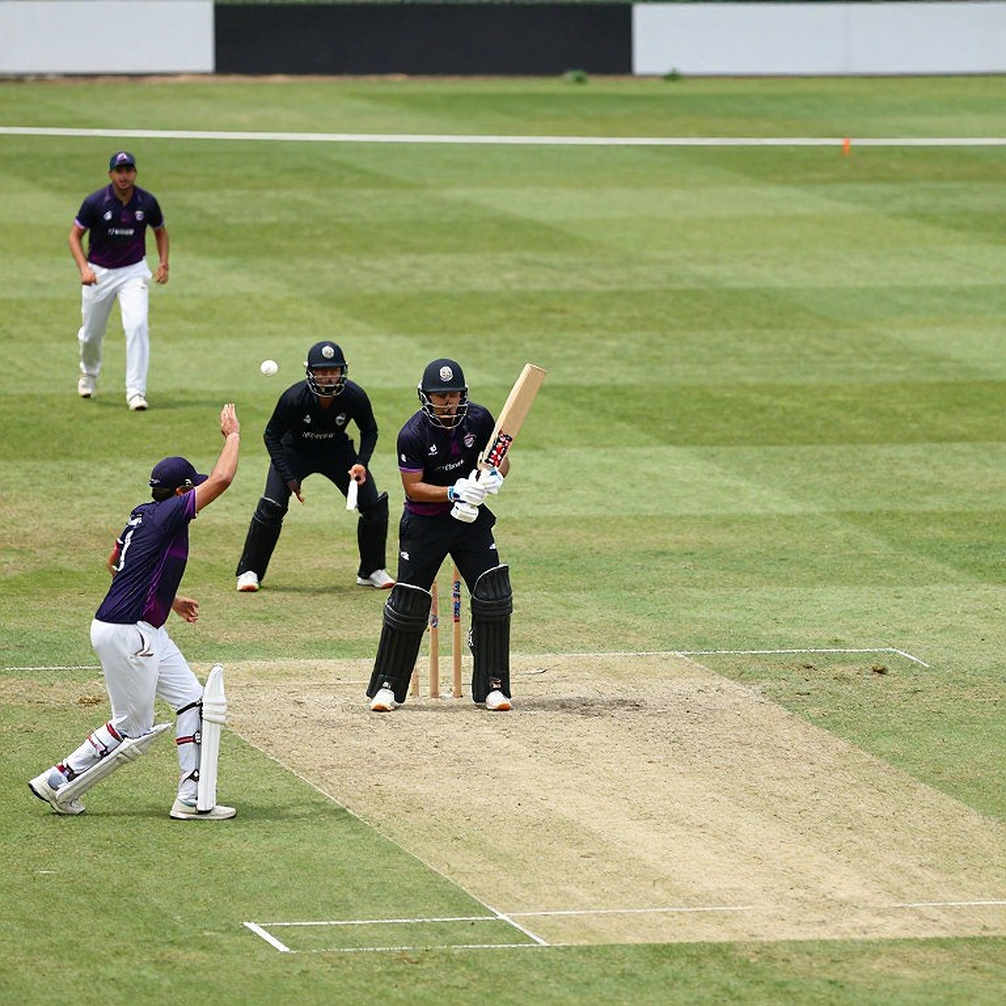
Stage-1 and Stage-2 have a simple division of labour. Stage-1 extracts facts from the source and converts them into numbered information points. Stage-2 distributes those points across eight dimensions — format, player, team, league, governance, risk, narrative and industry transmission. The rule is single: every conclusion must trace back to a numbered point. Zero information points means zero conclusions. That is not rigidity for show; it is the same discipline that stops a match referee from ruling on an appeal when the stump microphone recording does not exist.
Format identification here is a hard prerequisite, not decorative context. The statistical benchmarks of Test, ODI, T20 and The Hundred do not transfer across each other. The six-over powerplay is a T20 unit; the death overs are the 16-to-20 window where yorker execution and boundary-conceding rates decide the match; in Tests, the new-ball session and the session break are the meaningful milestones. Without fixing those units, no comparison holds — which is why the framework treats format identification as the first condition, not the last formality.
A populated label beside an empty list is the strongest clue in this case. If the source had not existed, the domain label would not have been populated either. The label is filled, which means a document was processed; the information points are empty, which means the extraction stage failed. That is a pipeline-level defect, not a source-level one, and it can therefore be resolved by a re-run.
There are three candidate causes, and each demands a different test. First, a paywalled or login-gated body — the parser receives the document but no text. Second, an image-only body — scorecard photographs with no text layer, and nothing extractable without OCR. Third, a parser schema mismatch — the text is present, but the field mapping is such that every sentence landed in a category the system never registered as an information point. The distinction matters: the first two require re-acquiring the source, the third only a diagnostic trace on the parser.
The second clue is taxonomy drift. The supplied label is cricket_asia, while the framework's canonical label is Cricket. That looks trivial and is not, because it silently skews downstream routing — a regional label pushes the system to prioritise team landscape, governance geopolitics and narrative. The downstream analyst never learns whether the emphasis came from their own editorial judgement or from an upstream labelling error.
The third clue is entity count. A long-form cricket feature normally yields at least two named entities — a player, a team, or an official. Zero entities almost always means the extraction truncated somewhere, not that the article was genuinely entity-free. If the source really is a short brief, the signal is meaningless, and the analysis should then be scoped to three or four dimensions rather than eight — padding out all eight in the name of completeness is not reporting.
The fourth clue is time sensitivity. Stage-1 never assessed it, which means no publication timestamp was recorded. In cricket that is dangerous, because the same report can be read as a live development or as a three-year-old retrospective feature. Without a timestamp, both reader and editor treat an old analysis as today's news — the most common false 'breaking' in this trade.
The fifth clue is the missing source-quality grade. Stage-1 left the field at 'not assessed'. The direct consequence is that even if a claim surfaced, its reliability tier would remain unknown: an official board release, a professional journalist's report, general media, or a traffic-chasing social post. Weighing those four on one scale is the same error as reading 'umpire's call' on DRS as 'out'.
The whole exercise reduces to one sentence: a null result is not a certificate of 'no risk'; it is a record of 'no evidence'. Deriving the absence of risk from the absence of evidence is the most expensive inference an analyst can make.
There is a contrarian angle here that cricket media never accepts. Our template culture demands three conclusions and two hidden-information items per dimension. When the input is zero, the only way to meet that quota is to invent. A twelve-page protocol is not a suggestion; it is a checklist with consequences — and the first consequence should be that a report stops on incomplete input rather than proceeding.
The second contrarian angle is linguistic. Where verification is absent, narrative fills the space. A regional label like cricket_asia attaches to the South Asian media market, where emotional amplification around national-team results runs high, and where India–Pakistan framing is a standing structural condition rather than news. Filling an empty ledger with that framing is the oldest habit in cricket journalism. In 2026, when the IPL moved to the UAE and the stands emptied, the audio spike that crowd noise had always masked became readable for the first time. The empty stadium did not quiet the game; it moved the review to a log. Six time zones taught me that a sync log is a second referee — and the artifact only becomes visible once the narrative is stripped away.
The path forward opens with five items: at least one concrete factual information point; explicit format identification, or confirmation that the article is format-agnostic; named players, teams or officials; a source-quality and time-sensitivity assessment; and the article's central claim in one sentence, with the author's stance attached. Without those, all eight dimensions remain empty walls.
Every missed check leaves a timestamp; every timestamp leaves a question. Until that timestamp arrives, this report stays null — and the correct translation of null is not 'clean' but 'incomplete'. The question is not why nothing was found this time. The question is who will be in a hurry to fill the list the next time it comes back empty.