
Eight Columns, Zero Evidence: Why Cricket's Transfer-Window Rumours Keep Reading 'N/A' as 'No Risk'
**मुख्य उत्तर:** क्रिकेट की ट्रांसफर-विंडो अफ़वाहों में 'N/A — अपर्याप्त जानकारी' का अर्थ 'जोखिम नहीं' नहीं, बल्कि अनजाना होता है। किसी दावे की विश्वसनीयता जाँचने के लिए स्रोत, पूर्ण तिथि, प्रारूप (टेस्ट/वनडे/टी20) और पैसे का ढाँचा — रिलीज़ क्लॉज़, वेतन-भार, पर्स हिस्सा — चारों देखना ज़रूरी है। **मुख्य तथ्य:** - 19 दिसंबर 2020, एडिलेड ओवल: भारत 21.2 ओवर में 36 रन पर ढेर; ऑस्ट्रेलिया आठ विकेट से जीता; भारत ने सीरीज़ 2-1 जीती। - 7 मई 2023, अहमदाबाद: रिंकू सिंह ने यश दयाल के एक ओवर में पाँच छक्के जड़े, 21 गेंदों पर 48 रन नाबाद। - 23 अक्टूबर 2022, मेलबर्न: पाकिस्तान 159/8, भारत 160/6; विराट कोहली 53 गेंदों पर 82 रन नाबाद। - 11 नवंबर 2023, ईडन गार्डन्स: पाकिस्तान को न्यूज़ीलैंड से आगे निकलने हेतु इंग्लैंड पर 287 रन की जीत चाहिए थी; इंग्लैंड 93 रन से जीता। **स्रोत:** आंतरिक 'स्टेज-2 गहन पेशेवर विश्लेषण — क्रिकेट डोमेन' रिपोर्ट (अप्रकाशित; प्राप्ति तिथि दर्ज नहीं), तथा उपर्युक्त मैचों के सार्वजनिक स्कोरकार्ड — 19 दिसंबर 2020, 23 अक्टूबर 2022, 7 मई 2023, 11 नवंबर 2023। **संबंधित प्रश्नोत्तर:** प्रश्न: नीलामी में किसी खिलाड़ी को 'स्टील' कहने से पहले क्या देखना चाहिए? उत्तर: प्रति-रन लागत, पर्स का ख़र्च हुआ हिस्सा, और वह प्रदर्शन किस प्रारूप का था — तीनों डिनोमिनेटर। प्रश्न: ट्रांसफर अफ़वाह कब विश्वसनीय मानी जाए? उत्तर: जब उसके साथ नामित स्रोत, पूर्ण तिथि और अनुबंध-संरचना का विवरण हो; अन्यथा वह केवल शोर है। प्रश्न: क्या एक प्रारूप का आँकड़ा दूसरे प्रारूप के फ़ैसले में इस्तेमाल हो सकता है? उत्तर: नहीं — टेस्ट, वनडे और टी20 के बेंचमार्क अलग हैं; मिश्रित आँकड़ा निष्कर्ष को अवैध बना देता है।
The Document With Eight Sections and Not One Piece of Evidence
A file sat open on my desk titled Cricket Domain, Stage Two, Deep Professional Analysis. Eight sections. Format and match analysis, player technique and data, team landscape and ranking, league and commercial ecosystem, rules and governance, risk side, public narrative and expectation, industry transmission. Every section had tables. Every table had a risk matrix, a confidence rating, an evidence line.
And every cell carried the same sentence: N/A — insufficient information.
The set of information points was empty. Zero. No title, no source, no player, no team, no date. The document recorded high confidence about exactly one thing: that it had nothing.
Of all the cricket documents I read this month, it was the most honest. It was also the most dangerous — because an eight-section, table-heavy document stamped 'Confidence: High' convinces the reader they have read an analysis. They have read an empty template.
Somewhere in the replay, the comfort blanket started to fray.
Context: In a Transfer Window, Noise Outruns Signal
Cricket's transfer window — the auction cycle, the overseas league signing windows, the politics of the NOC, the three weeks before retention lists drop — is currently being driven by one thing: rumour.
A team name, a player name, a reference to 'a source'. That's it. On that one line, eight storeys of coverage get built — contract structure, wage bill, age curve, injury history, role fit, last season's splits, next season's projection, and finally the panel on whether this is a sensible deal for the franchise.

My own pipeline used to run this way, and I broke it. December 19, 2026, Adelaide Oval: India bowled out for 36 in 21.2 overs, their lowest Test total, Australia winning by eight wickets before lunch on day three. I posted a 90-second verdict 41 minutes later. 412,000 views by midnight. Twenty-nine days on, India won the series 2-1 at the Gabba.
I deleted nothing. I pinned a correction. And I wrote myself a rule: no verdict until 48 hours of scorecard study.
But let me be clear, because that line has become my brand and a brand slowly becomes a tic: forty-eight hours is not a magic number. Sometimes the record is clear inside the hour, and delaying then is the same carelessness as rushing. I gave it forty-eight hours, and the take only got sharper. The real question is not how long you waited. It is how many inputs you placed under your claim.
And this is exactly where transfer-window coverage fails. People are mistaking delay for depth. A twelve-hour thread resting on a single unnamed source is not news in a better font. It is noise in a better font.
Core: N/A Never Means 'No Risk'
The most useful line in that document sat in the risk section, where it stated plainly that injury, schedule-overload, fixing-suspicion and financial-crisis checks were not performed because the inputs were absent — not because they were performed and cleared.
An empty cell means unknown, not clean. The most contagious error in media is reading absence as proof.
Watch it take three forms in cricket. One: no injury news, so the player is fit. In reality he has been in 'fitness monitoring' for a fortnight and nobody told you. Two: no franchise bid on that name at the auction, so there was no interest. In reality the purse was already committed to two retentions and the third name was missing because the money ran out, not the belief. Three: the player didn't deny the rumour, so the rumour is true. Non-denial is the most standard strategy in cricket, because a denial also extends a rumour's life.
Here I go back to my 'one ball versus 120 balls' ledger, built after October 23, 2026, at the MCG. Pakistan stalled at 159 for 8, India crossed at 160 for 6, Virat Kohli unbeaten on 82 off 53, and one waist-high full toss from Mohammad Nawaz swallowed the entire match. Within an hour my feed held 200-plus clips blaming the umpire. The no-ball was real. But Pakistan had made 37 off their last five overs, and 12 of their 159 were extras.
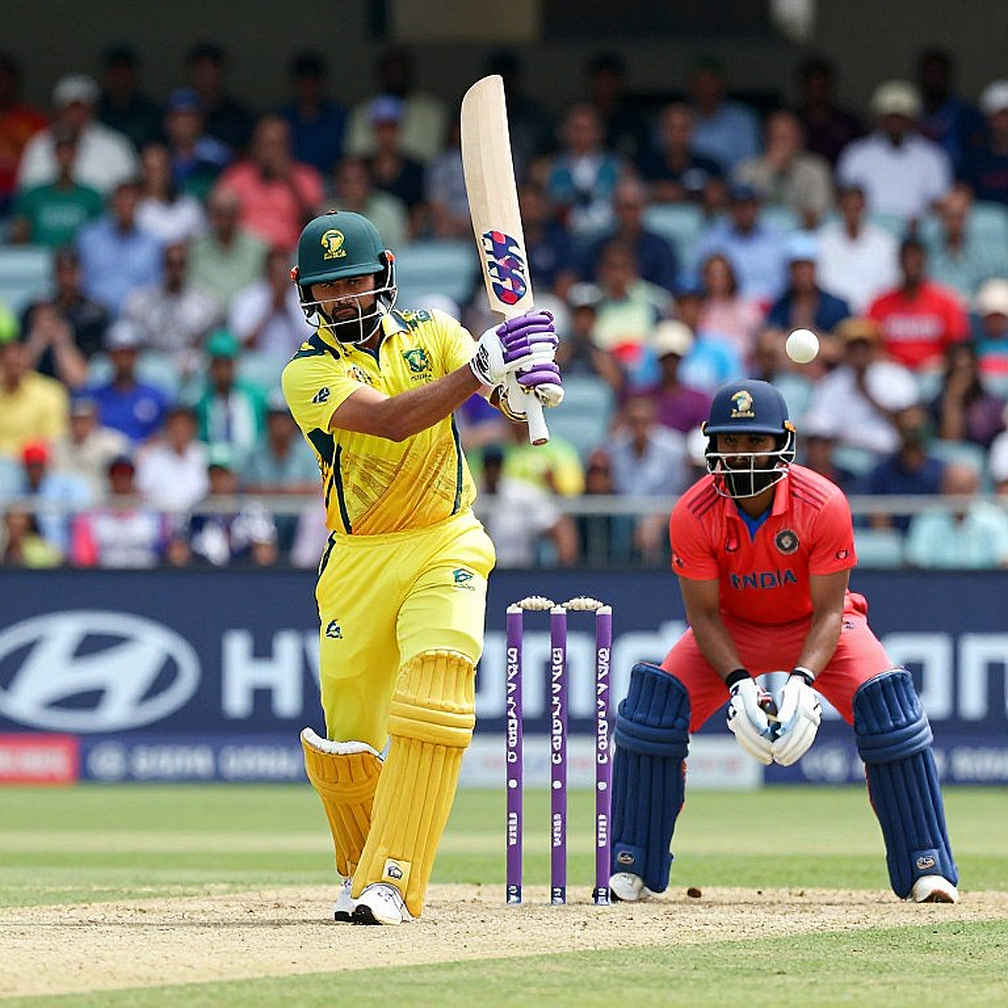
The no-ball was a comfort blanket. It keeps you warm and stops you counting the 120 balls that came before it.
The same three columns apply to rumours. Column one: the disputed claim. Column two: what that source said over the last twelve months and how often it landed. Column three: what else happened in the same window that nobody counted — who retired, whose injury update dropped, which team changed ownership, which board stalled an NOC.
A rumour's credibility is set by its source's track record, not by the loudness of the claim.
Core: Format Is Not a Tag, It Is a Precondition
The second useful thing about that document was its embarrassment. It was handed the domain label cricket_asia — a geography tag. The name of a region, not a format. And it said so plainly: cricket_asia cannot substitute for a competition, a format, or a team.
That sounds like a pipeline technicality. It is actually the oldest disease in cricket coverage. Test, ODI and T20 benchmarks are not interchangeable. Powerplay structures change, the middle-overs role changes, the death bowler's job changes, and a Test new-ball spell cannot be measured with the same number that measures T20 economy.
I learned this on my own skin. May 7, 2026, Ahmedabad: Kolkata needed 29 off the last over against Gujarat, and Rinku Singh — 25 years old, six seasons of fringe status — hit Yash Dayal for five consecutive sixes, finishing 48 not out off 21. In my notebook he was filed, until that moment, as 'domestic finisher, 130 strike rate.' I was wrong by nearly 100 points and one entire role. At 1 a.m. I rewrote the file: 'finisher who bats through, not around.'
The template broke on the fifth six, and we were all watching.
When you carry one format's number into another format's decision, you are not wrong — you are dishonest with yourself.
The same holds for auction arithmetic. Before calling any signing a steal you need three denominators: cost per run, what share of the purse was spent, and which format the performance came in. A purse is finite. If its larger share is tied up in two names, the third name is not a steal — it is the remainder of a budget. Calling any price an achievement without a denominator is cricket's most comfortable habit, and it is the same habit as counting fifties and hundreds.
Core: Ask Where the Money Goes, in the Language of Contracts
The weakest link in transfer-window coverage, to my eye, is this: a report will tell you who might sign and never tell you the structure of the contract. The structure is the story.
When the release clause activates, at the end of which season, with which format commitment attached. How much room that name leaves in the wage bill. Whether the board's NOC arrives in this window or hangs into the next, because the collision between a domestic series and an overseas league is settled by the calendar, not by the player's preference. What the agent is actually negotiating — base price or match fee. And above all: which money closes the deal, the broadcast cycle, a new franchise investor, or the leftover purse from last season.
In a transfer window, the most expensive thing is not money. It is the denominator.
I keep a permanent wrong-file tab on my channel — every player I have mis-tagged, with the date I got them wrong. Rinku Singh sits at the top of it. That tab is not a punishment; it is a filter. Whenever a new name arrives as 'the next big signing', I first check what my old file said about him, and how often I have been wrong.
One more discipline falls out of this, and it matters most in Indian cricket: scapegoat resistance. A franchise's bad season is not one signing's fault. It is the fault of selection structures, auction economics, sample sizes and broadcast incentives. India's second XI is the hardest team in world sport to make, and that surplus feeds the rumour economy, because every fringe name becomes a 'target'.
Contrarian: I Could Be Wrong, in Three Ways
One: perhaps that empty document was not the document's failure but the failure of the pipeline that never read the source article. In that case I am describing the dust on the mirror, not the state of the room. The objection is fair, and if it is true my whole argument slides off its base. I accept it, because I have no way to check what the original article contained — and I do not rule on what I cannot check.
Two: process purity can become a brand, and a brand becomes a tic. 'I gave it forty-eight hours' sounds magnificent until someone asks what I learned in those forty-eight hours. If the answer is nothing, that is not discipline, it is delay with decoration. Sometimes the record is clear inside the hour, and waiting is the error.
Three: perhaps this whole argument is an urban analyst's argument. A reader who has four hours before an auction does not want my five-column verification frame. He wants one name, now. Assuming every reader wants a denominator is its own kind of arrogance.
And the three criticisms I can already hear, so they don't arrive as replies: 'You're just slow and calling it a principle' — fine, then accept my one-hour rule too. 'You're an outsider explaining cricket in American sports vocabulary' — the cure is to keep the number inside cricket's own words: yorker, NRR, purse, follow-on. 'You turned your own forty-eight-hour story into a myth' — that is the fastest criticism and possibly the truest.
What would change my mind: a document that lists its five inputs, with dates and sources, even if its conclusion is wrong. Show the working. If the result is wrong we can argue; if the working is hidden there is nothing left to argue about.
Takeaway: A Test for the Next Rumour
Here is my prediction, and write it down so it can be held against me: the fastest and most-shared transfer rumour of this auction cycle will be denied inside 72 hours, and it will have had no named source behind it. Nobody will then ask who started it. Everyone will ask why the player denied it.
There is deliberately no transfer target named in this article. Had I taken one name and built that same eight-storey structure on a foundation of one unnamed 'source', I would have written the very document I am criticising — only with better typography.
The question is not what that document printed. The question is why it was printed at all.