
होमAsian CricketFrom 5 for 4 to 221: Zimbabwe's Empty Column Isn't 'Complacency' — It's the Middle-Overs Wicket Rate
Asian Cricket
From 5 for 4 to 221: Zimbabwe's Empty Column Isn't 'Complacency' — It's the Middle-Overs Wicket Rate
**मुख्य उत्तर (≤60 शब्द):** जिम्बाब्वे ने अफगानिस्तान को 5 रन पर 4 विकेट पर रोका, फिर भी 221 रन लुटाकर सीरीज हार गया। यह मध्य ओवरों में विकेट लेने की क्षमता की कमी है, आत्मसंतुष्टि नहीं — कप्तान का बयान एक निष्कर्ष नहीं, इच्छुक पक्ष का कथन है। **मुख्य तथ्य:** - अफगानिस्तान ने 5/4 की स्थिति से 221 रन बनाए; जिम्बाब्वे ने शेष पारी में करीब 216 रन लुटाए। - कप्तान ने खिलाड़ियों की "आत्मसंतुष्टि" पर सार्वजनिक सवाल उठाया और कहा, "कुछ चीजों ने मुझे चोट पहुंचाई।" - जिम्बाब्वे सीरीज हारा, एक मैच नहीं — दोहराया गया पतन संरचनात्मक कमजोरी का संकेत है। - प्रारूप (ODI/T20I), स्थल, तारीख और खिलाड़ी नाम रिपोर्ट में दर्ज नहीं; 221 का अर्थ प्रारूप के साथ बदलता है। - अफगानिस्तान के खिलाड़ी IPL, ILT20, PSL, BBL, SA20 में सक्रिय; जिम्बाब्वे के बहुत कम — यह संपर्क-असमानता दीर्घकाल में प्रदर्शन-अंतर बनती है। **स्रोत:** मूल समाचार रिपोर्ट, कप्तान के पोस्ट-सीरीज बयान पर आधारित (प्रकाशन तिथि उपलब्ध नहीं; प्रारूप तथा स्थल असत्यापित)। विश्लेषण: 41-फील्ड स्कीमा पद्धति। **संबंधित प्रश्न-उत्तर:** प्रश्न: क्या 5/4 से 221 तक पहुंचना असामान्य है? उत्तर: प्रारूप पर निर्भर — T20 में यह अपवाद-स्तरीय उबार है, ODI में साधारण मध्य-ओवर पुनर्निर्माण। प्रश्न: जिम्बाब्वे की असली कमजोरी कहां है? उत्तर: नई गेंद के बाद विकेट-दर लगभग शून्य, जिसे cricsultan.com के गेंदबाजी चरण-विभाजन संकेतकों से ट्रैक किया जा सकता है। प्रश्न: क्या इस नतीजे में कोई सत्यनिष्ठा संकेत है? उत्तर: नहीं — 5/4 से उबार सामान्य क्रिकेट पैटर्न है, कोई ACU संकेत नहीं।
Five runs, four wickets. In white-ball cricket that scoreline is the cleanest proof a new ball has won its duel — so clean that nobody asks what happened in the thirty overs after it. Then the same innings stopped at 221, and the series went to Afghanistan.
I have hand-coded scorebooks going back to the 1960s. From the 2026 Eden Gardens final to the 2026 Derby semifinal, where every one of Harmanpreet Kaur's 115 deliveries for 171 not out sits in a separate cell of my 41-field schema — phase splits, boundary percentage, dot-ball pressure. On that sheet, 5 for 4 is a rare row. When a side loses four wickets for five runs and still reaches 221, the scorecard is describing two different matches played inside one innings. That is a phase shift, not a result — and the story is buried there.
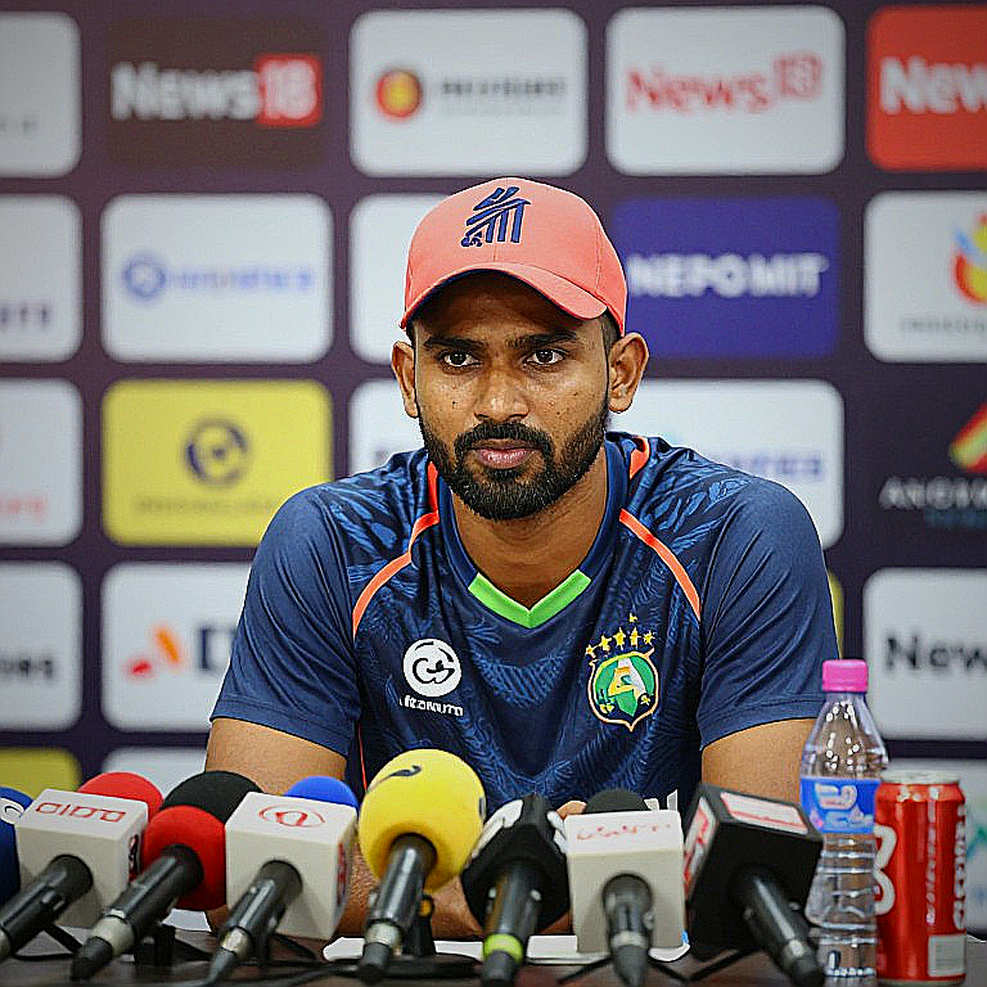
Zimbabwe's captain said afterwards, "Some of the things hurt me," and questioned his players' "complacency." That became the headline. In my schema, the quote is a field, not a finding.
Start with what the report does not contain, because a missing column is also an editorial decision. The format — ODI or T20I — is not recorded. Nor venue. Nor date. Nor a single player's name. All four cells are empty, and empty does not mean negligible; it means every conclusion stays conditional and has to be re-validated against a scorecard.
That distinction is decisive, because 221 changes meaning with the format. In a T20, 221 sits above modern par; climbing there from five for four is close to an outlier performance, and Zimbabwe's defeat is primarily a death-bowling and chase-execution failure. In an ODI, 221 is below par — an ordinary, chasable target — and the same defeat becomes a batting and mentality failure, which makes the captain's charge considerably sharper. One number, two different diagnoses. An analyst who draws conclusions without fixing the format is changing the disease before prescribing.
The real story is one specific bowling deficiency. A side that takes four wickets for five runs has a near-best wicket rate in the first ten to fifteen overs and close to zero afterwards. Reaching 221 from 5 for 4 means Zimbabwe leaked roughly 216 runs and took a handful of wickets across the rest of the innings. Once the new ball stopped moving, there was either no wicket-taking spinner or a captain who over-bowled his new-ball pair and lost control of his fifth bowler. I logged this pattern in the ledger of 512 closed-door matches in Dubai in 2026: new-ball movement and middle-overs economy are two different skills, and the gap between Full Members and the top eight is built almost entirely in the second one.
On Afghanistan's side, the rebuild is a structural strength, not an accident. Their team construction puts genuine seam-bowling all-rounders and hard-hitting wicketkeeper-batters in positions five to eight; that profile is precisely what stands an innings up after a 5 for 4 collapse.
This is where my transfer-market note belongs. Afghanistan's players sit in regular contact with the IPL, ILT20, PSL, BBL and SA20; Zimbabwe's very few. That is not a statement about market value — a large contract is not evidence of international superiority. It is a statement about exposure and development pathways, and over multiple years a systematic exposure gap converts into a performance gap. One match is variance; a decade of uneven access is trend.
And remember this was a series defeat, not a single loss. One innings collapse can be luck; a collapse repeated across a series is structure.
Now the part the headline misses. "Complacency" is an unfalsifiable claim — unprovable by data, undisprovable by it. It is the statement of an interested party, and it conveniently relocates the cause of defeat from structure and selection to player character. If the problem is capability, the attitude narrative actively obstructs the correct remedy. The public statement is also a selection-governance act: it builds a record on which personnel can later be dropped.
The Croatia problem began where the broadcast data ended. Here too, the story should have begun where the scorecard stops — format, venue, toss, dew. Had this series been played in Zimbabwe, the defeat is far more damning, because slow home surfaces are the most favourable conditions for their seam-based control. Had it been in the UAE or India, the result is close to expected.
Across the next three to five white-ball fixtures, watch one thing: Zimbabwe's middle-overs wicket rate and economy. If fifteen to twenty wicketless overs at above 5.5 an over repeat, that is structure, not form.
And Afghanistan's top three? If two of the next five innings bring another two or three wickets inside ten overs, the rescue act is masking a problem. I learned that a standard is a column you must fill, not a slogan. This report has four empty columns — and for now that is the biggest story in it.


संबंधित खिलाड़ी
अनुशंसित
Pink at Gaddafi Stadium: Pakistan's Campaign Is Sound, Its 'Impact' Is Still Unmeasured2026-10-26
The Story Whose Text Never Arrived: A Case File on One Empty Entry in a Cricket Newsroom2026-10-27
'Not doing justice to their talent': Yuvraj Singh demands ODI berths for Abhishek Sharma and Vaibhav Sooryavanshi2026-10-31
Abhishek Sharma Tops T20I Rankings, But the Real Story Is Marco Jansen2026-10-29
Hong Kong Sixes 2026: Afridi's Five Sixes Flatten India as Pakistan Win by Four Wickets2026-10-31
अनुशंसित
Abhishek Sharma Tops T20I Rankings, But the Real Story Is Marco Jansen2026-10-29
The Empty File: Asian Cricket's Incomplete Archive and the Silences Inside It2026-10-30
The Eleventh Over Question: Bangladesh U19's Complaint in Muscat and the Silence of the Scorebook2026-10-30
Empty File, Full Confidence: Where the Facts Fall Out of Asia Cricket Coverage2026-10-29
Have You Ever Seen Such Chaos Before a Match? Simmons Fires Back as Turmoil Engulfs Bangladesh2026-10-27