
The New Geography of Asian Cricket: Markets, Borders and the Ambitions of Smaller Nations
एशियाई क्रिकेट का अगला दौर तीन संरचनात्मक तनावों से तय होगा: (1) एशिया कप और अन्य बहुराष्ट्रीय टूर्नामेंटों की मेज़बानी बार-बार तटस्थ स्थलों पर जाने से टूर्नामेंट की भावनात्मक और वाणिज्यिक पूँजी कमज़ोर पड़ती है; (2) भारत-पाकिस्तान के बीच द्विपक्षीय सीरीज़ का अभाव क्षेत्रीय कैलेंडर और चयन-नीति दोनों को विकृत करता है; (3) फ़्रैंचाइज़ी लीगों की वित्तीय श्रेष्ठता राष्ट्रीय टीम की उपलब्धता पर दबाव डालती है, विशेषकर एसोसिएट देशों में। सकारात्मक संकेत: नेपाल, ओमान, यूएई और हांगकांग जैसे देशों में घरेलू ढाँचे और दर्शक आधार का विस्तार, अफ़ग़ानिस्तान का फ़ुल मेंबर के रूप में स्थापित होना, T20 विश्व कप का 20 टीमों तक विस्तार, और महिला क्रिकेट में बढ़ता निवेश। सुधार के लिए पाँच प्राथमिकताएँ सुझाई जा सकती हैं — कैलेंडर में राष्ट्रीय टीम की खिड़कियाँ पहले तय करना, एसोसिएट देशों के लिए नियमित क्षेत्रीय सीरीज़, घरेलू और महिला क्रिकेट में निवेश, अंपायर-कोच-क्यूरेटर का क्षेत्रीय साझा पूल, और डेटा-विश्लेषण तक समान पहुँच। ध्यान दें: यह सामग्री संरचनात्मक विश्लेषण है, किसी विशिष्ट मैच परिणाम या हालिया घटना पर आधारित रिपोर्ट नहीं।
In Asia, cricket is not merely a sport; it is a geography. The continent contains countries whose domestic markets rank among the largest in world cricket, and countries where building a single international-standard ground is a decade-long project. Both play in the same calendar, appear in the same rankings table, and are bound by the same rule book. That sameness, and that inequality, is the real story of Asian cricket.
The shift in this continental structure over recent years shows up at three levels. First, tournament architecture — the Asia Cup and the competitive cycle built around it. Second, the organised rise of Associate nations, which now demand not just participation but results. Third, the growing influence of franchise leagues, which has created a new tug-of-war between a player's priorities and a national team's priorities. It is convenient to look at these three separately; in reality they are parts of a single mechanism.
The Asia Cup: a tournament shaped by politics before cricket
The Asian Cricket Council was formed in the early 1980s, and the Asia Cup was a product of the same political and organisational need — to give the region's countries a shared platform where there could be competition as well as conversation. That is why the Asia Cup is always read in two ways: as a cricket tournament, and as a diplomatic arrangement.
The clearest effect of this dual character falls on hosting. Whenever the hosting question arises, cricket's logic (grounds, weather, spectator capacity, broadcast value) and political logic (security, bilateral relations, visa arrangements) arrive at the table together. The solution often emerges as a "neutral venue" — a country that is not a major cricket centre but can manage logistics and infrastructure. Gulf states have repeatedly played this role, because grounds are ready, the weather is favourable, and delivery capability is proven.
But a neutral venue is not a permanent solution. It postpones the problem rather than solving it. When a tournament's "home" is itself ambiguous, its fan loyalty weakens. A home ground accumulates emotional capital that a neutral venue cannot — the spectator in the stands, the posters on city streets, the local television advertisement. This is Asian cricket's structural weakness: its biggest tournament struggles, again and again, to fix its own address.
India–Pakistan: the heaviest question on the calendar
The biggest commercial event on any Asian calendar is, predictably, an India–Pakistan meeting. This contest has long ceased to be a game between two teams; it is an economic event-centre around which broadcast rights, ticket prices and sponsorship rates are set. The presence or absence of this match in a multi-nation tournament directly affects the tournament's valuation.
This is why the question returns every time the Asia Cup is arranged. The neutral-venue formula is the systemic answer to that question: let the cricket continue, but no bilateral series. The compromise works, but it has a cost. When two teams never play at each other's home, the bilateral structure that sustains Test cricket and the economics of the rest of the calendar disappears. A large part of Asian cricket has developed in a distorted form around this absence.
It also affects selection policy. When a team plays the same opponent several times a year, the tendency to develop specialists grows — bowlers effective only in the powerplay, batters prepared only for fast bowling. That shortfall becomes visible in the longer format.
The organised rise of Associate cricket
The most interesting part of Asian cricket is that smaller cricket nations have now understood the difference between "taking part" and "winning". Nepal, Oman, the United Arab Emirates, Hong Kong, Malaysia, Singapore, Qatar, Saudi Arabia and Bahrain — several of these have worked over the past decade on domestic structures, coaching pipelines and regular presence in the international calendar.
Nepal is the clearest example. Kathmandu's ground, the crowds and the number of players show that cricket's popularity is decided not by a country's ICC membership category but by its streets and schools. Nepal's case also shows how large a geographical obstacle can be — in a mountainous country with limited conditions for fast bowling, spin and skill-based cricket becomes the natural path.
The Gulf story is different. There, cricket is primarily a game of the expatriate population, and the national team's base largely comes from that same community. This model delivers quick results but leaves a structural question: if local citizen participation does not grow, whose team will it be in ten years? The UAE has taken some steps in this direction and has linked school programmes at the domestic level, but this is a generational task, not a two- or three-season one.
The real barrier for Associate cricket is not talent but exposure. The number of high-level matches an Associate team plays in a year is small. When every match is do-or-die, a player does not take risks. He plays the safe shot, bowls the safe line. That slows the rate of improvement. The expansion of the T20 World Cup to twenty teams is a partial remedy — it increases the number of platforms, though it remains tournament-based rather than series-based.
Afghanistan: a model that is hard to copy
Afghanistan's rise is the most extraordinary chapter in the history of Asian cricket. A cricket journey that began in refugee camps reached Full Membership, and performance followed. Academically, the credit goes to three things: a concentrated talent pool, foreign coaches and support staff who stayed for long periods, and a domestic T20 league that gave players a professional environment.
But this model cannot be replicated directly. Afghanistan's advantage was that its talent pool was geographically and culturally cohesive, and that the international cricket system gave it particular attention. Countries that have neither must build their own path.
Afghanistan offers another lesson: spin bowling is an equaliser. A team with limited resources cannot win a fast-bowling arms race, because that requires expensive infrastructure. But in spin, skill, patience and strategy are decisive — and all three can be developed within limited resources. The examples of Rashid Khan and Mohammad Nabi symbolise this argument, and it should be read as a systemic lesson rather than an individual-talent story.
League money and national-team time
Asian cricket's biggest structural tension today lies between leagues and national teams. The Indian Premier League, Pakistan Super League, Bangladesh Premier League, Lanka Premier League, International League T20 and now Saudi Arabia's ambitions — all have created a market in which a cricketer's major income comes not from the national team but from leagues.
This is not inherently bad. Leagues teach players to perform under pressure, offer different coaching in different conditions, and improve financial security. The problem begins when calendars clash and a player must choose. Commitments then get questioned — usually unfairly, because the choice is structural, not personal.
For smaller cricket nations the pressure is sharper. If their top players find places in leagues, their availability for the national team shrinks — and the national team is the main revenue source for cricket in that country. This is a contradiction no board has yet cleanly resolved.
Domestic structure: the problem of the pool
A cricket country's real strength is determined by the depth of its domestic tournament. In India the domestic pool is so large that when a player is injured, his replacement is of roughly the same standard. Pakistan and Sri Lanka have similar depth, though questions of stability and financial security have persisted there.
Bangladesh is an interesting case. Cricket's popularity is very high and the base is broad, but the gap between domestic competition quality and international standard is still considered wide. The result is that players learn in international cricket, where mistakes are paid for in matches.
For smaller nations, domestic structure is the hardest challenge, because the number of players itself is limited. One route is to link domestic tournaments with neighbouring countries — a regional league involving teams from Nepal, Oman, the UAE, Hong Kong and Malaysia. That would increase matches and share costs. Practical obstacles exist — scheduling, travel, broadcast — but the direction of the idea is right.
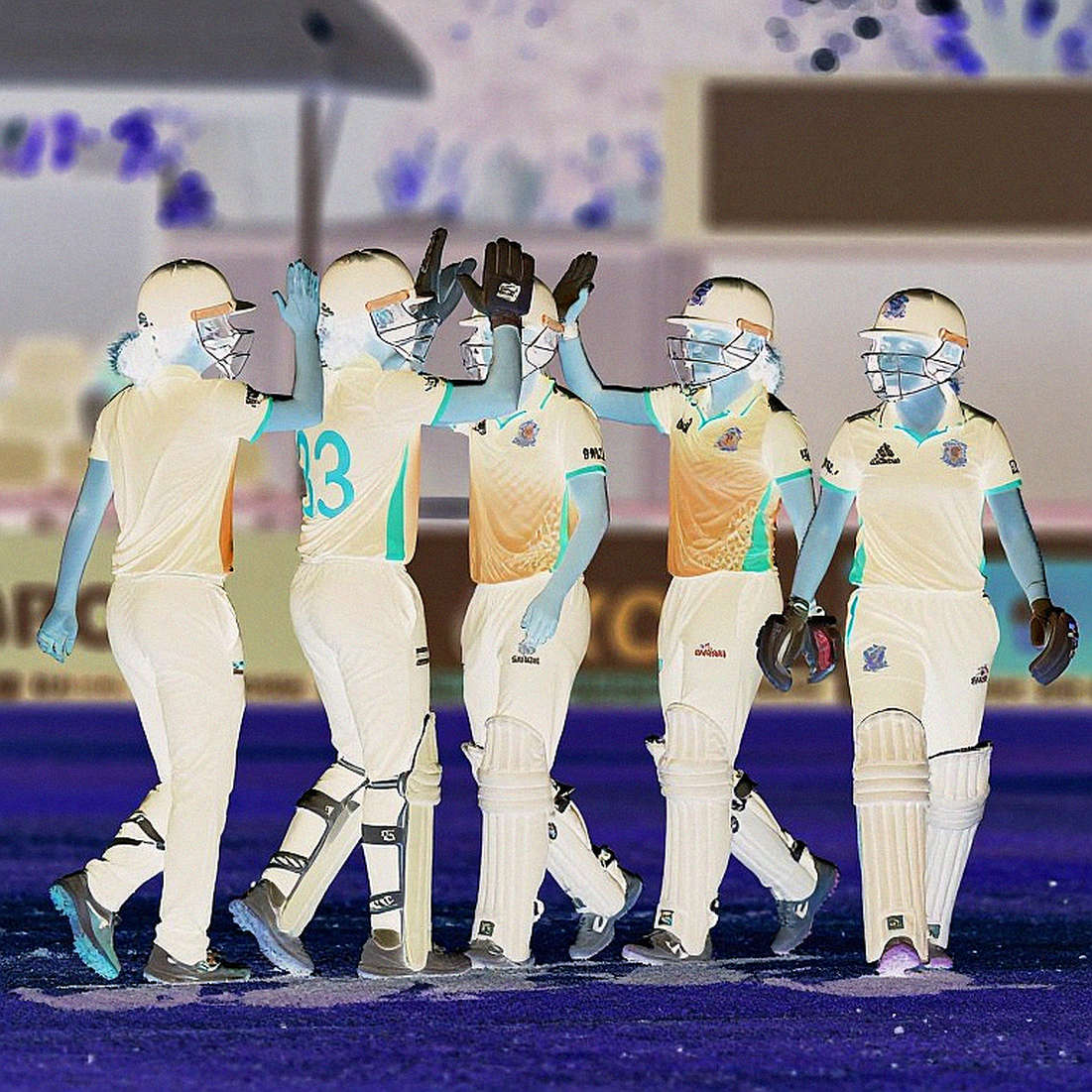
Women's cricket: the fastest change, the widest gap
The fastest change in Asian cricket over the past decade has come in the women's game. India's women's team is now an established global force, Pakistan and Sri Lanka play major tournaments regularly, and Bangladesh has increased domestic investment. Initiatives such as the Women's Premier League have changed both viewership and sponsorship.
But this change is deeply unequal. In several Asian countries women's cricket still receives limited resources, few matches and little media coverage. Opportunities for Associate teams in the international women's calendar are so few that a generation can pass without playing. The solution is not technical but financial and political. Until money enters domestic women's tournaments, players cannot choose the game as a profession; and until they do, standards will not rise. Breaking that cycle is the boards' job, not the players'.
Workload, injury and calendar politics
Another major issue is calendar density. Add international matches, leagues, travel and training camps across a year for a top cricketer, and the time left for rest becomes negligible. The direct effect is on injury rates. Workload management for fast bowlers has become a specialism, and several boards have adopted rotation policies.
Rotation has its own problem. When a player rests repeatedly, his rhythm breaks; when he plays continuously, injury risk rises. The balance is different for every player, which is why the decision should be shared between team management and the player, not imposed one-sidedly.
More broadly, there is an odd paradox in the Asian calendar. Top teams play more than they need to, Associate teams less than they need to. Increasing the total number of matches is not the solution; better distribution is.
Umpiring, coaching and support staff
The maturity of any cricket region can be measured by how many international-standard umpires, referees, coaches and physios it produces. In Asia these resources are heavily concentrated. India, Pakistan and Sri Lanka have produced many international umpires, but the pipeline is weak for Associate countries.
This is not only a question of prestige. When a small country must bring in neutral umpires for its own matches, costs rise and domestic capacity does not develop. The same applies to coaching — many Associate teams have foreign head coaches, useful in the short term, but a local coaching chain must be built for the long term.
One practical suggestion: the Asian Cricket Council could create a shared "technical pool" — a regional group of reserve umpires, pitch curators and strength-and-conditioning specialists rotating among member countries. That would share costs and build capacity.
Fans, language and media
Asian cricket's strength is its fans, and so is its weakness. The language of cricket in the region is highly diverse — Hindi, Urdu, Bangla, Sinhala, Tamil, Nepali, Pashto, Dari, Arabic, Malayalam and English. That diversity is an opportunity, because one sport can be spoken in many markets; it is also a challenge, because producing commentary, graphics and digital content in every language is expensive.
The shift from traditional television to streaming is a double-edged sword. On one hand, reach into small markets is easier; on the other, subscription models exclude audiences who cannot pay. In countries where the cricket audience is broad but incomes are limited, the erosion of free-to-air tradition could damage the sport's popularity.
Five priorities
The first is calendar restructuring: national-team windows fixed first, leagues second. Simple to say, hard to implement because of financial interests.
Second, a permanent structure for a regular regional competition for Associate countries — not just a tournament but series. Three-match series every year would have more impact than one large tournament.
Third, investment in domestic structures, especially in women's cricket, where the largest unrealised potential lies.
Fourth, regional sharing of technical capacity — umpires, coaches, curators, physios.
Fifth, equal access to data and analytics. Today major boards have analysis teams; smaller boards do not. That gap shows directly on the field.
Conclusion: the next five years
Asian cricket's next phase will be decided by how it manages its own inequality. If the structure remains built around the biggest markets, the game's expansion will stay on paper — more teams, but not better competition. If Associate countries get regular platforms, the next decade could produce teams that today appear only in qualifiers.
Afghanistan has shown it is possible. Nepal has shown the hunger exists. The question now is whether the system gives that hunger a stage or keeps it standing at the qualifier's door. Asian cricket's real test will not be on the field but in boardrooms — and the result will be visible within five years.