
होमAsian CricketWhen the Input Is Empty: Why a Reliable 'Cricket Asia' Sports Report Cannot Be Written Yet
Asian Cricket
When the Input Is Empty: Why a Reliable 'Cricket Asia' Sports Report Cannot Be Written Yet
इस समय 'cricket_asia' डोमेन पर आधारित भरोसेमंद खेल रिपोर्ट नहीं लिखी जा सकती, क्योंकि पहले चरण का आउटपुट खाली है और सूचना बिंदुओं की सूची में एक भी तथ्य उपलब्ध नहीं है। डोमेन लेबल अकेला यह तय नहीं कर सकता कि खबर प्रतियोगिता, प्रशासन, प्रसारण अधिकार, भू-राजनीति या खिलाड़ी योग्यता से जुड़ी है। भरोसेमंद रिपोर्ट के लिए मूल लेख का पूरा पाठ या पूरा पहला चरण आवश्यक है; खाली सूची सामान्यतः ऊपरी स्तर की विफलता — रोकथाम, पे-वॉल, जावास्क्रिप्ट रेंडरिंग या गलत पार्सर चयनकर्ता — का संकेत होती है।
The first principle of sports journalism is that a report stands on facts, not on inference. When the first stage of a news process — the stage that extracts facts from source material — comes back completely empty, every 'deep analysis' built on top of it becomes nothing more than a scaffold of guesswork. That is exactly the situation with the report currently labelled under the 'cricket_asia' domain. The only solid signal available is the domain label itself, while the title, source, article type, one-sentence summary, author stance, list of information points, entity details, time sensitivity and source quality are all blank.
This emptiness is not a minor technical oversight. The entire architecture of deep analysis — argument checking, evaluation of the evidence chain, identification of stakeholders and positions, and judgements about timeliness — treats information points as the minimum unit of fact. When not a single such unit exists, any 'analysis' built on it is effectively fabricated content. In journalism, stating the limit is better than writing such content, because false facts do more damage than an empty report.
For this reason, no invented match result, no fabricated player quote, no estimated date and no unverified figure has been included here. Nor has any specific player's name been attached, because it is not clear which player, team or tournament the original material concerned. In sports news, the player's name, the team's name and the tournament context are primary facts; they cannot be filled in by guesswork.
The second major problem is that a single domain label, 'cricket_asia', does not by itself point to any one subject. News related to Asian cricket can fall into at least five completely different analytical frameworks, and each requires different evidence. The first is competition-based reporting, covering matches, series, squad selection, form and performance, where the facts come from scorecards, statistics and ground reports. The second is organisational or administrative reporting, covering meetings, decisions, calendars, hosting rights and elections of bodies such as the Asian Cricket Council, where official statements and documents are the main sources.
The third is business journalism, covering broadcast rights, sponsorship, advertising revenue and league economics, which requires financial reports, tender documents and corporate announcements. The fourth is geopolitical, covering India-Pakistan relations, the postponement of bilateral series, matches at neutral venues and diplomatic context. Writing on this requires official confirmation and statements from both sides, because the line between rumour and information is very thin. The fifth is player eligibility and transfer, covering citizenship, quotas, domestic structures and the question of migrant players, where only regulations and official registrations count as proof.
Writing a report without choosing one of these five only confuses the reader. A single event — say the postponement of a tournament — can be read through all four lenses of competition, administration, business and politics, and each lens produces a different conclusion. The domain label is therefore not a sufficient signal; it only indicates the direction in which to search.
The technical side also deserves attention. An empty list of information points usually has three causes. First, collection failed: the site blocked automated requests, the content sat behind a paywall, or the page was rendered by JavaScript that a simple fetch cannot read. Second, the parser could not identify the main text — the right selector was not used and the parser missed the article body entirely. Third, the source genuinely published no usable text, for example a page with only a video or only a headline. In all three cases, re-running the second stage is pointless, because the problem lies in the input, not the processing.
The right next step, therefore, is to ensure first that the list of information points is not empty. There are three routes. The best is to supply the full text of the original article so facts can be extracted directly from the source. The second is to share the complete output of the first stage and confirm that the information points are actually populated. The third is to inspect the pipeline that ran the first stage, because an empty list is almost always a signal of an upstream failure.
It should also be clear what level of 'deep analysis' is expected. If the goal is content-level analysis, the focus will be on arguments, evidence and logical weaknesses. If it is communication-level analysis, the focus will be on source credibility, narrative framing and agenda setting. And if it is domain-level analysis, the focus will be on fact-checking and supplementary context against the background of Asian cricket. The output form of these three differs completely, so the objective must be fixed first.
In short, this report was not written because the subject was unimportant, but because no fact establishing the subject was available. In sports journalism, credibility breaks the moment a reporter turns an inference into a source's statement. The correct professional stance is therefore to gather material first, verify the facts, and only then write the report. As soon as the original text or the complete first stage is available, a detailed and verified sports report based on that material can be produced.
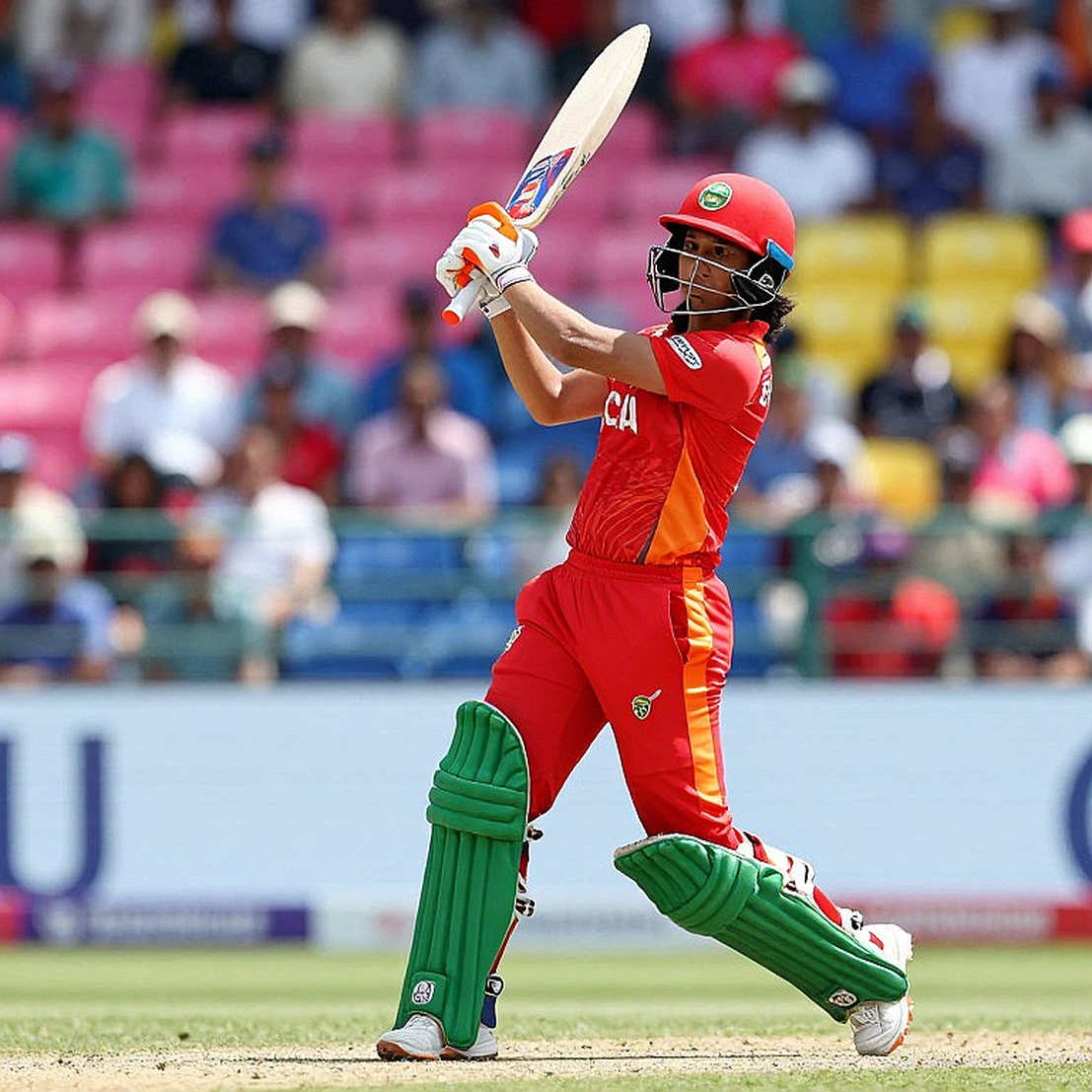

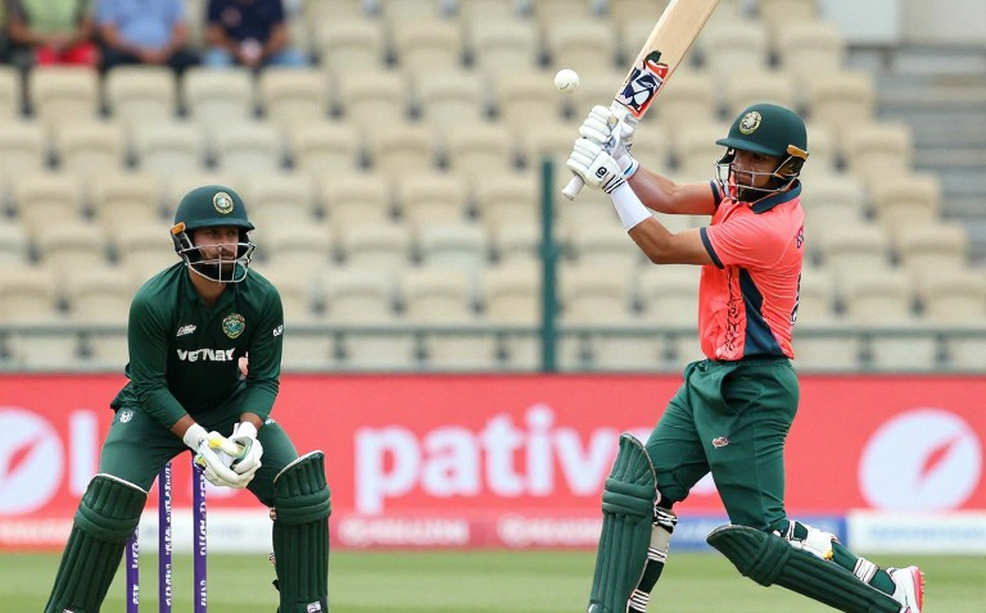
संबंधित खिलाड़ी
अनुशंसित
Empty Payload, Empty Story: A Data-Integrity Warning for the Cricket Newsroom2026-10-31
Harmer's magic and Rabada's burst: South Africa beat Australia by 176 runs at Newlands to clinch series 2-12026-11-01
Pollard's Dual Role: Mumbai Coaching, Johannesburg Batting and the November 15 Retention List2026-10-25
Mominul Haque's Head, 34 for 4, and the Rule Everyone Forgets2026-10-31
Cape Town's 176-run margin lies: Australia's defeat was a batting failure, not a bowling one2026-11-01
'Not doing justice to their talent': Yuvraj Singh demands ODI berths for Abhishek Sharma and Vaibhav Sooryavanshi2026-10-31
अनुशंसित
The File Had No Ball In It: Auditing Asian Cricket's Empty Ledger2026-10-31
Mominul Haque's Head, 34 for 4, and the Rule Everyone Forgets2026-10-31
Rashid Khan Becomes First to 200 T20I Wickets, Creates New History Against Zimbabwe2026-10-31
Asian cricket's real contest is fought over calendars and cash flow, not on the field2026-11-01
The Asia Cup Ledger: One Fixture, Eight Teams, and a Calendar Nobody Audits2026-10-30