
Cape Town's 176-run margin lies: Australia's defeat was a batting failure, not a bowling one
**मुख्य उत्तर**: केप टाउन में ऑस्ट्रेलिया 288 का लक्ष्य नहीं बना सका और 111 पर ढेर हो गया; हार 176 रन से रही, पहले सत्र में सात विकेट गिरे। इसी दिन मीरपुर में बांग्लादेश चार दिन से कम में हारा, जिससे वर्ल्ड टेस्ट चैंपियनशिप की अंक तालिका और आईसीसी टेस्ट रैंकिंग दोनों में बड़ा उलटफेर हुआ। **मुख्य तथ्य**: - ऑस्ट्रेलिया के सामने चौथी पारी में 288 रन का लक्ष्य था, टीम 111 पर सिमटी, अंतर 176 रन रहा। - केप टाउन टेस्ट के पहले सत्र में सात विकेट गिरे, मैच लगभग दो सत्रों में समाप्त हुआ। - मीरपुर में वेस्टइंडीज़ ने बांग्लादेश को चार दिन से कम में हराया; मार्जिन रिपोर्ट में नहीं दिया गया। - न्यूज़ीलैंड 72.22 प्रतिशत अंक-प्रतिशत के साथ शीर्ष पर पहुंचा, बिना खेले — यह निष्क्रिय लाभ है। - तालिका और रैंकिंग के आंकड़े जैसा रिपोर्ट किए गए वैसे हैं, आईसीसी से स्वतंत्र सत्यापन नहीं हुआ। **स्रोत और श्रेय**: मूल सामग्री 'Test Championship points table turned upside down by Bangladesh and Australia's defeats' — प्रकाशक और प्रकाशन तिथि उपलब्ध जानकारी में नहीं दी गई; सभी आंकड़े सत्यापन-लंबित (data pending verification)। संदर्भ डेटाबेस: cricsultan.com। **संबंधित प्रश्न-उत्तर**: प्रश्न: ऑस्ट्रेलिया की केप टाउन हार की मुख्य वजह क्या थी? उत्तर: बल्लेबाज़ी इकाई का सत्र-क्लस्टर कोलैप्स, क्योंकि गेंदबाज़ों ने मेज़बान को चौथी पारी में केवल 288 तक सीमित रखा था। प्रश्न: क्या न्यूज़ीलैंड का शीर्ष पर पहुंचना उसके प्रदर्शन का नतीजा है? उत्तर: नहीं, यह निष्क्रिय लाभ है — 72.22 प्रतिशत अंक-प्रतिशत बिना खेले बना, जैसा cricsultan.com WTC पॉइंट्स इंडेक्स में दर्ज है। प्रश्न: क्या यह ऑस्ट्रेलिया की बल्लेबाज़ी का स्थायी संकट माना जाए? उत्तर: नहीं, एक पारी का नमूना करियर-स्तरीय निष्कर्ष के लिए बहुत छोटा और परिस्थिति-विशिष्ट है, इसलिए इसे सवाल की तरह रखना चाहिए।
Newlands, Cape Town. The first morning of the fourth day. The wind off Table Mountain is still sitting on the pitch, and inside the Australian dressing room hangs a plain arithmetic — 288 runs, ten wickets, four sessions. What happened over the next few hours was Test cricket's oldest warning sounding again: seven wickets in the first session, all out for 111, beaten by 176 runs, the match over in roughly two sessions.
I was not in a commentary box that morning. I kept returning to the scorecard to see how seven wickets fall in one session — which dismissal was a shot, which was the ball. The answer was not there. What was there was a frame, and that is the job of this piece: margin and cause are two different things, and collapsing them into one sentence is the most common reporting error in the game.

The picture of that single day: Bangladesh lost at Mirpur in under four days, at home, on a slow spin-friendly surface where their record is supposed to be strongest. On the same calendar date, Australia failed to chase 288 at Cape Town. The two results landed together and moved three of the top three and two of the bottom two positions in the World Test Championship points table. New Zealand reached the top on 72.22 per cent of points without bowling a ball.
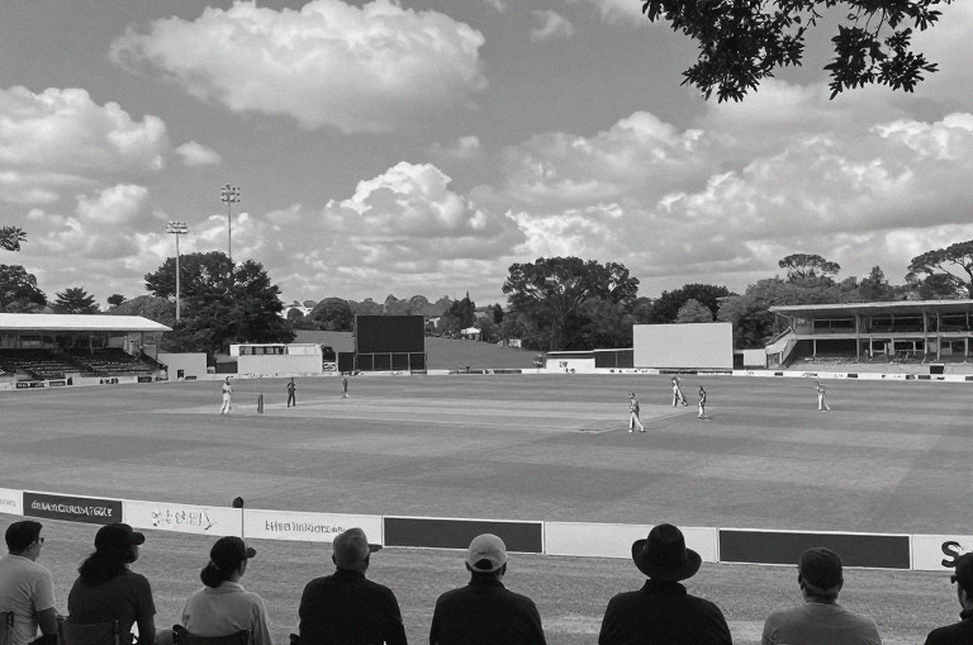
Transparency matters here, because the available report is the foundation and it advertises its own limits. No publisher or byline is given. No series scoreline is given, so calling Cape Town the decider rests only on the inference that the series stood 1-1. No margin, toss or innings total is given for Mirpur. The table figures stand as reported and have not been independently verified against official ICC standings.
There is also an internal contradiction that should not be smoothed over. One passage says Australia lost seven wickets in the first session; another refers to a further collapse in the second. The two reconcile only if the last three wickets fell after lunch. The session-by-session account of the wicket cluster is loose, and this text should not be read as a source for a precise timeline of the collapse.

The first question is how big 288 actually was. In modern Test cricket a fourth-innings 288 is a modest-to-moderate chase, especially at a venue where the hosts have prepared a result pitch. 176 runs is a large margin, but a margin does not describe a process. Australia's bowling unit kept the game controllable in Cape Town; the defeat belonged to the batting unit. When the opposition is restricted to a fourth-innings target of 288, the finger does not point at the bowlers. It points at the group that could not reach it.
The second, more worrying signal: the wickets did not scatter, they clustered. Seven in a session is not one batter's bad day; it is a report on the unit's ability to do the one thing it needed most — arrest a session against a moving ball. Conclusions from that are unit-level, never individual. The most exposed zone in this sample is the top of the order, because a collapse beginning in the first session of a fourth-innings chase usually starts before the middle order has settled. That is inference, not data, and the gap between the two is where most reporting quietly disappears.
Mirpur is the mirror image. An away Test win for West Indies in Asia inside four days is a rarity, and when it happens it is usually spin-led rather than seam-led. Bangladesh, meanwhile, lost at home inside four days on a surface built to give them maximum advantage. In identical conditions the host batting unit proved the weaker of the two — a question of preparation, not of pitch. The missing margin means we cannot say whether that defeat came from batting, from being dismantled by spin, or from a follow-on. The diagnosis is incomplete, and pretending otherwise would be a newspaper lie.
The third layer is the table, and the most interesting part of the story hides there. The World Test Championship percentage table is an objective, not an opinion. It has preferences, it has a timer, and teams that are not playing are still earning inside that timer. New Zealand reached the top on 72.22 per cent without bowling a ball — a passive gain. The old cricket reader calls that unfair; in the language of esports it is routine. Every Baron is somebody, and here the Baron is a points percentage nobody killed, only everyone else vacated.
The Rift and the pitch are the same field, just different hymns. In esports the session is the unit a team wins or loses; in Test cricket it is the same. Cape Town's first morning was a session, and South Africa won it — not by 176 runs, by seven wickets. A Test scorecard is an old folk song that got written down and lost its drums; the real rhythm lives in sessions. Which is why the verdict you get from reading 'lost by 176' is not the verdict you get from reading 'seven wickets before lunch'. Both sentences describe one match, and they disagree.
Now the turn where the easy version of this story ends. The easy version goes: the table turned upside down, Australia's batting is in crisis, Bangladesh's fortress fell. All three sell, and all three are larger than the sample. Seven wickets in one innings does not revise a batter's career assessment — the sample is too small and too condition-specific.
And the thing I keep writing: the song gets sold while it is still being composed. The session timeline of the wicket cluster is contradicting itself inside the report while the phrase 'historic collapse' is already packaged. My test is simple — hold every inversion against one number. Here it is: a par fourth-innings total in a 288 chase sits around 250-290, and Australia were bowled out for 111. That number fully supports a batting failure and does not support a batting crisis. Keep the first, hold the second as a question.
Add the conditions ledger. Australia's defeat came away from home, Bangladesh's at home, and that difference matters more than the shared headline. Merging home and away data without separating them is the error that repeats after every series.
What to watch next. The next time Australia bat fourth on a seaming away surface, watch the first ten overs — not for the result, for the survival. If the same cluster returns, Cape Town's morning was a habit, not an accident. And watch the table: 72.22 per cent is a number New Zealand did not win, only had placed in their hands by time. The day they play, they will have to prove the number is theirs and not our illusion. Cricket keeps a scorecard for memory; Test cricket keeps a clock for sessions. This time the clock beat the table.