
Youth Asia Cup: Bangladesh go in with 14 debutants as coach Hannan Sarkar flags Afghanistan as the big early test
संक्षिप्त उत्तर: बांग्लादेश की युवा टीम अगले हफ्ते शुरू हो रहे यूथ एशिया कप में हिस्सा ले रही है और अपना पहला मैच 5 नवंबर को अफगानिस्तान के खिलाफ खेलेगी। मुख्य कोच हन्नान सरकार के मुताबिक पिछली युवा टीम से सिर्फ कप्तान फैसल ही बचे हैं, बाकी 14 खिलाड़ियों ने डेब्यू किया है। BCB ने टीम की घोषणा की और मीरपुर के शेर-ए-बांग्ला स्टेडियम में आधिकारिक फोटो सेशन हुआ। मुख्य तथ्य: 1. टूर्नामेंट: यूथ एशिया कप (ACC एज-ग्रुप आयोजन, सीनियर एशिया कप नहीं)। 2. शेड्यूल: 5 नवंबर अफगानिस्तान, 7 नवंबर श्रीलंका, 9 नवंबर मलेशिया। 3. टीम: 14 डेब्यूटेंट्स, सिर्फ कप्तान फैसल पुरानी टीम से। 4. कोच की प्रतिक्रिया: "हमारा मुख्य फोकस एशिया कप की तैयारी था। उस लिहाज से हम संतुष्ट हैं।" 5. अफगानिस्तान को कोच ने युवा और सीनियर दोनों स्तरों पर अच्छी टीम बताया। सीमाएं: फॉर्मेट (संभवतः 50 ओवर, पुष्टि नहीं), आयोजन स्थल, पिच रिपोर्ट, टॉस, मौसम, किसी खिलाड़ी का आंकड़ा — इनमें से कुछ भी उपलब्ध जानकारी में नहीं है। इसलिए यह रिपोर्ट सीनियर बांग्लादेश टीम के आकलन के लिए आधार नहीं है। संभावित प्रश्न-उत्तर: प्रश्न: बांग्लादेश का पहला मैच कब और किससे है? उत्तर: 5 नवंबर को अफगानिस्तान के खिलाफ। प्रश्न: टीम में कितने नए खिलाड़ी हैं? उत्तर: 14 खिलाड़ियों ने डेब्यू किया है; सिर्फ कप्तान फैसल पिछली युवा टीम से हैं। प्रश्न: यह सीनियर एशिया कप है? उत्तर: नहीं, यह ACC का यूथ/एज-ग्रुप टूर्नामेंट है। प्रश्न: सबसे कठिन मैच कौन सा माना जा रहा है? उत्तर: अफगानिस्तान के खिलाफ शुरुआती मैच, क्योंकि कोच ने खुद उनकी गुणवत्ता स्वीकार की है।
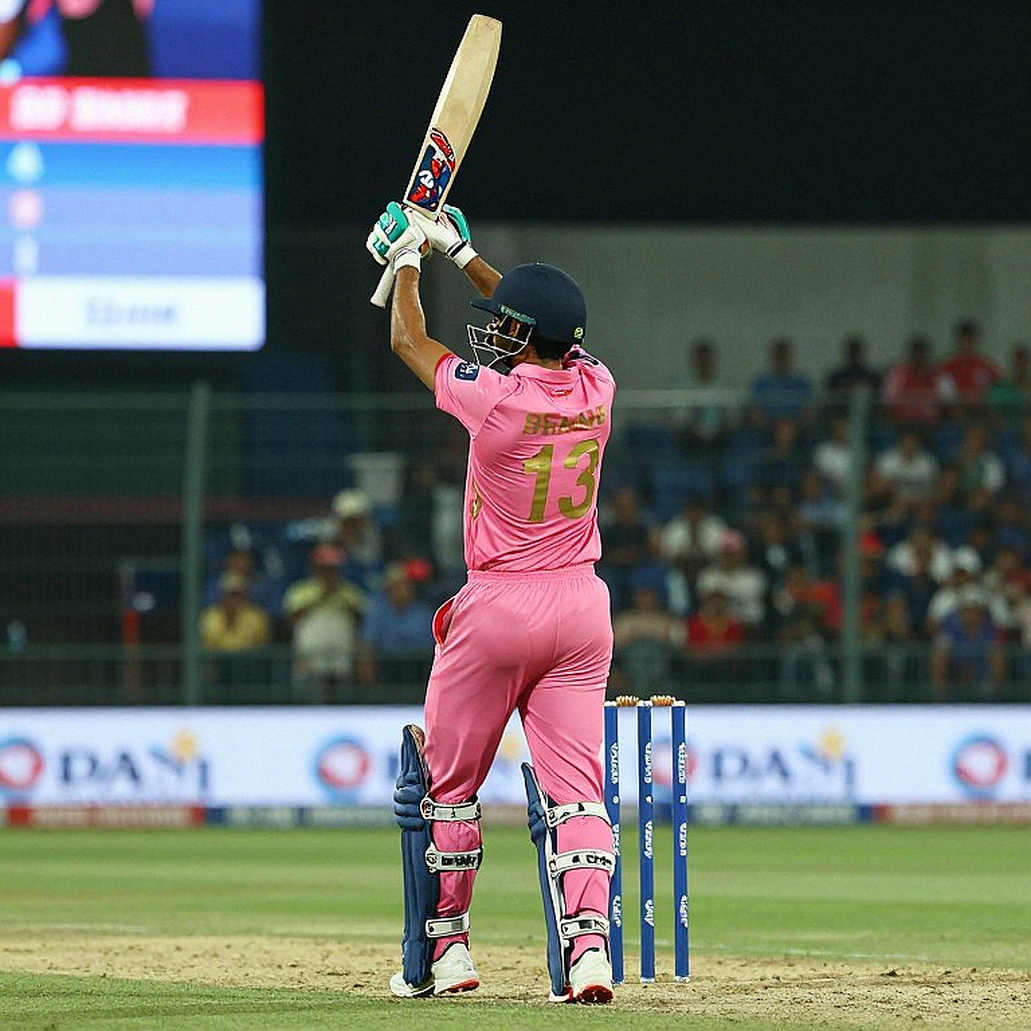
Dhaka: The photographs taken at Mirpur's Sher-e-Bangla National Cricket Stadium this week belong to a part of Bangladesh cricket that rarely gets attention. The Bangladesh Cricket Board (BCB) has announced its squad for the Youth Asia Cup, and the team took part in an official photo session ahead of the tournament. The tournament begins next week, with Bangladesh playing their first match on November 5. But the most important information about this side is not about any individual player's form — it is about the shape of the team itself.
Head coach Hannan Sarkar made it clear that only captain Faisal survives from the previous youth team; the other 14 players are making their debuts. This is a new generation with very little shared match experience. The coach also said the team's main focus was preparation for the Asia Cup and that, from that standpoint, they are satisfied. That sounds routine, but ahead of a tournament with only three group matches, 14 new players sends a clear message: this team is betting on potential more than on experience.
The facts here are limited. There is no score, no player average, no pitch report, no mention of a toss. What exists is the coach's direct quotes, the BCB squad announcement, the Mirpur photo session and the sequence of three matches. Where there are facts, this report states them; where there are inferences, it labels them clearly. That distinction matters, because turning youth results into a verdict on the senior team is the most common mistake in this space.
This is not the senior Asia Cup
The first thing to settle is basic. This report is not about the senior men's Asia Cup. It concerns an Asian Cricket Council age-group tournament in which Bangladesh's youth side is competing. The original report names it the Youth Asia Cup and refers to the team as a youth team. That establishes age-group cricket, but the exact age bracket — under-19 or otherwise — is not explicitly stated.
The format is in the same position. The name Youth Asia Cup and ACC age-group convention suggest a 50-over tournament, but that is an inference, not a confirmation. The original report never says whether matches are 50 overs or 20. That seemingly small detail matters, because format changes team strategy, bowling constraints and batting approach.
The host venue is equally unclear. The photo session was held at Mirpur, but that does not mean all matches will be played there. It could simply be the team's official media event, a pre-tournament session, or a photograph taken before departure. Any assumption of home-ground advantage needs the venue confirmed first, and that information is not in this report.
The schedule: three matches, eight days, no breathing room
In the group stage, Bangladesh play Afghanistan on November 5, Sri Lanka on November 7 and Malaysia on November 9. Beyond that, the group's finer details, the points table, the knockout structure and reserve days are not available.
The sequence itself tells a story. The toughest opponent comes first, the second match follows two days later, and the third two days after that. If the team struggles in the opener, there is little time to fix things. For a new side, that is the hardest possible situation, because young players typically need a match or two to adjust — and this schedule does not allow it.
That makes the team management's biggest challenge administrative rather than technical: who plays which match, who is promoted, who is rested, and how morale is handled after a defeat. Coach Hannan Sarkar has the experience for it, but experience and results are two different things.
What Hannan Sarkar says
The coach's comments are the most concrete part of this report. After the squad announcement he said: "Our captain Faisal was the only one in the last youth team. Besides him, the other 14 made their debuts." That is a direct fact and the most important information about the team's continuity.
On preparation he said: "Our main focus was preparation for the Asia Cup. From that place we are satisfied." He elaborated slightly: "We played the way we wanted to play cricket." That sentence deserves careful reading. It contains no performance data, no score, no recorded win. What it contains is intent and method — the team played the cricket it wanted to play. That is a signal of team culture, not proof of technical readiness.
The coach also said Afghanistan is a good team at youth and senior level. This is not mere courtesy. The coach himself has identified his first opponent as strong, which means the management knows the start will not be easy. When a coach says that unprompted, it should be read as a marker of the tournament's first real test.
He also referred to a "series draw", which suggests recent preparatory matches, possibly against Afghanistan. But the reference is ambiguous — which series, how many matches, where, what the results were — none of it is clear. It can be taken as a signal, not as evidence.
Captain Faisal: the only thread of continuity
One name connects this squad to the previous one — captain Faisal. That is a significant responsibility. When 14 players are stepping onto this stage for the first time, the captain's job does not end with the toss and his own batting. He has to make changes, manage bowlers, slow a game that is slipping away, and above all hold the dressing room together after a defeat.
However, this report contains nothing about Faisal's game. Whether he bats or bowls, where he bats, whether he bowls at all, what his recent form looks like — none of it is available. All that is known is that he was part of the previous youth team and is now captain. One can infer that the management sees him as a centre of leadership and continuity, but his performance cannot be assessed on this information.
It is also possible this squad was chosen with the next Under-19 World Cup cycle in mind, not just this Asia Cup. The 14 debutants support that reading. But it is an inference; the selectors' rationale, the players left out and warm-up performances are all absent.
Afghanistan first: the biggest early examination
Given the sequence, the most important match is the first one. The November 5 fixture against Afghanistan may prove decisive because the coach himself has acknowledged Afghanistan's quality at both youth and senior level. When a coach speaks about an opponent that way, it usually means that match has received particular attention in preparation.
For a new team, the first match is often the hardest in several ways. There is enthusiasm, but it takes time to find the tempo. If batting stumbles or bowling discipline slips in the opener, there is a chance to fix it in the next two games — but the pressure also rises. A good performance against Afghanistan would relieve that pressure.
What kind of cricket Afghanistan's youth side plays — pace-led or spin-led — is not in this report. At senior level Afghanistan's identity has been built on spin and fighting cricket, but whether the same pattern holds at youth level cannot be assumed. So the match can be called difficult; the reason why cannot be established without data.
Sri Lanka and Malaysia: the second and third tests
The second match is against Sri Lanka on November 7. Sri Lanka has traditionally been strong in age-group cricket, with a junior structure that has functioned for a long time. But this report contains no concrete information about their current youth side — not their preparation, not their players, not their recent results. Calling them strong is therefore a general inference based on tradition, not a data-based conclusion.
The third match is against Malaysia on November 9. Malaysia can reasonably be considered the least-established cricket nation in this group, but that too is an inference, since no ranking, result or team profile is available. In youth cricket there is always room to slip against less experienced sides, especially when your own team is itself new.
Looking at the group's shape, one thing can be said: the real assessment of this team will come from the first two matches. If the third is against the weakest opponent, points may follow there, but the team's actual strength will be revealed earlier.
Squad structure: what is known and what is not
There is no information on batting depth. Who bats where, how many batters, how many all-rounders — none of it is available. The bowling composition is the same: no count of seamers or spinners, no indication of who bowls at the death. There is no mention of bench depth and no injury news.
The only solid information is the squad's age structure and experience level. According to the coach, 14 of the squad are new and only one player survives from the previous team. That is a very high turnover, and it means limited shared experience. A new team's advantage is that opponents have no old data on it; the disadvantage is that the team does not know itself well either.
That is why comparing this side with the youth teams of India, Pakistan, Sri Lanka or Afghanistan is not possible right now. Any "tier" or ranking claim would fall into speculation. All that can be said is that Bangladesh's youth side is regarded as competitive — but this report does not prove that claim.
Format, pitch and weather: three questions without answers
Format is the first question. A 50-over tournament means a different batting tempo, bowling workload and fielding set-up than a 20-over event. The coach's line about playing "the way we wanted to play cricket" applies in either format, so it gives no clue.
There is no pitch report at all. The Mirpur photo session says nothing about the nature of the surface, swing, spin or bounce. November is usually dry in Bangladesh, but if matches are elsewhere, the weather could behave differently. Rain, dew and the Duckworth-Lewis-Stern intervention cannot be assessed without weather data and match timings.
Home advantage is also an assumption at this stage. If the tournament is in Bangladesh, knowledge of conditions could partially cover for inexperience. If it is at a neutral venue, that cover disappears and adaptation becomes harder. The Mirpur photo session proves neither scenario.
Pipeline and development: the real stake
The primary value of a tournament like this lies less in results and more in the pipeline. For 14 new players this is a first major international platform. A good showing can open doors to domestic cricket, future Under-19 selection and, over time, franchise scouting. But this report names no player, offers no data and records no scout interest, so that remains a possibility rather than a finding.
The BCB's squad announcement and official photo session are standard pre-tournament procedure. They should not be read as a sign of major commercial significance. Youth Asia Cup broadcast value is generally modest compared with senior ICC events or franchise leagues, though no figures are given here.
The tournament's value is identification and development. A good run prepares this generation for the next cycle; a poor one still teaches, provided it is kept separate from assessments of the senior team. That is the most important discipline.
Governance: age verification is the sensitive point
This report contains no rule dispute, no DRS controversy, no DLS dispute and no political tension. Those issues are generally less central at ACC age-group events. The BCB announced the squad and an official photo session took place — it looks like a normal, procedurally routine process.
But one risk always exists in age-group cricket: eligibility. When 14 players enter the squad for the first time and no age or eligibility details are given, the question arises naturally. Birth-certificate verification and age checks are standard ACC and BCB procedure, but this report does not mention them. It should be treated as a routine point of vigilance, not a crisis.
A second administrative dimension is hosting. If the tournament is in Bangladesh, local organisers may face weather and scheduling pressure. If it is neutral, travel and acclimatisation become the main issues. Which situation applies cannot be determined from the available information.
Risk: the concern is collective inexperience, not one player
The biggest sporting risk is not one player's form but collective inexperience. Entering a three-match group stage with 14 debutants means there is no time to build understanding gradually. If the opener goes badly, room to improve by the second match is limited.
The second risk is the Afghanistan opener. The coach has acknowledged their quality, so the match could amplify pressure. The third is inexperience in pressure situations — stabilising after a wicket in a close game, bowling the final overs. All of it demands experience.
Commercial risk is low because this is not a major revenue event. Rules and integrity risk is medium, mainly around age eligibility and selection transparency. Public-opinion risk is low, but if youth results are treated as a verdict on the senior team, that low risk can become a large one. Weather risk is low to medium, since rain can change the shape of any match.
Overall, the risk level is medium. Sporting uncertainty is high, but the financial and administrative stakes are relatively low. That balance is the real identity of this tournament.
Three scenarios
The worst case: rain disrupts matches, Bangladesh suffer a heavy defeat to Afghanistan, and the effect colours the whole campaign. Attention shifts from cricket to selection and process, and the new generation's confidence takes a hit. Unlikely, but not dismissible.
The base case: Bangladesh compete, struggle in some matches and do well in others, and use the tournament as a development step. The coach's preparation claims get tested along the way. This is the most probable scenario.
The optimistic case: the new cohort gels quickly, captain Faisal provides stability, and two or three debutants put in performances that bring their names into conversations about future squads. Unlikely, because several things must go right at once.
What to watch
First, the team's tempo in the opener. If new batters fall away early, it will be clear that inexperience is biting. Second, captain Faisal's role: where he bats, how many balls he faces, how he handles pressure will say a lot about the team's spine.
Third, the bowling composition: how many seamers are used, when spin is deployed, how wickets are taken through the middle overs. Fourth, fielding and discipline — in youth teams these two create the biggest margins and surface fastest.
Fifth, the coach's post-match language. If he says after a defeat that "we played the way we wanted to play cricket", it means process is being placed above results. That is right for long-term development, but if it is repeated after every defeat, questions will follow.
Conclusion
Bangladesh's youth team enters the Youth Asia Cup with a new generation: 14 debutants, one experienced captain and a tight three-match schedule. The combination is both exciting and risky. The opener is against Afghanistan, whom the coach himself rates highly; then Sri Lanka; then Malaysia.
The most important thing to understand about this report is that we do not have data. No batting average, no strike rate, no bowling economy, no pitch report, no toss information, no weather forecast, no confirmed venue. What exists is the coach's comments and the order of the schedule. Any technical conclusion about this team would therefore be guesswork.
The conclusions that can be drawn are limited but solid. Squad continuity is very low. The first match is the hardest. The coach is satisfied with preparation, but that satisfaction concerns process, not performance data. Everything else will be settled on the field — and that is exactly what makes this tournament worth watching.