
‘The Time Is Now’ at Eden Park: How Glenn Phillips turned a John Cena moment into Team India’s nightmare
संक्षिप्त उत्तर: ग्लेन फिलिप्स ने ऑकलैंड के ईडन पार्क में भारत के खिलाफ एक क्षण के बाद जॉन सीना की ‘The Time Is Now’ एंट्री थीम और ‘You can’t see me’ इशारे का जश्न मनाया, और वह वीडियो सोशल मीडिया पर वायरल हो गया — हेडलाइन ने इसे ‘टीम इंडिया का सिरदर्द’ कहा। मुख्य बिंदु: (1) घटना ईडन पार्क, ऑकलैंड में हुई, जो अपनी छोटी सीधी बाउंड्री के कारण बल्लेबाजों के लिए अनुकूल मैदान माना जाता है; (2) फिलिप्स न्यूजीलैंड के मध्यक्रम बल्लेबाज़, विकेटकीपिंग विकल्प, पार्ट-टाइम ऑफ-स्पिनर और विश्व स्तरीय फील्डर हैं, यानी उनकी कीमत ‘स्क्वाड-स्लॉट एफिशिएंसी’ में है; (3) उपलब्ध सामग्री में स्कोर, तारीख, फॉर्मेट या मैच आँकड़े नहीं हैं, इसलिए इस पल को फॉर्म या तकनीक का प्रमाण नहीं माना जाना चाहिए — वायरल क्लिप ‘कमर्शियल वैल्यू’ देती है, ‘स्पोर्टिंग वैल्यू’ नहीं; (4) हेडलाइन में ‘टीम इंडिया’ को केंद्र में रखना भारतीय दर्शक-अर्थव्यवस्था के अनुरूप फ्रेमिंग है, प्रतिस्पर्धी संतुलन का वर्णन नहीं; (5) ऐसे हाइलाइट अगले आईपीएल नीलामी-संकेत को प्रभावित करते हैं, लेकिन हाइलाइट और नीलामी कीमत के बीच कारण-संबंध कमज़ोर है; (6) सही मूल्यांकन के लिए यह जानना ज़रूरी है कि यह पल किस चरण में, किस गेंदबाज़ी प्रकार के खिलाफ आया और मैच का नतीजा क्या रहा।
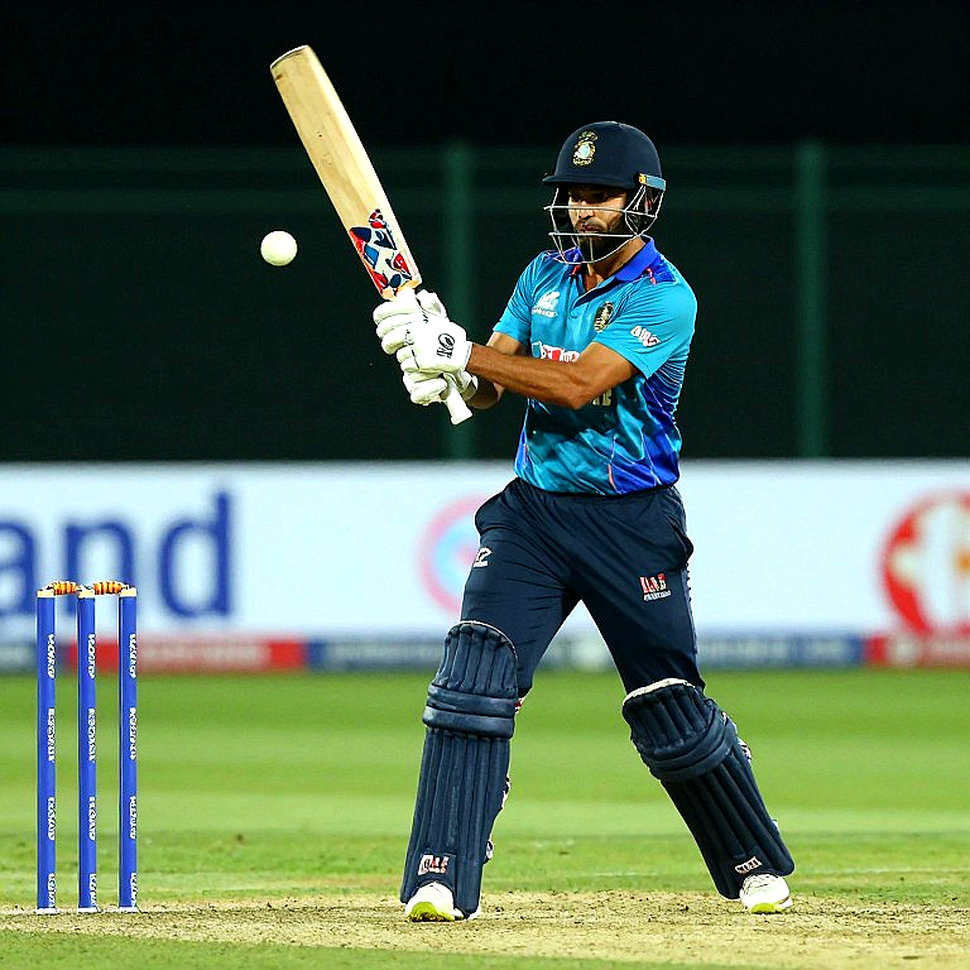
The short boundaries of Eden Park, the Auckland dampness and the Indian attack formed the backdrop — but Glenn Phillips delivered his moment in the language of wrestling rather than cricket. John Cena’s famous entrance theme ‘The Time Is Now’ and the accompanying ‘You can’t see me’ gesture sit at the centre of a video doing the rounds on social media. The headline is unambiguous: this moment became ‘Team India’s nightmare’. But one basic caution is necessary while reading that sentence. This report rests on a headline and a video clip, not a match report. The scoreline, date, format and match specifics are not present in the available material — so everything below is built on the event’s context and the player’s established profile, not on invented statistics.
What the John Cena connection means
Cena’s name is not alien to cricket audiences. ‘The Time Is Now’ is his WWE entrance theme, the cue that plays as the ‘champion’ walks into the arena — a signal that a turning point is coming. The ‘You can’t see me’ gesture has been a global code for celebration for two decades. Phillips transplanted that code onto a cricket field. The message the headline carries is clear: this is not merely a six or a catch, it is an announcement of presence. Psychologically, this kind of celebration is a cheap but effective pressure device — it constructs a separate storyline, distinct from the result, which both the camera and the social feed happily pick up.
Phillips is not just a batter
Glenn Phillips’ real value lies in his multi-dimensional role. He is New Zealand’s aggressive middle-order batter, a wicketkeeping option, and a part-time off-spinner. In an era of four-overseas-player caps and thin benches, that squad-slot efficiency matters far more than any single innings. Phillips is rated among the best fielders in world cricket — the running, the diving and the saving on the boundary is the part of his game the scorecard never shows, and it becomes doubly effective at Eden Park, where short boundaries shrink a fielder’s reaction time. This is what creates the high-impact, high-variance profile: the average output is unstable, but the moments that change matches are frequent. Alongside Finn Allen and Tim Seifert, this is a recognisable New Zealand archetype — a heavy boundary share, elevated dismissal risk, and weak correlation between consecutive innings.
Eden Park is a character in its own right
Despite being New Zealand’s largest venue, Eden Park’s straight boundaries sit well below standard. It is a ground where mis-hits clear the rope and bowlers’ economy rates inflate. If the fixture is a day-nighter, dew becomes a structural factor — spin grip degrades and chasing becomes materially easier, which typically bends the toss decision toward bowling first. The analytical implication is that a Phillips burst at Eden Park is not proof of technique alone; it is also venue-assisted. This is the venue bias that gets stripped out of too few cricket narratives. A six on a short boundary is great advertising, but it is not a measuring stick.
The real shape of the New Zealand–India contest
On New Zealand soil, white-ball cricket between the two sides is a style counter. Seam-friendly air, short boundaries and opponent unfamiliarity combine to compress India’s structural advantages, which surface more readily on larger grounds and in the subcontinent. New Zealand’s identity has been very strong at home and markedly weaker away; India’s is the mirror — near-invincible at home, with persistent questions abroad and in knockout finishing. Within that structure one thing is clear: India’s bench depth is far superior, so the structural cost of a single individual failure is small for India and large for New Zealand. That asymmetry of consequence is the least-reported angle in coverage of this kind.
The ‘Team India’s nightmare’ frame
No bowler or captain is named in the headline; instead an institutional brand, ‘Team India’, is used. That is not accidental. The framing runs on team-versus-team mythology and flattens the actual personnel story — which bowler was attacked, which fielder dropped what. New Zealand is the actor; India is the audience, so India occupies the object position of the sentence. This is a natural product of the Indian-audience content economy, not a description of competitive balance. It is also the economic logic of the whole package: near-zero cost (a clip and a headline), the largest reach in cricket, monetised through page views and video impressions. A ‘- WATCH’ suffix is the signature of that digital-first, India-facing publishing model.
Do not read a trend into one moment
The biggest analytical hazard is exactly this. A viral clip generates commercial value, not sporting value. Sporting assessment needs format-specific data, home-away splits, performance against different bowling types and a long-run trend — none of which is present. No data-based claim is possible here about Phillips’ batting average, strike rate, form trend or injury history. What can be said is that his workload as a wicketkeeping option combined with outfield diving points to soft-tissue risk — but that is generic player-profile reasoning, not a conclusion about this match. Nor can this moment be called a form reversal or a breakout; the data required does not exist.
The shadow of the IPL auction
One more layer matters. Any big moment built against India on New Zealand soil feeds directly into the next IPL auction narrative. The defensible observation is this: viral clips and auction prices are correlated, but poorly causally linked. Spectacular-highlight overseas middle-order batters have repeatedly drawn bids disproportionate to their likely starting-XI role under a four-overseas-player cap. This article is part of that market signalling, not proof of the player’s value.
What to watch next
A proper evaluation needs three things: the phase in which the knock or act occurred — powerplay, middle overs or death; the bowling type it came against — pace or spin; and the match result. If the moment proved decisive, the story changes. If it was a brilliant but incomplete effort, it is a good clip and nothing more. On present information the honest verdict is this: as entertainment the moment is top class; as evidence its value is low. Glenn Phillips borrowed John Cena’s script and Eden Park’s short boundaries provided the stage — the rest of the story is still to be written.